
Last updated October 16, 2026
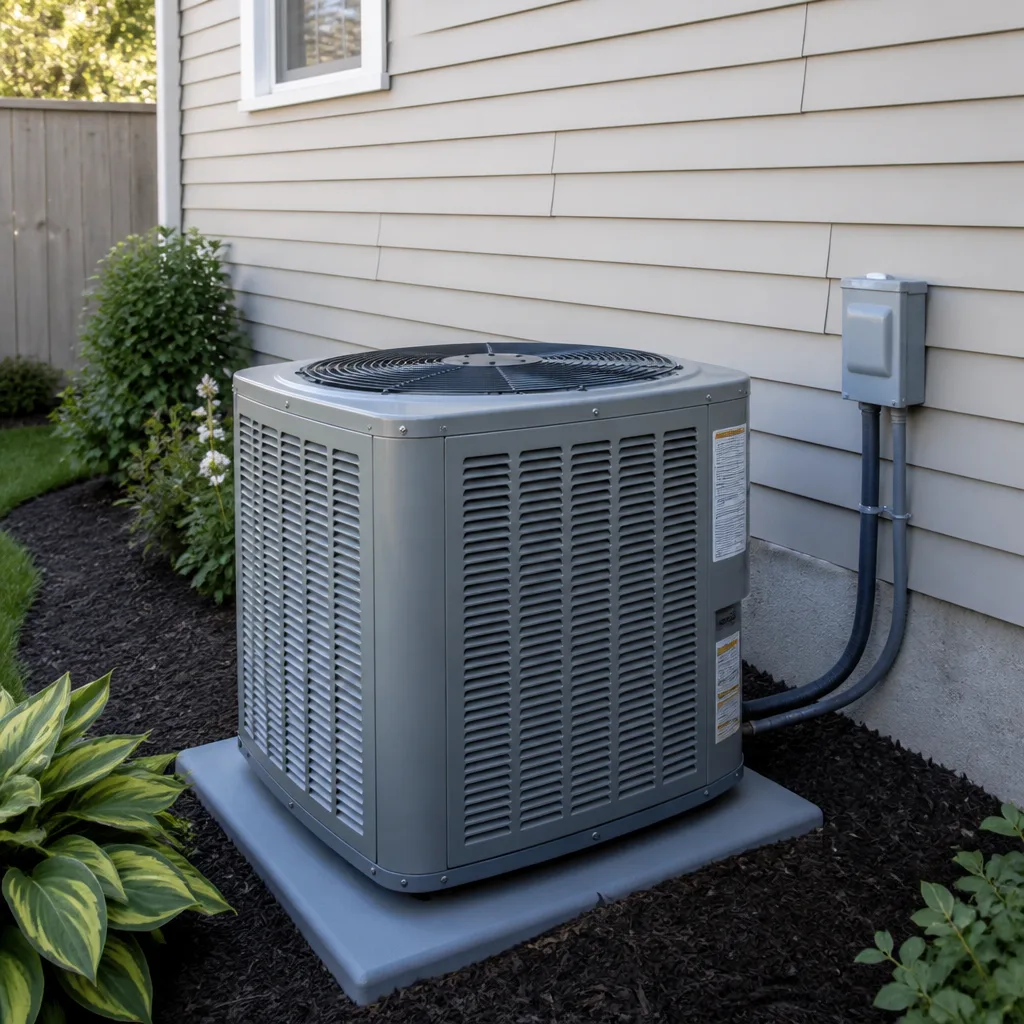 AC repair
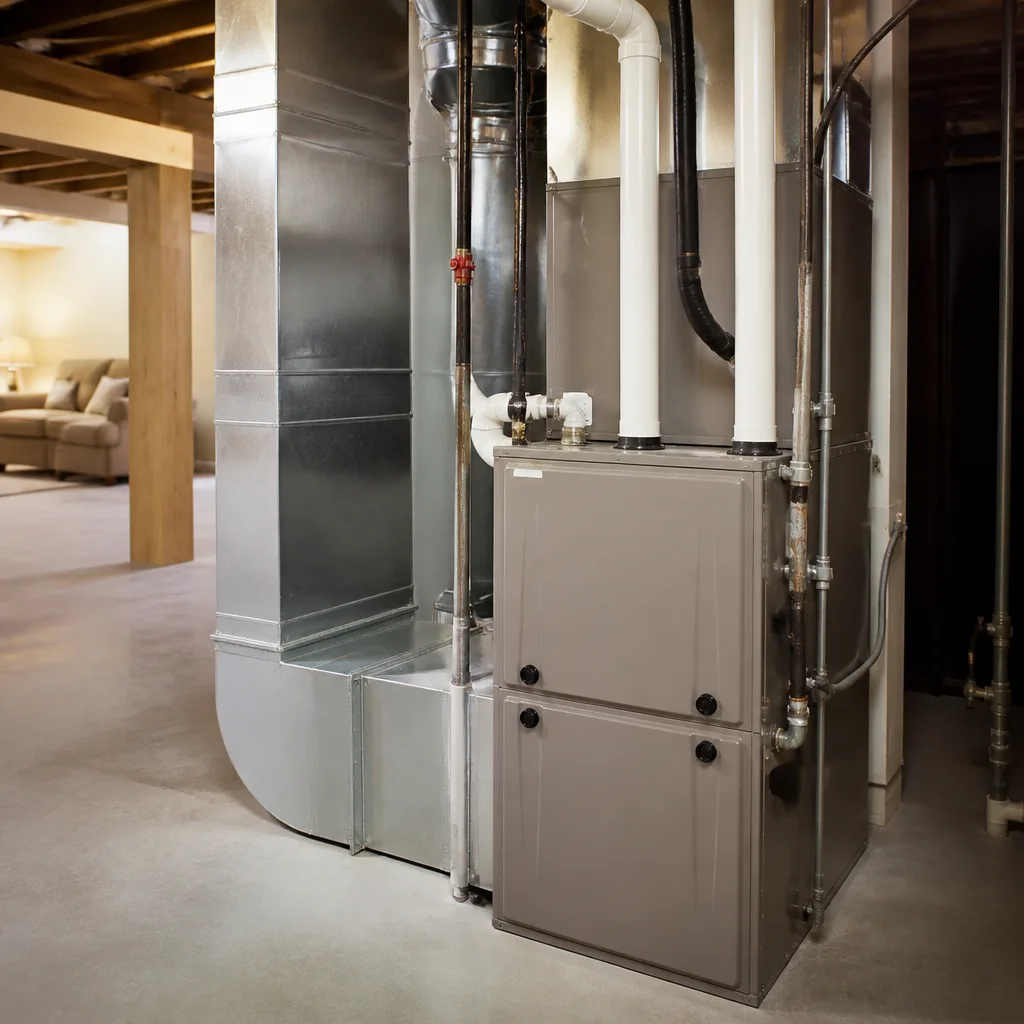 Furnace & heating
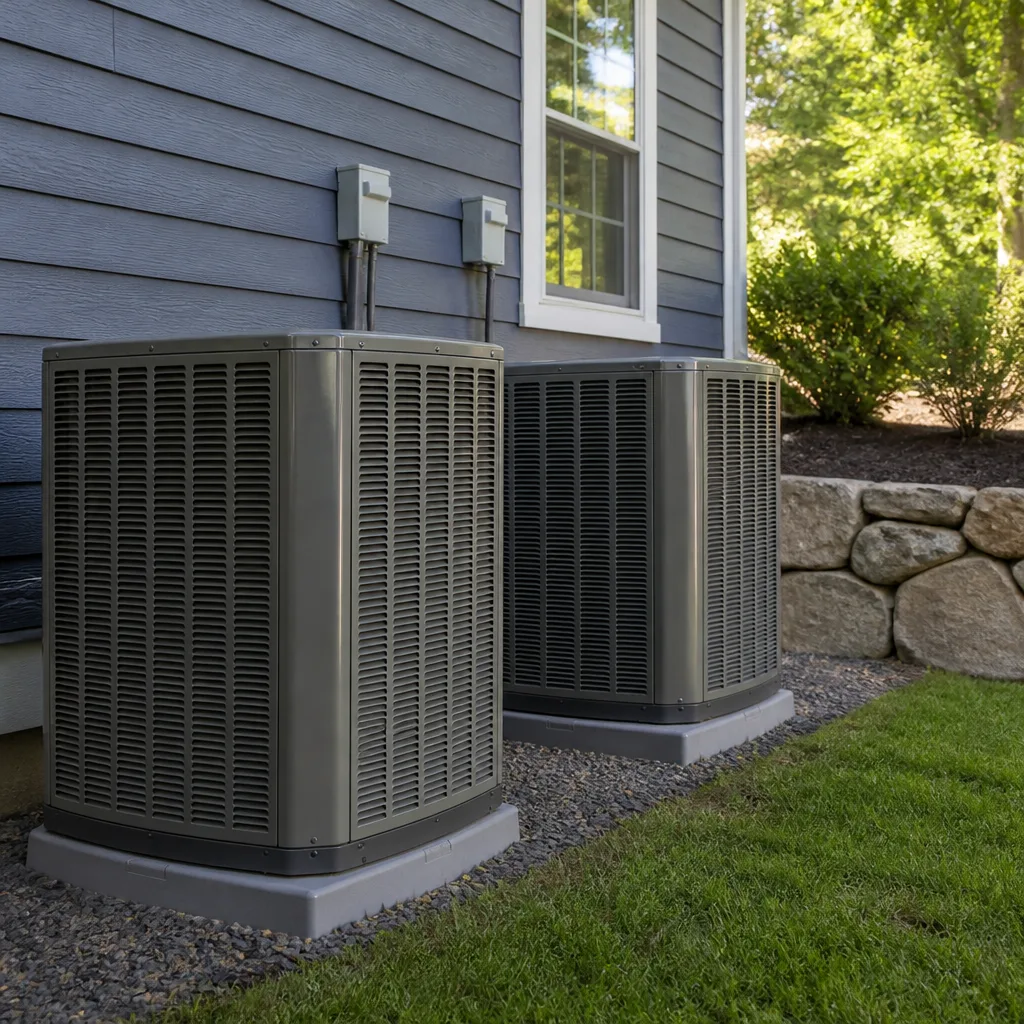 Heat pumps
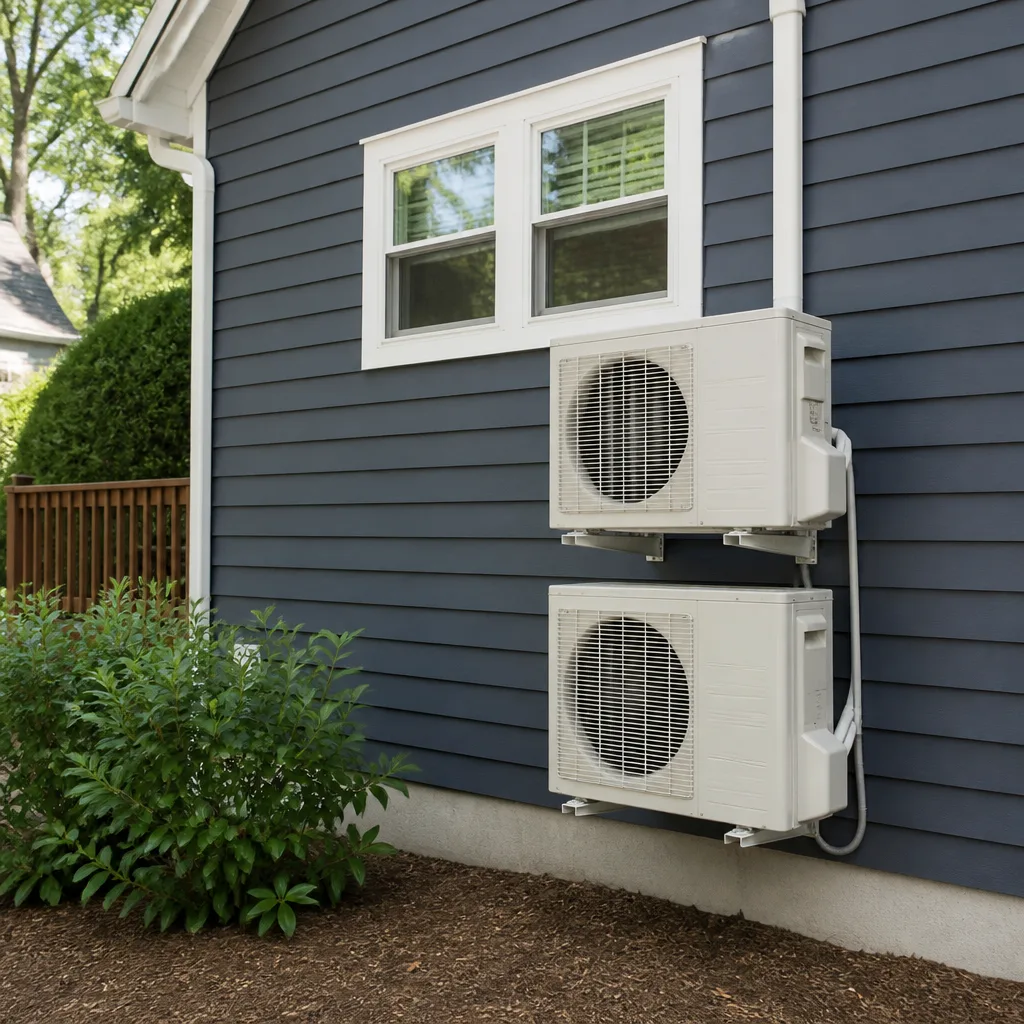 Ductless mini splits
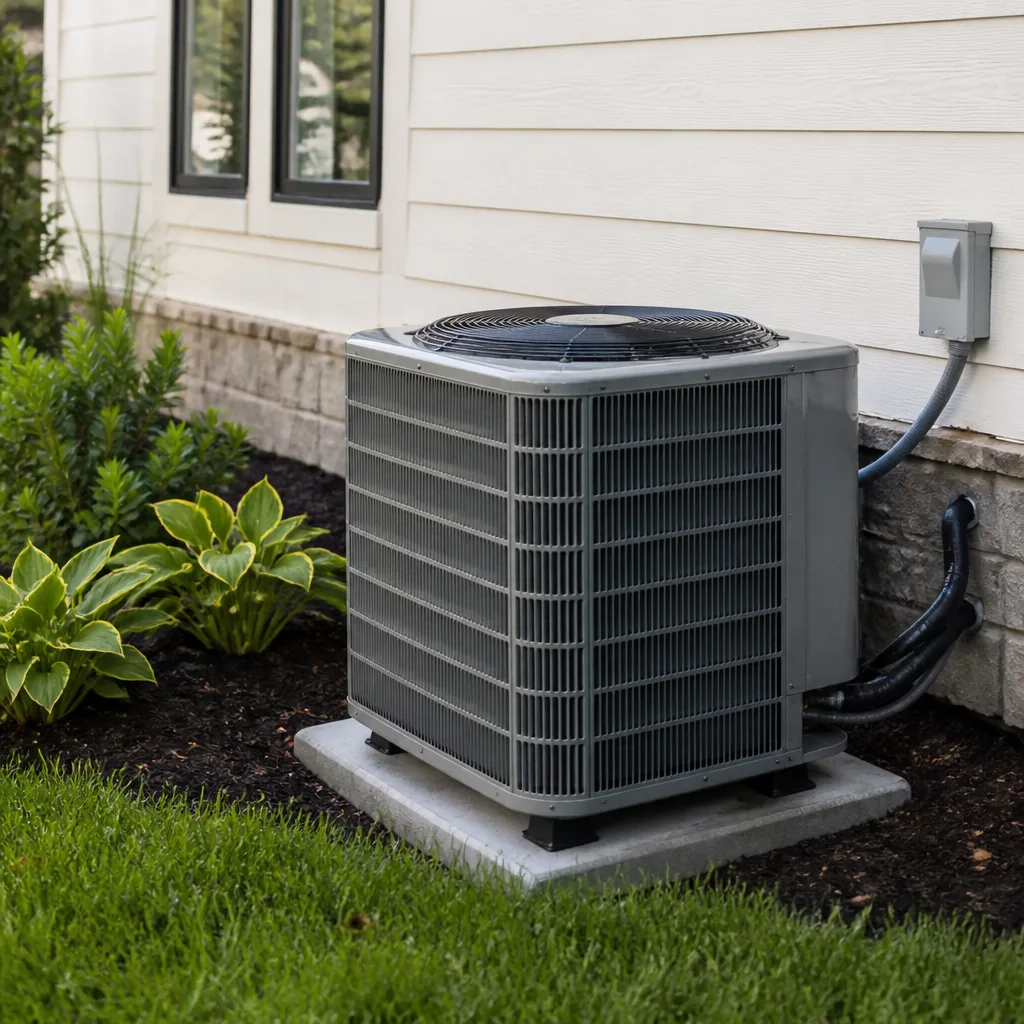 Carrier
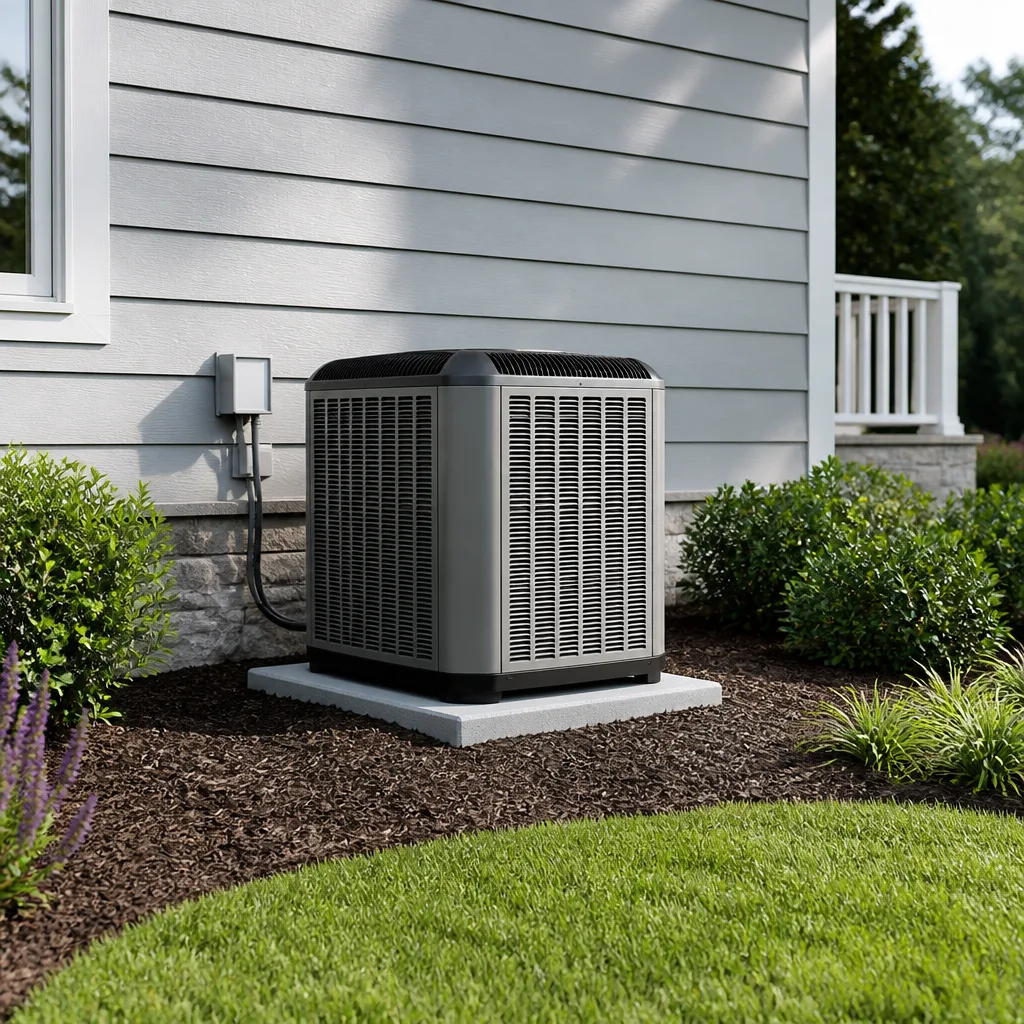 Trane
Trane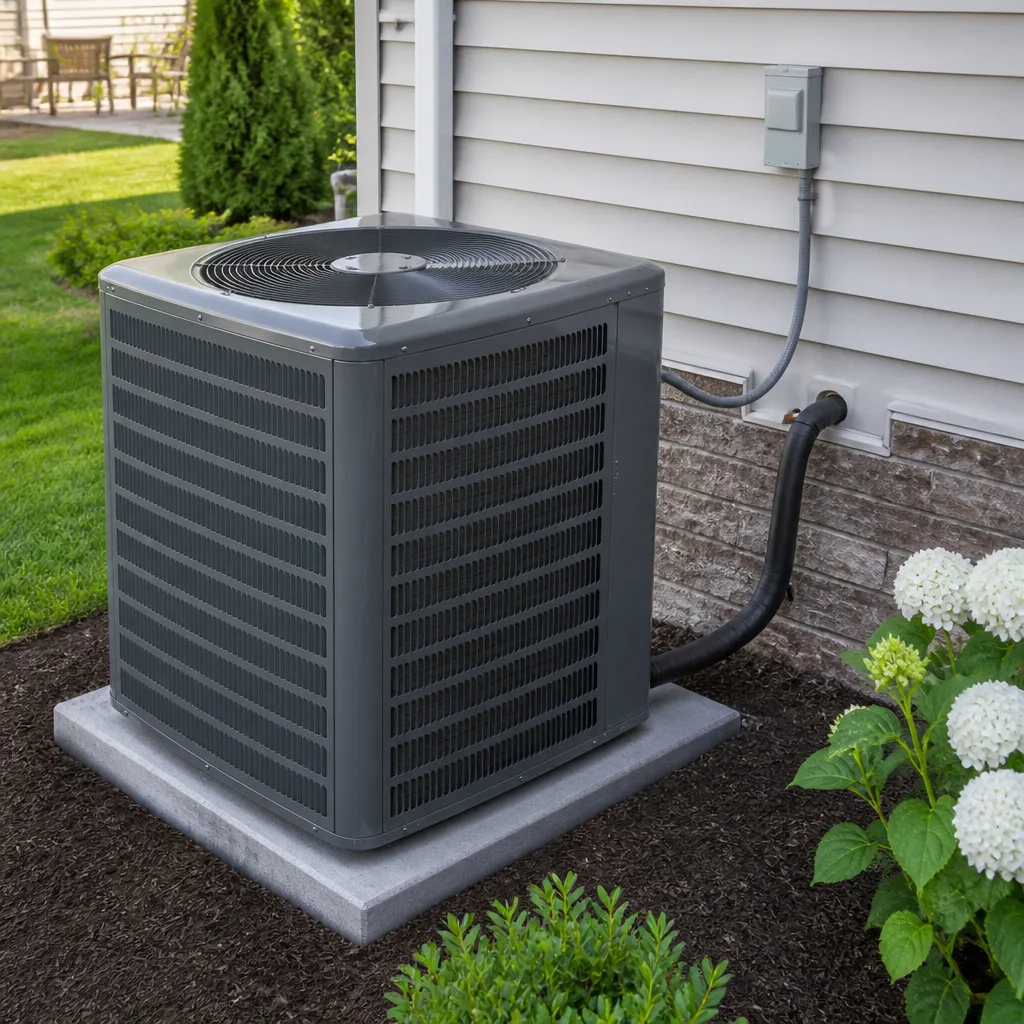 Goodman
Seasonal tune-up and full diagnostic on your Carrier, Trane, or Goodman system - readings shown to you before any repair is proposed
Diagnosis first, numbers second - you approve the repair price before a single part goes in.
Get your free estimateHVAC Warning Signs: A Orlando Homeowner’s Reference Guide
There’s a specific sound a refrigerant-starved compressor makes at 2 PM on a 95-degree Orlando afternoon that means you have roughly 48 to 72 hours before a full system lockout. Most homeowners hear it, assume it’s normal, and end up calling on a Saturday for emergency rates. Knowing that sound, and six others like it, is worth hundreds of dollars. This guide covers the Florida-specific warning signs generic articles miss, how to test your system with a $12 thermometer, and when to call before a small fix becomes a full replacement. For a broader overview, see The Complete Guide to HVAC in Orlando.
Quick Answer
The most common HVAC warning signs in Orlando are ice on the indoor or outdoor unit, a compressor that hums but won’t start, weak airflow from vents, a thermostat that reads one temperature while rooms feel warmer, and a persistent musty smell from the supply registers. In Orlando’s heat and humidity, ice on the evaporator coil and musty odors are more common, more damaging, and more urgent than in drier climates. Our Seasonal HVAC Care for Orlando: Year-Round Homeowner’s Guide explains how to prevent both. If your system has been running all day and the house won’t cool below 78, that’s a capacity problem worth a same-day look, not a “wait and see” problem.
Styles & brands we work with
Table of Contents
- Florida-Specific Warning Signs Most Guides Miss
- The Thermostat-to-Temperature Gap Test
- Warning Signs by Component
- Repair Now or Start Replacement Math
- What to Document Before the Technician Arrives
- Seven Sounds That Matter in Orlando
- Humidity and Air Quality Warning Signs
Florida-Specific Warning Signs Most Guides Miss
We’ve serviced systems across Orange County for two decades, and the failure patterns in Orlando look different from what homeowners read in national guides. Our climate runs AC systems 3,000 to 3,500 hours per year. A system in Columbus, Ohio runs maybe 1,200. That constant runtime changes which parts fail first and which symptoms show up earliest.
Ice on the evaporator coil is the big one. In Orlando, indoor evaporator coils ice up more often than in any other major US market. High outdoor humidity means the coil pulls more moisture from the air, and when airflow drops even 20 percent, that coil temperature drops below freezing and ice forms fast. Homeowners see water pooling around the air handler or ice on the refrigerant lines at the outdoor unit and assume it means “the AC is working extra hard.” It actually means the system is suffocating, usually from a dirty filter, a failing blower motor, or a refrigerant charge that’s drifted low. The ice insulates the coil, airflow drops further, and the compressor runs hotter until it shuts off on thermal overload. In Orlando, a iced-up coil can turn into a compressor replacement in under a week if the underlying cause isn’t fixed.
A musty smell from the vents is an emergency here, not an inconvenience. Generic guides treat musty odors as a cleaning suggestion. In Orlando, where indoor relative humidity routinely sits at 55 to 65 percent even with AC running, mold and mildew grow in ductwork and on the coil within days, not months. That smell means the drain pan isn’t draining, the coil is staying wet too long, or the ductwork has condensation on the outside. Breathing mold spores is a health issue for anyone with allergies or asthma, and it gets more expensive to remediate the longer it sits.
The “runs all day in August” symptom is also different here. A system that can’t reach setpoint by 7 PM on a 94-degree day in Orlando is undersized, low on refrigerant, or has duct leakage. In milder markets, a system running long cycles might be normal. Here, it means the system never gets a break, the compressor runs at 100 percent duty, and electricity bills spike well past your neighbors’. We regularly see Orlando summer electric bills drop $80 to $150 per month after fixing a duct leak or a low charge that had the system running 16-hour days.
The Thermostat-to-Temperature Gap Test
Before you call for AC repair in Orlando, run this test. It takes five minutes and gives the technician a real diagnostic starting point instead of a vague “it’s not cooling.”
- Buy a basic digital thermometer, the kind with a probe, for about $12 at any hardware store or pharmacy.
- Set your thermostat to 75 degrees and let the system run for 20 minutes.
- Hold the thermometer at a supply register, the one where cold air blows out, for 60 seconds. Write down that number.
- Hold the thermometer at the return register, the one where air gets pulled in, for 60 seconds. Write down that number.
- Subtract the supply temperature from the return temperature.
Reading the result: a healthy system with a clean filter and a proper refrigerant charge produces a temperature drop of 15 to 20 degrees across the coil. If you’re seeing 14 degrees or less, the system is losing capacity. Common causes: low refrigerant from a slow leak, a dirty evaporator coil, a failing blower motor, or return duct leakage pulling hot attic air into the system. If you’re seeing 20 degrees or more, the system is working hard but something is restricting airflow, usually a clogged filter, closed supply vents, or undersized return ductwork.
Run this test on a hot afternoon, not in the morning. The gap narrows as outdoor temperature climbs, and a system that shows a 19-degree split at 9 AM might only manage 13 degrees at 3 PM. That’s your real-world Orlando performance number.
If the gap is under 12 degrees and the house still won’t cool below 80 in the afternoon, don’t keep running the system. Every hour it runs short-cycled or overworked pushes a billable repair toward a $4,000-plus compressor or full system replacement. Call for service and tell the dispatcher the exact split you measured. It tells us a lot before we even ring the doorbell.
Warning Signs by Component
When you call a technician in Orlando, being able to describe which part of the system is misbehaving cuts diagnostic time and gets you a written price faster. Here’s what to watch for in each major part of a residential split system.
Outdoor Condenser (the unit outside)
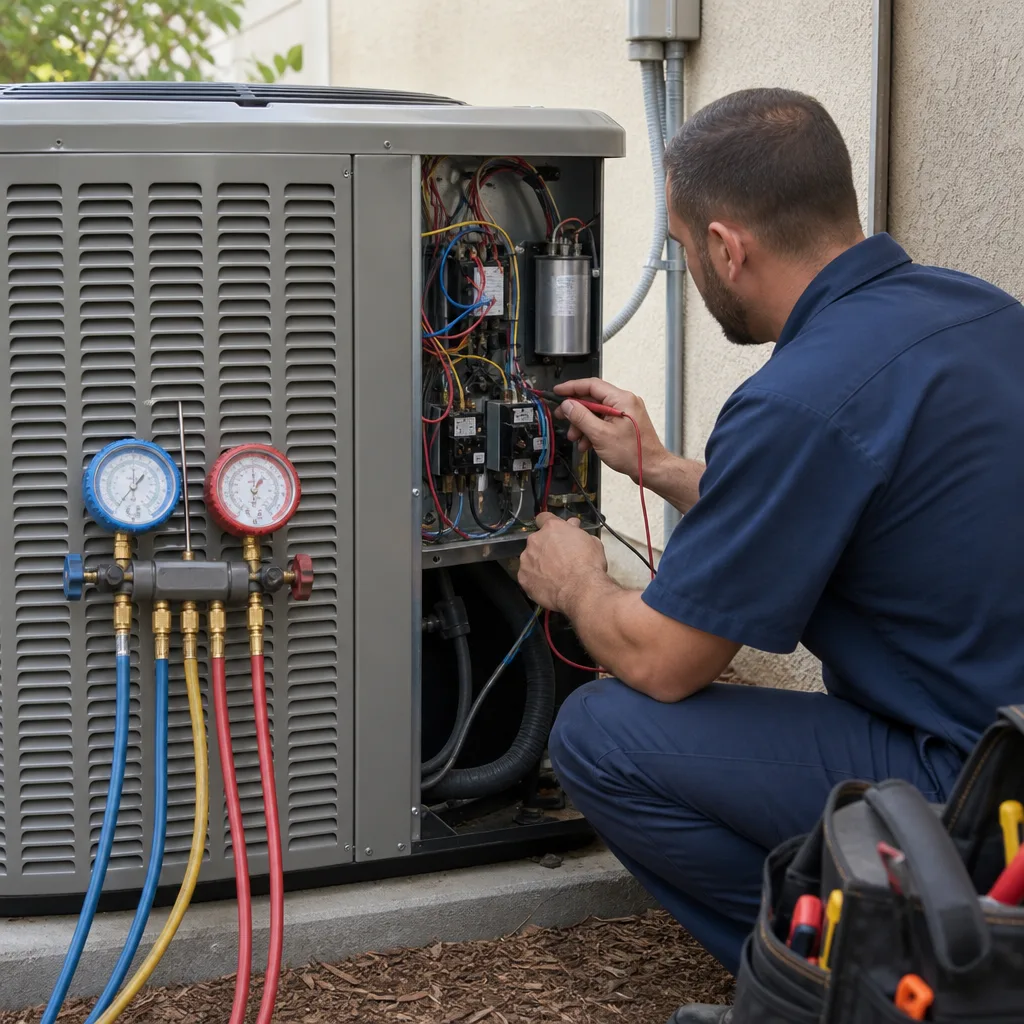
- Humming but not starting: the compressor is getting power but can’t turn over. Often a failed start capacitor, which is a $150 to $350 repair. Sometimes it’s a locked compressor, which is a replacement-level event. Don’t let it sit humming; the compressor is pulling locked-rotor amperage and cooking itself.
- Short cycling (on for 5 minutes, off for 5 minutes, repeat): the system is tripping a safety switch or the thermostat is reading temperature wrong. In Orlando’s summer, short cycling is the fastest way to kill a compressor.
- Loud rattling or banging from the cabinet: the fan blade may be loose, the compressor mounts may be broken, or the scroll compressor is failing internally. Get a video before calling.
- Cold liquid line (the larger copper pipe) covered in ice or frost: this points to low refrigerant or an airflow problem. Shut the system off and let it thaw before the technician arrives, but don’t just reset it and keep running.
Air Handler and Indoor Coil (usually in a closet, garage, or attic)
- Ice on the coil or on the refrigerant lines entering the cabinet: covered above, but this is the single most common Orlando-specific failure we see in summer. Shut the system to cool-only fan mode to help it thaw, but the underlying cause (low charge, dirty coil, blower problem) won’t fix itself.
- Water pooling under the air handler: the condensate drain line is clogged with algae, which grows aggressively in Orlando’s humidity. A $89 to $129 drain line clearing is the fix if caught early. If left for weeks, the water damages drywall and subflooring.
- A soft hissing or bubbling sound from the indoor coil: this is refrigerant moving through the expansion valve or a small leak at the coil. Hissssss with no cold air is a classic low-charge symptom.
Thermostat
- Temperature reading doesn’t match a separate thermometer: the thermostat’s sensor has drifted or it’s mounted on a wall that gets afternoon sun or sits above a heat-producing appliance. A thermostat that thinks it’s 74 when the room is actually 78 will never call for enough cooling.
- Screen blank or unresponsive: before calling, check the breaker and the batteries if it’s a battery-powered model. About 20 percent of “dead thermostat” calls in Orlando are a tripped breaker or dead AAs.
- System runs constantly, regardless of setpoint: a stuck relay in the thermostat or a shorted control wire. This runs your bill up fast.
Ductwork
- Rooms that are 5 to 8 degrees warmer than the rest of the house: duct leakage or a collapsed flex duct in the attic. In Orlando attics, which hit 130 degrees in July, any leak pulls superheated air into the supply side and dumps it in the room.
- Whistling or a noticeable change in airflow when a door closes: ductwork is undersized or the return path is too restricted. Closing doors in an Orlando home with a single central return starves the air handler and makes the problem worse.
- Visible condensation on the outside of duct boots or grilles in the ceiling: the duct insulation is failing or the duct is carrying 55-degree air through a 95-degree attic uninsulated. This causes drywall staining and mold.
Repair Now or Start Replacement Math
Not every warning sign means “replace the system.” Most mean “repair this specific fault.” But some symptoms are the HVAC equivalent of a check-engine light that’s been on for six months: the repair is possible, but the smart money starts planning for replacement. Here’s the line we tell Orlando homeowners to draw.
Signs that point to repair
- A failed capacitor on an otherwise healthy system under 10 years old. This is a $150 to $350 part swap, and if the system has been maintained even occasionally, it’s often the only problem.
- A clogged condensate drain line. This is a maintenance item in Orlando’s climate, not a system failure. Clear it and move on.
- A single refrigerant leak on a system under 8 years old that’s been located and can be repaired at the fitting. Leak repair plus recharge runs $300 to $800 depending on the leak location and refrigerant type.
- A thermostat that’s drifted out of calibration. Replace the thermostat, not the system.
- A blower motor that’s failed on a system with a clean coil and a recent compressor. Blower motors are $400 to $900 installed and they don’t shorten compressor life once replaced.
Signs that start the replacement conversation
- The compressor is failing, the system uses R-22 (which was phased out and now costs $100+ per pound just for refrigerant), and the unit is 12 years old or more. That combination almost never pencils out as a repair in Orlando, especially going into summer.
- You’ve had two or more major repairs in the past 18 months and the system still can’t hold a 76-degree setpoint on a 90-degree day. You’re paying repair money into a system that’s already told you it’s done.
- The evaporator coil is leaking and the system is over 10 years old. A coil replacement is $1,200 to $2,200 and requires opening the refrigerant system. If the compressor follows in a year or two, you’ve spent half a replacement on a two-year extension.
- The ductwork itself has failed, with collapsed runs and massive leakage, and the system is undersized for the home. This is where AC installation in Orlando should be considered as a complete system and duct design, not a box swap.
As a rough rule for Orlando specifically: if the system is under 8 years old and the repair is under $500, repair it. If it’s over 10 years old and the repair involves the compressor, coil, or refrigerant charge, get a written replacement quote alongside the repair estimate so you can make a clear decision with both numbers in front of you.
What to Document Before the Technician Arrives
Every Halden Heating and Air visit starts with a written price before work begins, and a written guarantee on the repair. For routine tasks you can handle yourself, check our AC Repair Maintenance Checklist for Orlando Homeowners. But there’s something you can do before any technician arrives that protects you and speeds up the diagnosis: document what the system is doing with your phone. Not a long video essay, just 30 seconds each of the specific things below.
- A video of the outdoor unit while it’s running. Hold the phone steady for 30 seconds and capture the sound. If it’s humming, buzzing, rattling, or cycling on and off, that audio is diagnostic gold for a technician who isn’t there yet.
- A photo of the thermostat showing the setpoint and the current room temperature. Do this at 2 PM or 3 PM on a hot afternoon, when the system is under maximum load.
- A photo of ice, frost, or water if you see any. Ice melts fast on an Orlando afternoon. By the time the technician arrives, the evidence may be gone and they’ll have to infer what happened.
- A photo of the air filter. Pull it out and snap a picture. A filter that’s gray-black after a month tells the tech something important about return duct leakage.
- The temperature split numbers from the test above. Write them down with the outdoor temperature at the time. “83 return, 68 supply, 15-degree split, 2:45 PM, 94 outside” is a complete sentence to any technician.
- A photo of the data plate on the outdoor unit. The model and serial number on the plate tells us the refrigerant type, the tonnage, and the age before we ring the doorbell.
This documentation matters because Orlando AC failures often present intermittently. A capacitor that fails at 2 PM might test fine at 6 PM after it cools down. A float switch that trips at 3 PM might not trip again until tomorrow. Your video and photos become the before record, and the written repair report becomes the after record. That before-and-after paper trail is part of how we hold every job to the 365-Day Done Right Promise.
Seven Sounds That Matter in Orlando
Our technicians know most of these sounds from phone videos before they ever pull up. Learn them and you’ll know whether you’re scheduling routine service or calling for an emergency visit.
- The refrigerant-starved hiss-squeal: a high-pitched hiss or soft squeal from the outdoor unit during the hottest part of the afternoon, usually accompanied by lukewarm air from the vents. This is the sound of the compressor trying to pump against low refrigerant pressure. You’ve got 48 to 72 hours to address it before thermal lockout, and every hour of run time risks compressor damage. This is the one from the top of this guide, and in Orlando it’s the most expensive sound to ignore.
- The click-hum-click: the outdoor unit clicks, hums for 3 to 5 seconds, then clicks off. That’s the compressor trying and failing to start, usually a bad start capacitor. This is a quick repair if caught in the first few days. Let it long enough and the compressor itself locks up.
- The hard rattle on startup: a sharp metallic rattle when the system first kicks on, then it settles. Loose fan blade, failing compressor mounts, or a scroll compressor that’s starting to flake. Get a video from 2 feet away.
- The constant gurgle from the indoor unit: a bubbling or gurgling sound coming from the air handler when the system is off. This is refrigerant moving through a coil with air in the lines, which means a leak somewhere in the system. Not urgent by the hour, but don’t schedule it for “next month.”
- The loud buzz with no fan movement: the contactor is pulled in and the fan motor is getting voltage but the fan blade isn’t turning. Bad fan motor or a seized bearing. Shut the system off at the thermostat until service arrives; a motor pulling locked-rotor amperage burns out fast.
- The boom or bang when the system shuts off: refrigerant lines slapping against the cabinet or a compressor that’s shuddering on shutdown. This one points to system pressure issues and should be seen sooner rather than later.
- The rhythmic thumping that speeds up and slows down: a failing blower motor in the air handler, often described as a “womp-womp-womp” from the closet or garage. In Orlando homes where the air handler sits in an insulated closet, this sound often gets dismissed as normal house noise until the motor actually dies.
When you call Halden Heating and Air Orlando home to describe one of these sounds, the dispatcher who answers is a real person, not a tree of menu options. They’ll ask what the system is doing, what time of day it happens, and whether you have a short video. That conversation gets the right technician dispatched with the right parts the first time.
Humidity and Air Quality Warning Signs
Air conditioning in Orlando is doing two jobs at once: dropping temperature and removing moisture. Most homeowners only monitor the first job. The second job is where hidden problems show up first, and in a market with nine months of dew points above 65, a system that’s cooling but not dehumidifying is quietly damaging the home and the people in it.
Watch for condensation on the inside of your windows on summer mornings. If the AC is running and the windows are sweating on the inside, indoor relative humidity is sitting above 60 percent. The system is either oversized (cooling the air too fast to remove moisture), running short cycles, or the thermostat fan is set to “On” instead of “Auto” so it’s blowing moisture right back into the house.
Sticky or clammy air at 74 degrees. Temperature is correct but the air feels heavy. Same root causes as above, but also possible: the system is losing capacity from a low charge and running long cycles without enough coil temperature to pull moisture.
Dust accumulating on furniture and registers within days of cleaning. Duct leakage on the return side pulls attic insulation, dust, and hot air into the system, then blows it through the house. In Orlando’s older neighborhoods, where much of the ductwork dates to the 1990s, this is a common finding. The dust is a symptom; the duct leak is the disease.
A spike in allergy symptoms or headaches when the AC runs. Mold in the ductwork or on the coil, often following a period of standing water in the drain pan. This is a “call today” symptom in Orlando, not a “buy a portable air purifier” symptom. The source has to be found and the ductwork may need professional cleaning.
A quick humidity check costs $8 with a basic hygrometer from any hardware store. If your indoor humidity is over 60 percent while the AC runs on a 90-degree day, something in the dehumidification chain is broken, and that something gets more expensive the longer it stays broken.
Common Mistakes to Avoid
- Letting a iced-up coil “just thaw and keep running.” The ice is a symptom, not the problem. Thawing it without finding the root cause just resets the clock on a worse failure. In Orlando, the root cause is usually low airflow or low refrigerant, and both get more expensive every week.
- Charging the refrigerant every summer without finding the leak. If the system needs a pound or two each year, it has a leak. Topping it off year after year is money into a hole. Find the leak, fix it, and charge the system properly once.
- Setting the thermostat to 68 to “cool the house faster.” The system cools at the same rate regardless of setpoint. A lower setpoint just makes it run longer, uses more electricity, and doesn’t fix underlying capacity problems. In an Orlando summer, this is how $400 electric bills happen.
- Ignoring a condensate drain line until water appears on the ceiling. In Orlando humidity, drain lines clog with algae every 8 to 14 months on systems without proper maintenance. A $89 drain clearing prevents a $2,000 drywall repair.
- Replacing the AC unit but keeping 30-year-old flex duct in a 130-degree attic. New high-efficiency equipment connected to leaking ductwork delivers the same comfort as the old unit at a higher price. The ductwork is half the system.
- Closing off the supply vents in unused rooms to “save energy.” Residential systems in Orlando are not designed for zoned operation. Closing vents increases static pressure, reduces airflow across the coil, and causes the exact ice-on-coil failure described at the top of this guide.
See the difference
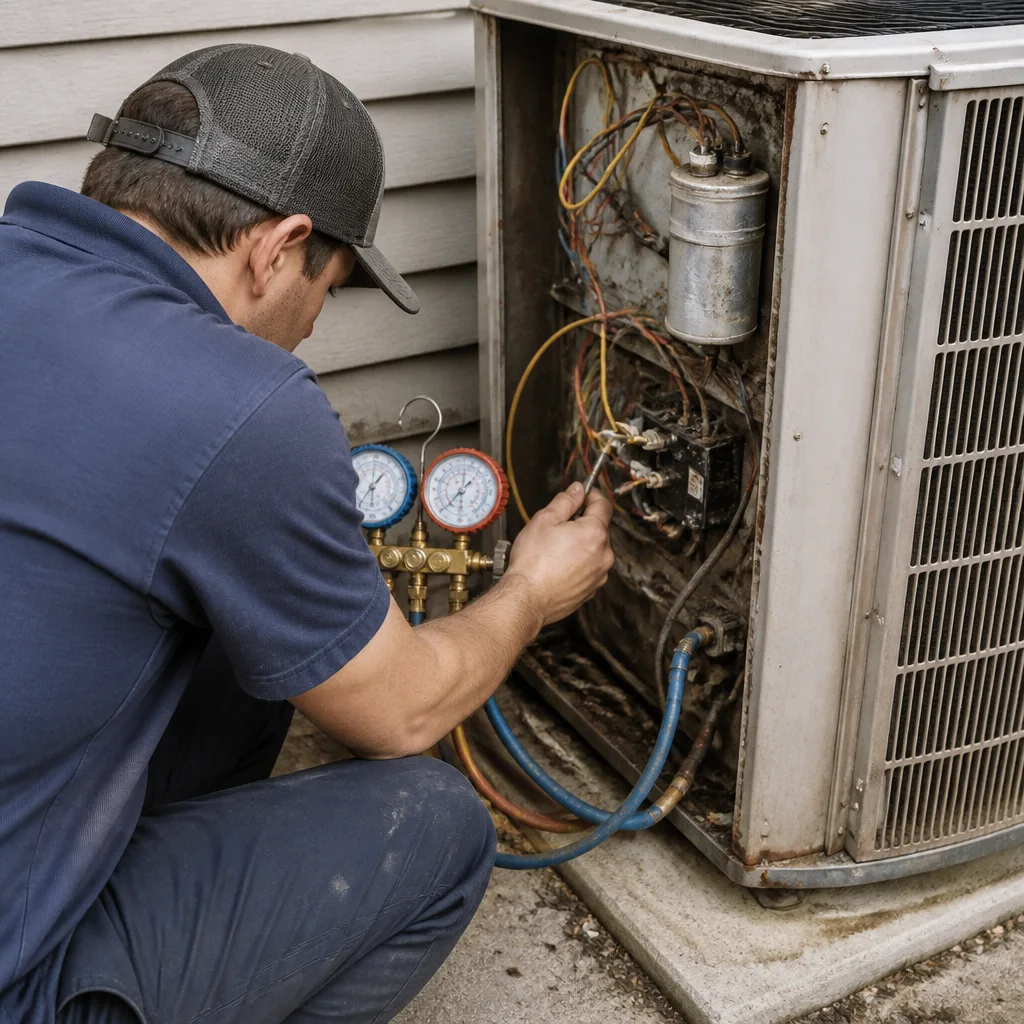 Before
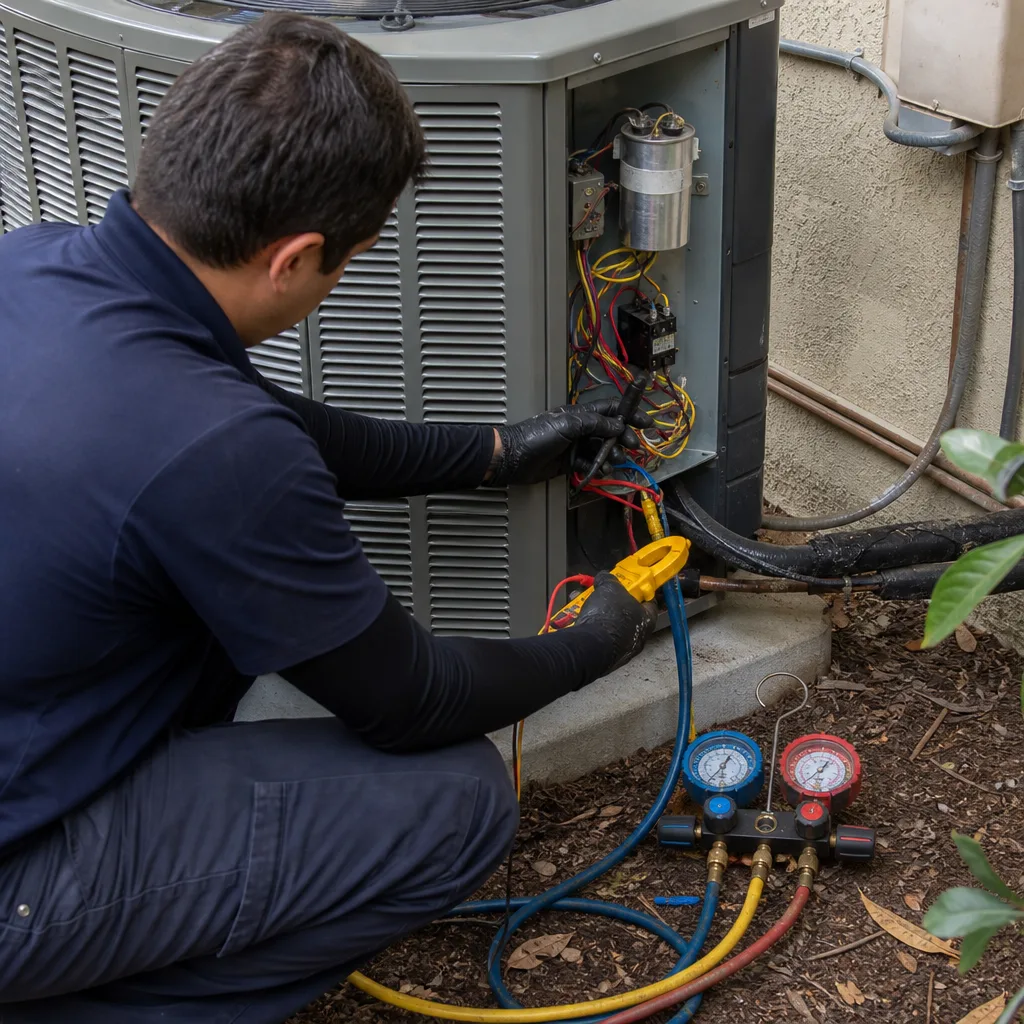 After
After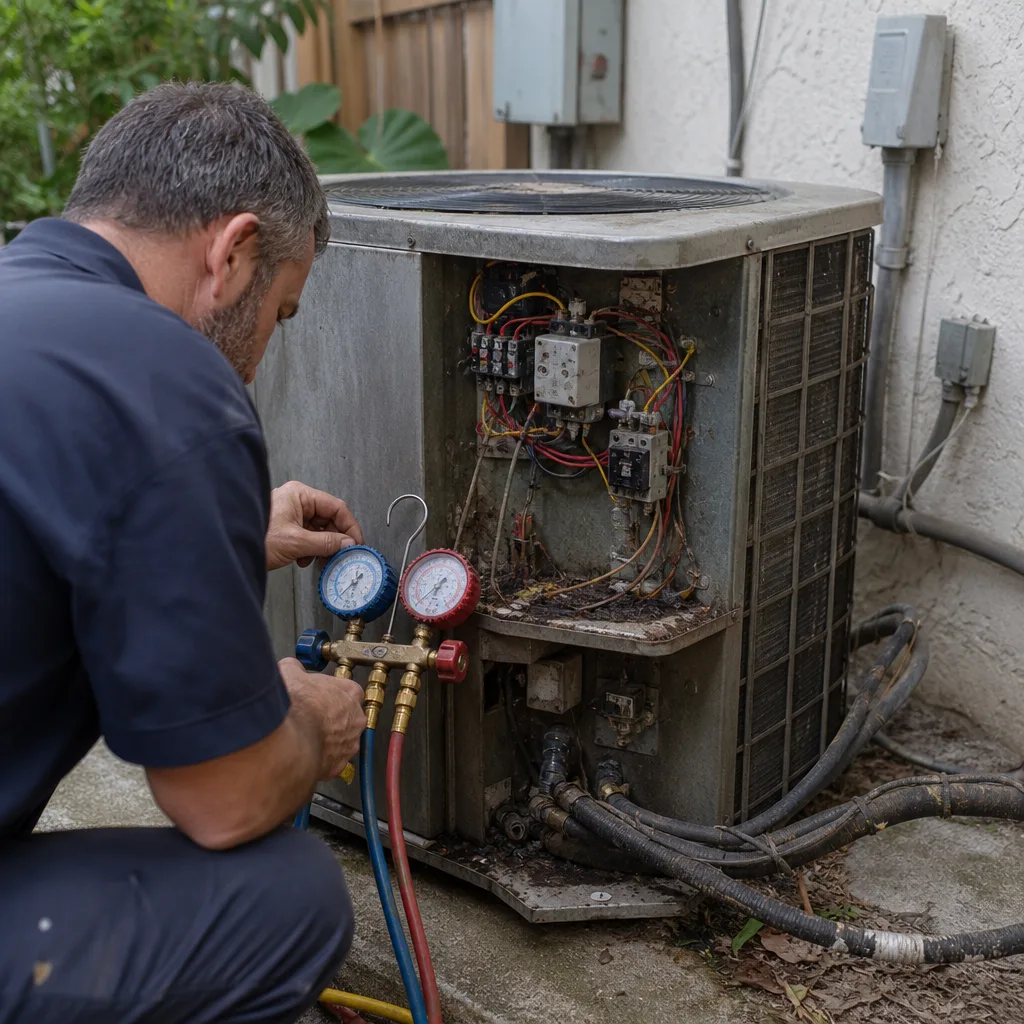 Before
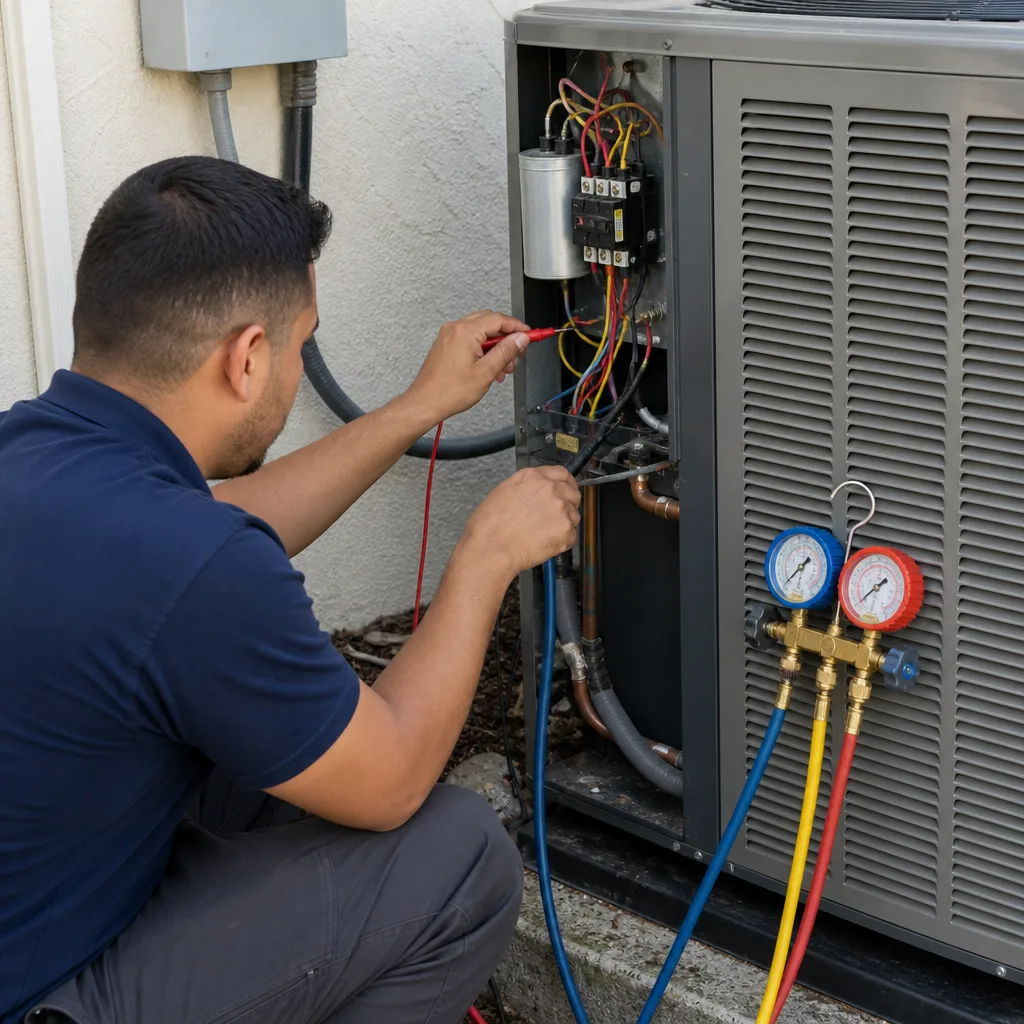 After
After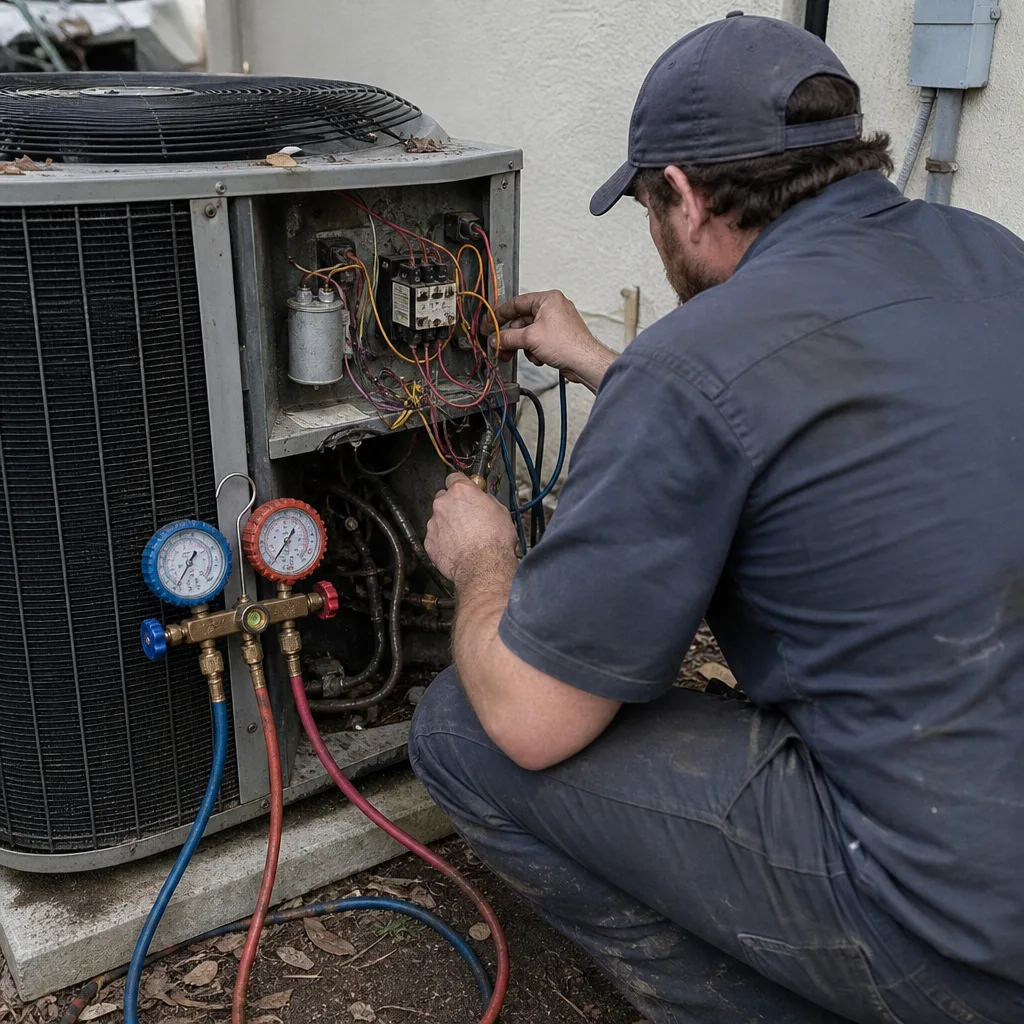 Before
 After
AfterWhen to Call a Professional
Call a technician the same day if your system is short-cycling in the heat, if you see ice or frost anywhere on the indoor or outdoor unit, if the compressor hums and clicks without starting, or if the system hasn’t shut off all afternoon and the house is above 80 degrees. Call within the week if you’ve measured a temperature split below 14 degrees, if you hear the refrigerant-starved hiss, if indoor humidity climbs past 60 percent while the AC runs, or if a musty smell comes from the vents every time the system kicks on. Halden Heating and Air Orlando offers a free estimate for any of these situations. Call (850) 695-3178 and a real person answers, 24/7. You’ll get a live arrival time you can track to your door, a written price before any work starts, and a written guarantee on any repair we perform.
Frequently Asked Questions
Your AC freezes up in Florida because high outdoor humidity means the evaporator coil pulls more moisture, and when airflow drops even 20 percent, the coil temperature falls below freezing and ice forms within hours. The underlying cause is almost always a dirty filter, a failing blower motor, a refrigerant charge that’s drifted low, or return duct leakage pulling hot attic air into the system. Shut the system off to let it thaw, then call for service, because running an iced-up system in Orlando is how compressors get destroyed.
An AC that runs continuously but never reaches setpoint is losing capacity through one of five paths: a low refrigerant charge from a slow leak, a dirty or matted evaporator coil, undersized equipment for the home’s heat load, duct leakage dumping cooled air into the attic, or a compressor that’s worn past its rated output. In Orlando, where 94-degree afternoon heat loads are normal, a system that can’t hit 76 by evening needs a diagnostic visit, not a colder thermostat setting. Call us and we’ll measure the actual temperature split and tell you what’s failing.
If the repair is under $500 and involves a capacitor, contactor, drain line, or thermostat, repair it. If the repair involves the compressor, the evaporator coil, or a significant refrigerant leak, get a written replacement quote alongside the repair estimate and compare the numbers directly. In Orlando’s runtime-heavy climate, a 12-year-old system that’s already had multiple repairs is past the point where repair money buys meaningful additional life, especially if it uses R-22 refrigerant, which now costs over $100 per pound just for the gas.
Yes. Halden Heating and Air Orlando answers calls with a live person 24 hours a day, 7 days a week, and we dispatch same-day service in Orlando when the system is down and the house is hot. You’ll get a live arrival time you can track to your door, not a four-hour window.
Every repair we perform includes a written guarantee. If the same fault returns within the coverage window, the second visit is free, automatically, no arguing required. That guarantee is part of our 365-Day Done Right Promise on every job, and it’s written on the invoice, not promised verbally.
The Relay Visibility Guarantee is the standard we operate under as part of the Relay Home Co. network: written prices before work begins, live arrival times you can track, background-checked uniformed technicians, before-and-after documentation of every job, and a written guarantee on every repair. It’s designed for Orlando homeowners who expect the same transparency from their HVAC company that they get from a rideshare app. Call (850) 695-3178 and we’ll show you what that looks like in practice.
The Bottom Line
Orlando’s heat and humidity make HVAC warning signs more frequent and more costly than in most of the country. The homeowner who knows the refrigerant-starved hiss, runs the temperature split test, and documents symptoms before calling will pay less, wait less, and replace less often than the one who waits for the system to die on a Saturday. Most warning signs are fixable for a few hundred dollars if caught early. Ignore them in this climate and the same symptom graduates to a compressor, a coil, or a full system. That’s the math, and it’s why written prices, written guarantees, and a free same-day diagnostic come standard on every call we run in Orlando.
Written by Andre Fuller, Owner at Halden Heating and Air Orlando, serving Orlando since 2004.