
Last updated October 16, 2026
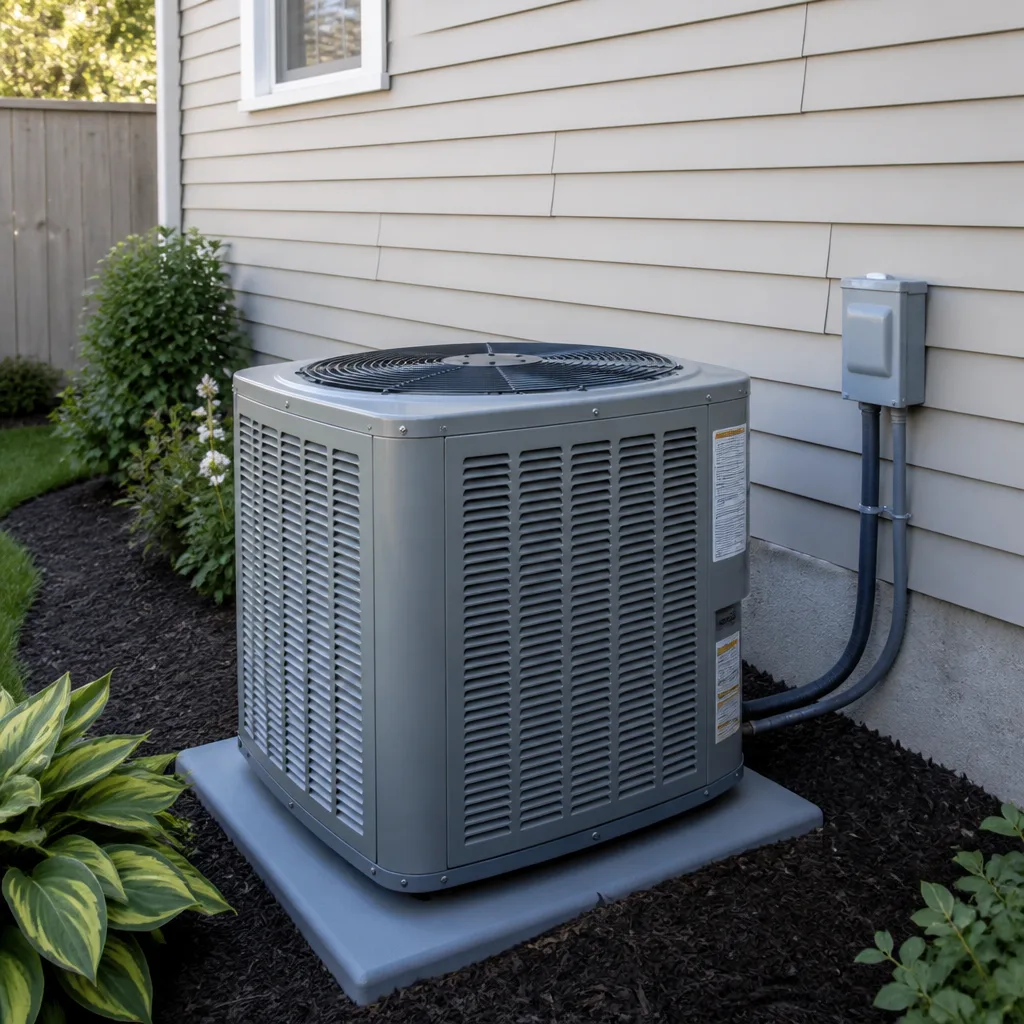 AC repair
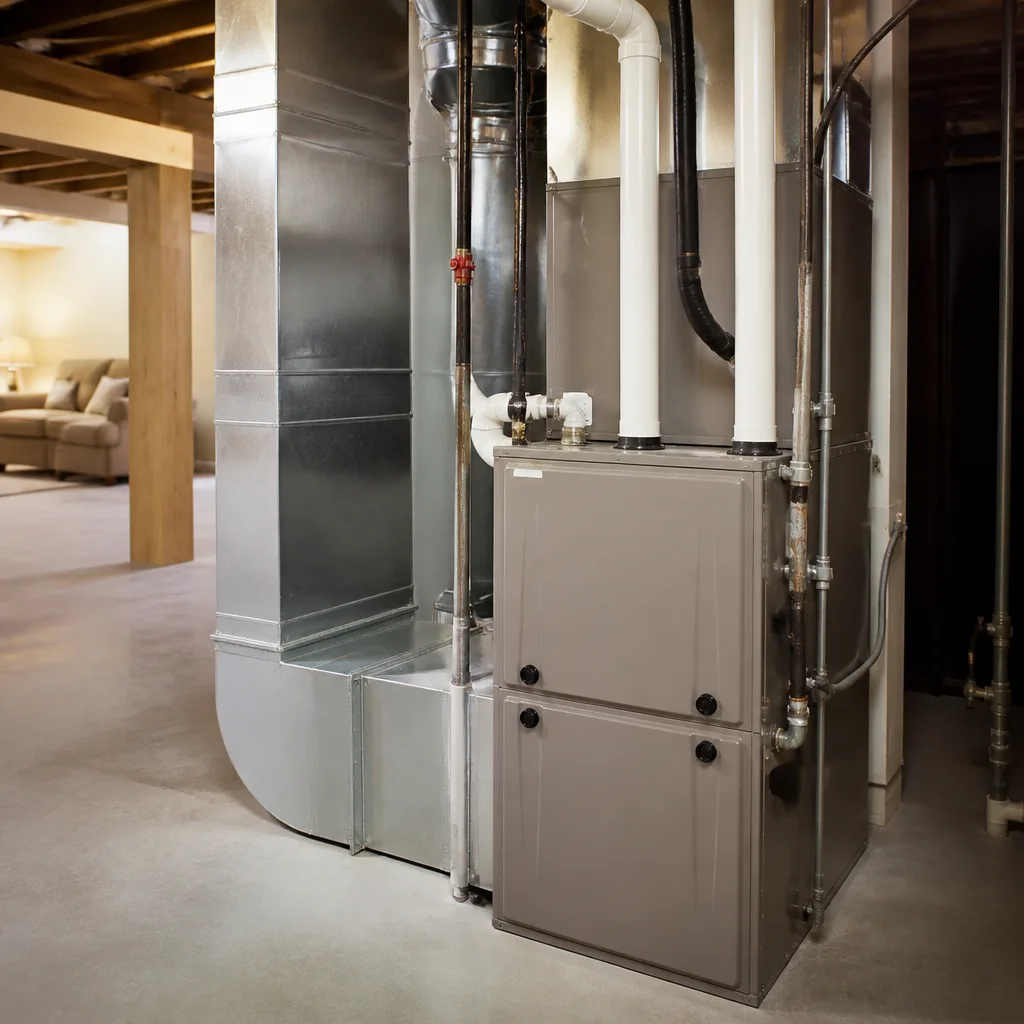 Furnace & heating
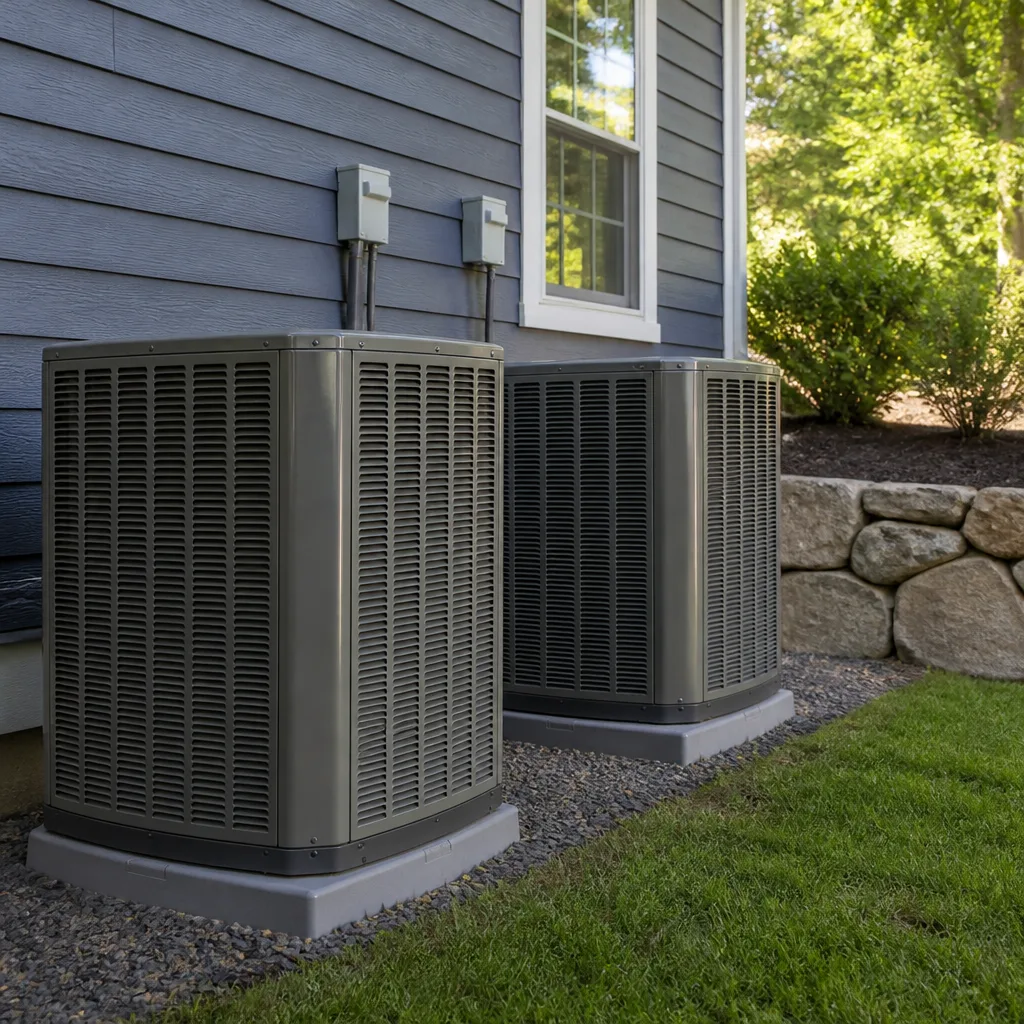 Heat pumps
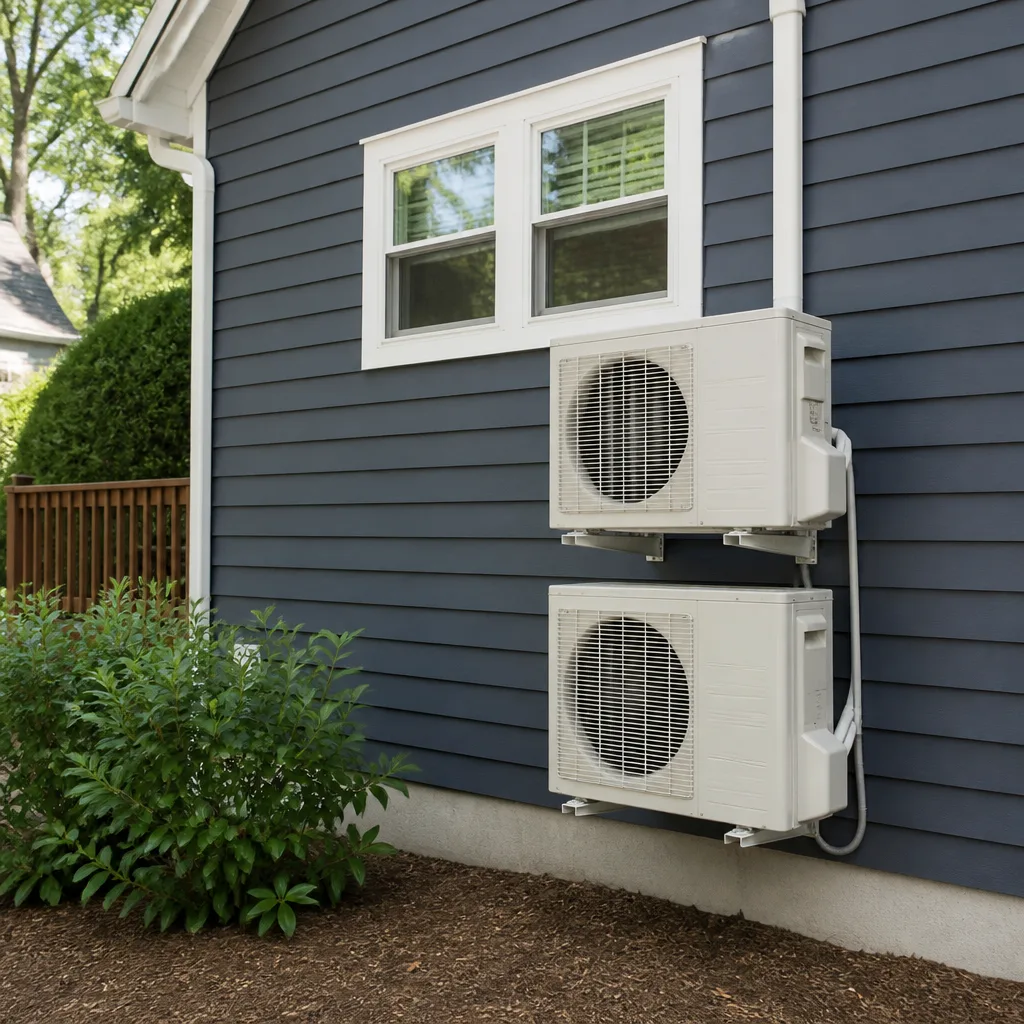 Ductless mini splits
 Carrier
 Trane
Trane Goodman
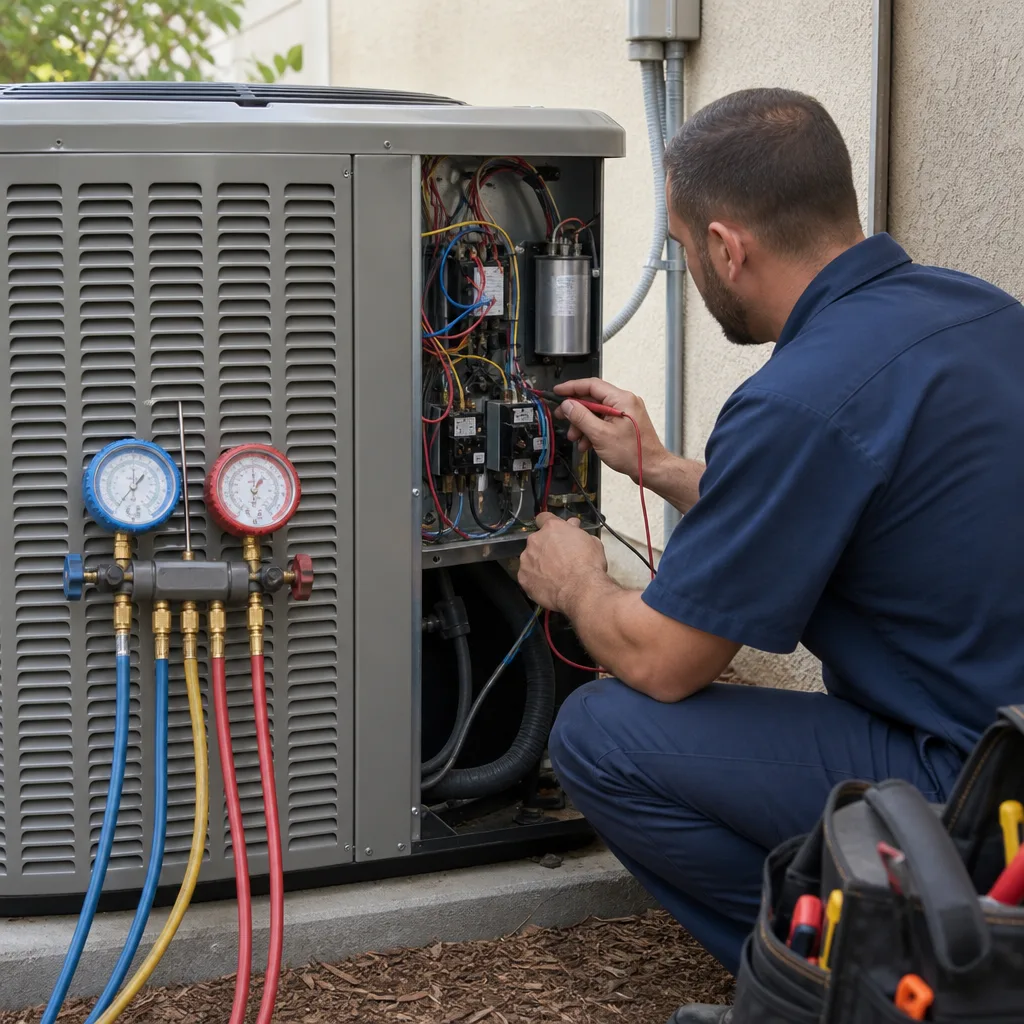
Seasonal tune-up and full diagnostic on your Carrier, Trane, or Goodman system - readings shown to you before any repair is proposed
Diagnosis first, numbers second - you approve the repair price before a single part goes in.
Get your free estimateThe Complete Guide to HVAC in Orlando
The average Orlando home runs its air conditioner roughly 2,800 hours a year. That’s nearly double what a typical house in Ohio or Pennsylvania logs, and it changes everything about how HVAC equipment should be sized, maintained, and replaced here. Most national HVAC guides are written for climates where systems get a four-month winter break. Orlando doesn’t work that way, and following generic advice is how homeowners end up with undersized units, $600 summer electric bills, and systems that die at year nine instead of year fifteen. This guide covers what actually matters for HVAC in Orlando: humidity-first sizing, local utility rebates, Florida code requirements, and how to read a contractor’s quote like someone who knows what they’re looking at.
Quick Answer
HVAC in Orlando is defined by one number: 2,800 cooling hours per year. That runtime means proper sizing via a Manual J load calculation is non-negotiable, humidity control matters as much as temperature, and maintenance needs to happen twice a year, not once. A well-sized, well-maintained system in Orlando should last 12 to 15 years and cost between $4,500 and $9,500 to replace, depending on efficiency and brand.
Styles & brands we work with
Table of Contents
- Why Manual J Load Calculations Matter More in Orlando Than Anywhere Else
- The Hidden Cost of Humidity: Dew Points, SEER Ratings, and Undersized Equipment
- Orlando’s Real Maintenance Schedule: Why Once a Year Isn’t Enough
- What HVAC Systems Actually Cost in Orlando: Equipment, Labor, and Real Price Ranges
- OUC and Duke Energy Rebates: Real Dollars Available in 2025 and 2026
- Florida Building Code and HVAC: What Homeowners Find Out at Resale
- How to Read an HVAC Quote Line-by-Line: The Five Omissions to Watch For
- Which Brands Hold Up in Orlando’s Climate: Carrier, Trane, and Goodman Compared
Why Manual J Load Calculations Matter More in Orlando Than Anywhere Else
A Manual J load calculation measures exactly how much cooling a specific house needs. It accounts for square footage, window orientation, insulation levels, ceiling height, number of occupants, and local climate data. In most of the country, a contractor can guess based on square footage and get close enough. In Orlando, that shortcut fails badly.
Here’s why: a rule-of-thumb estimate assumes a fairly standard cooling load per square foot. But Orlando homes face a unique combination of high solar gain, relentless humidity, and long runtimes. A south-facing living room with original single-pane windows in Conway can need 40% more cooling than the same square footage facing north in Winter Park. Skip the calculation, and you either get an oversized system that short-cycles (turning on and off constantly, never running long enough to pull moisture from the air) or an undersized system that runs nonstop from June through September and still can’t hold 75 degrees on a 95-degree afternoon.
We’ve walked into homes in Dr. Phillips and College Park where the previous contractor sized by the old “500 square feet per ton” rule. The result is always the same: rooms that never feel dry, electric bills $80 to $150 higher than they should be, and compressors that fail years early because they never get a break. When you’re getting quotes for a new system or a full replacement, ask one question: “Will you run a Manual J calculation?” If the answer is anything other than yes, get another quote.
The Hidden Cost of Humidity: Dew Points, SEER Ratings, and Undersized Equipment
Orlando’s summer dew points routinely sit in the mid-70s. That’s the technical way of saying the air is heavy with moisture, and your AC has two jobs: lower the temperature and strip that humidity out. Most national HVAC advice focuses almost entirely on temperature, because in dry climates that’s all that matters. In Orlando, a system that cools the air but doesn’t dehumidify properly leaves you with a house that feels clammy at 74 degrees and grows mold in corners you never check.
This is where SEER ratings get misleading. SEER, or Seasonal Energy Efficiency Ratio, measures cooling output per unit of electricity. A higher SEER number means lower monthly operating costs, but the rating assumes a typical national mix of conditions. What SEER doesn’t tell you is how well the system handles latent heat, which is the energy required to condense moisture out of the air. Two 16 SEER units can perform dramatically differently on a muggy Orlando afternoon depending on the indoor coil design, airflow settings, and whether the contractor properly matched the condenser to the air handler.
The practical takeaway: in Orlando, don’t buy a system based on SEER alone. Look for a contractor who sets the blower speed for humidity control, not just temperature. A slightly lower airflow setting can remove 20 to 30% more moisture per cycle, which means you can run the thermostat a degree or two higher and feel just as comfortable. That’s the difference between a $280 August electric bill and a $210 one, and it’s not something you’ll find on any spec sheet.
And about sizing: a system that’s technically “correctly sized” for a climate like Ohio is often undersized for Orlando because the load calculation didn’t account for how much sensible and latent heat this climate throws at a house. That’s another reason the Manual J matters so much, and another reason to hire someone who does HVAC work in Central Florida every day.
Orlando’s Real Maintenance Schedule: Why Once a Year Isn’t Enough
The standard national recommendation is one maintenance visit per year: a spring AC tune-up. That recommendation assumes your system runs for about four months, then sits dormant for the rest of the year. In Orlando, that advice is wrong.
A system that runs 2,800 hours a year needs two full inspections annually. Here’s the maintenance schedule we recommend for Orlando homeowners, based on how the equipment actually runs here:
- Late February or early March: Full cooling system inspection. Clean the outdoor condenser coil, check the refrigerant charge, measure the temperature drop across the evaporator coil, tighten electrical connections, and inspect the drain line. Orlando’s oak pollen and spring debris load is heavy, and a dirty condenser coil can cut efficiency by 20% by May.
- August or September: Mid-season check. Confirm the system is holding temperature and humidity, check the condensate drain for algae buildup (a constant battle in Orlando’s humidity), and verify the system isn’t short-cycling. This is when small problems show up before they become September breakdowns.
- October: If you have a heat pump or furnace, this is when you inspect the heating function. Orlando’s winters are mild, but a cold snap in January is the wrong time to discover your heat strips failed.
- Ongoing: Change filters every 30 days during peak summer, every 60 days in shoulder seasons. A clogged filter in a system running 14 hours a day will drive your energy bill up fast and reduce airflow across the coil, which compounds the humidity problem.
The one thing you should never skip is the condensate drain line. Orlando’s combination of constant cooling, high humidity, and warm temperatures creates ideal conditions for algae to grow inside the PVC drain line. When that line clogs, the drain pan overflows, and water ends up on your ceiling or floor. Regular drain line flushing with a mild cleaning solution is cheap insurance against a $1,500 ceiling repair.
What HVAC Systems Actually Cost in Orlando: Equipment, Labor, and Real Price Ranges
HVAC costs in Orlando skew slightly higher than the national average for labor, but the bigger variable is the equipment itself. Here are the real price ranges we see across the Orlando market for full system replacements, including installation:
| System Type | Equipment Cost | Installed Price Range | Typical Lifespan in Orlando |
|---|---|---|---|
| 14 SEER single-stage AC + air handler | $2,800 – $3,800 | $4,500 – $6,200 | 10 – 12 years |
| 16 SEER single-stage AC + air handler | $3,500 – $4,800 | $5,500 – $7,500 | 12 – 14 years |
| 17 SEER two-stage AC + variable air handler | $5,000 – $6,800 | $7,500 – $9,800 | 14 – 16 years |
| 18 – 20 SEER variable-speed system | $6,500 – $8,500 | $9,500 – $12,500 | 15 – 18 years |
| Heat pump (heating + cooling) | $4,500 – $7,000 | $6,500 – $9,500 | 12 – 15 years |
These are equipment-only and installed ranges for the Orlando metro as of late 2025. A few things drive the final number. The distance from the air handler to the condenser matters (longer line sets cost more in copper and labor). Second-story installations in places like Baldwin Park or Thornton Park cost more than ground-level closet installs. And whether your existing ductwork is in good shape or needs partial replacement can add anywhere from $800 to $3,000.
For repairs, most AC repairs in Orlando run between $150 and $500 depending on the part. A capacitor replacement (a small cylinder that helps the compressor and fan motors start) typically costs $150 to $250 installed. A contractor or blower motor replacement runs $400 to $900. A refrigerant recharge (topping off the coolant your system needs to produce cold air) is $200 to $600, depending on the refrigerant type: R-410A systems are cheaper to top off than older R-22 systems, which are being phased out and now cost $150 or more per pound if you can find it at all.
When you’re comparing quotes, ask each contractor to break down equipment cost, labor, permit fees, and any ductwork modifications separately. A quote that just says “$8,200 total” tells you nothing about whether you’re comparing apples to apples.
OUC and Duke Energy Rebates: Real Dollars Available in 2025 and 2026
Orlando homeowners are split between two major utilities: Orlando Utilities Commission (OUC), which serves most of the city of Orlando and parts of Orange County, and Duke Energy, which serves much of the surrounding metro including areas like Winter Garden, Apopka, and parts of Seminole County. Both offer rebate programs that can meaningfully offset the cost of new equipment, and most homeowners never apply because their contractor doesn’t mention it.
Here’s what the programs look like for 2025 and 2026, based on utility filings and program docs:
- OUC offers rebates for qualifying high-efficiency AC and heat pump replacements. Depending on the SEER rating and whether the system qualifies as a “high-performance” install, rebates range from roughly $200 to $600 per system. OUC also offers a $50 to $100 rebate for smart thermostat installation when paired with a qualifying system.
- Duke Energy’s residential AC rebate program typically pays between $150 and $650 for qualifying high-efficiency replacements. The exact amount depends on SEER rating, system type, and whether the contractor completes Duke’s required verification paperwork.
- Both utilities occasionally offer seasonal bonus rebates during spring and fall, when demand slows. It’s worth asking your contractor whether any bonus is active, because these can add $100 to $200 on top of the standard amount.
The catch, and the reason many homeowners miss out, is that the rebate must be applied for by the contractor or the homeowner at the time of installation, with the right documentation. If your contractor doesn’t mention rebates, that’s a signal they may not be doing the paperwork. Ask directly: “Do you handle the OUC or Duke rebate paperwork for this install?” Any reputable Orlando HVAC company should say yes without hesitation.
Florida Building Code and HVAC: What Homeowners Find Out at Resale
The Florida Building Code has specific requirements for HVAC work that rarely come up during a normal installation conversation. They come up later, when you’re selling the house and a home inspector flags an unpermitted system.
Here are the code requirements that affect Orlando HVAC work, in plain English:
- Permits are required for equipment replacement. Most HVAC installations in the City of Orlando and Orange County require a mechanical permit. The permit ensures the work was done to code and registers the new equipment with the local building department. Unpermitted work can delay a home sale or trigger a fine if discovered during a permit audit.
- Outdoor condensers must meet hurricane wind-load standards. Florida Building Code requires outdoor equipment to be anchored to code for wind resistance. In Orlando, that’s typically a 130 mph design wind speed depending on the exact location. An unanchored condenser can shift in a tropical storm and damage refrigerant lines.
- Drain lines must terminate correctly. The condensate drain from your indoor air handler can’t just dump water anywhere. Code requires it to terminate in a visible location such as an exterior wall or a utility sink, and secondary drain lines must have a shutoff switch to prevent overflow.
- Ductwork in unconditioned attics must meet insulation requirements. Orlando attics hit 130 degrees in the summer, and under-insulated ducts lose cooling before it ever reaches your vents. The current code requires R-8 insulation on ducts in unconditioned spaces. Older homes in neighborhoods like Colonialtown or Delaney Park may have R-4 or even bare metal ducts, which is a significant energy loss.
When you’re replacing a system, ask the contractor to pull the permit and handle the inspection. A company that offers to skip this “to save you money” is not doing you a favor, they’re creating a problem you’ll find out about when you least want to.
How to Read an HVAC Quote Line-by-Line: The Five Omissions to Watch For
Most Orlando homeowners compare two or three HVAC quotes side by side and focus on one number: the bottom line. That’s exactly backwards. The important information is in the line items, and local contractors routinely omit five things that later show up as surprise charges or performance problems.
Here’s how to read a quote, and what to look for:
- The equipment model numbers. A quote that says “16 SEER Trane system” without a specific model number is incomplete. Trane makes a dozen different 16 SEER systems with different features, coil types, and warranties. Any legitimate quote will list the exact condenser model, air handler model, and coil model. If it doesn’t, ask why.
- The line set. This is the copper tubing that connects the indoor air handler to the outdoor condenser. Orlando quotes often omit the line set replacement or assume the existing one is reusable. If your existing line set is more than 10 years old or a different diameter than the new system requires, reusing it can cause premature compressor failure. Ask whether the line set is included, and if not, why.
- The thermostat. Whether a new thermostat is included or you’re keeping your existing one should be called out. If you’re installing a two-stage or variable-speed system, your old single-stage thermostat may not be compatible. A $300 thermostat upgrade is worth knowing about before the install day, not after.
- The permit and inspection. As covered above, mechanical permits are required in Orlando. Some contractors leave the permit fee off the quote to look cheaper, then bill you for it later. Others skip the permit entirely, which is worse. The quote should state clearly: “Permit fee: $X, included.”
- The condensate drain treatment. A $30 line item that often gets skipped. In an Orlando summer, a condensate drain can clog within months of a new install. A proper installation includes drain line flushing and a drain pan treatment. If the quote doesn’t mention it, the contractor is skipping a step that will cost you later.
At Halden Heating and Air Orlando, our quotes include every one of these line items, with a written price delivered before any work starts. The Relay Visibility Guarantee is exactly what it sounds like: you see the full scope and the full price before we touch a screwdriver. Our AC installation process in Orlando walks through every detail before you commit.
Interested in a more detailed breakdown of what goes into a quote? Our guide to AC repair pricing in Orlando covers the most common repair line items and what they should cost.
Which Brands Hold Up in Orlando’s Climate: Carrier, Trane, and Goodman Compared
We service all major brands, and homeowners constantly ask which one is “best.” The honest answer is that in Orlando’s climate, installation quality matters more than the brand sticker. A poorly installed Carrier will fail years before a properly installed Goodman, every time. That said, there are real differences in how these brands perform under Central Florida conditions.
Carrier builds equipment with strong humidity control on their higher-end variable-speed systems, and their Infinity line pairs well with whole-home dehumidification. Carrier parts are widely available in Orlando, which means faster repairs when something does fail. Expect to pay a premium for the brand name, but the higher-end equipment performs well in constant-runtime environments.
Trane has a reputation for durability, and their all-aluminum coils resist the corrosion that Orlando’s salty, humid air can cause on copper coils over time. Trane systems tend to cost slightly less than Carrier at the same efficiency level and have strong parts availability across Central Florida.
Goodman is the value option, and the brand has improved dramatically over the last decade. You get more efficiency per dollar with Goodman than with Carrier or Trane, and their warranties are generally comparable. The trade-off is that Goodman equipment is slightly louder on single-stage units and the fit and finish isn’t as polished. For a homeowner on a budget, a 16 SEER Goodman installed correctly will outperform a 16 SEER Carrier installed sloppily.
The thing to understand is that in Orlando, your system is going to run 2,800 hours a year regardless of brand. What kills compressors early here is almost never a manufacturing defect. It’s an undersized system that never cycles off, a clogged filter that starves the system of airflow, or a refrigerant charge that was never set correctly at installation. Those are installation issues, not brand issues.
One more thing: choosing a brand should come after you’ve chosen a contractor. The best installer in Orlando will tell you which brands they’re certified to service and which they recommend for your specific home, based on your ductwork, your square footage, and your budget. We’re certified to work on Carrier, Trane, Lennox, Goodman, Rheem, York, Daikin, Bryant, and American Standard systems, so our recommendations are based on what fits your house, not what we happen to have in the warehouse.
Common Mistakes to Avoid
- Skipping the Manual J calculation. Letting a contractor size your system by square footage alone is the single most common cause of premature compressor failure in Orlando. Insist on a load calculation, in writing, before you sign anything.
- Buying based on SEER alone. A high SEER rating on paper means less if the system isn’t set up for humidity removal. Ask about blower speed settings and latent heat performance, not just the efficiency number.
- Deferring maintenance until something breaks. In Orlando, a system running 2,800 hours a year accrues wear twice as fast as the national average. Skipping your spring and late-summer checks is a direct path to a September breakdown call.
- Ignoring the drain line. Condensate drain clogs are the most preventable source of water damage in Orlando homes. A $30 drain flush twice a year prevents a $1,500 ceiling repair.
- Accepting a quote without model numbers. If the quote doesn’t list the exact condenser, air handler, and coil models, you can’t compare quotes or know what you’re actually buying. Walk away.
- Forgetting about the rebate. OUC and Duke Energy rebates add up to hundreds of dollars, and most contractors won’t mention them unless you ask. Ask specifically: “What rebate do I qualify for with this system?”
- Skipping the permit. Unpermitted HVAC work in Orlando creates title problems at resale and can indicate the contractor cut corners elsewhere. Always require a permit and inspection.
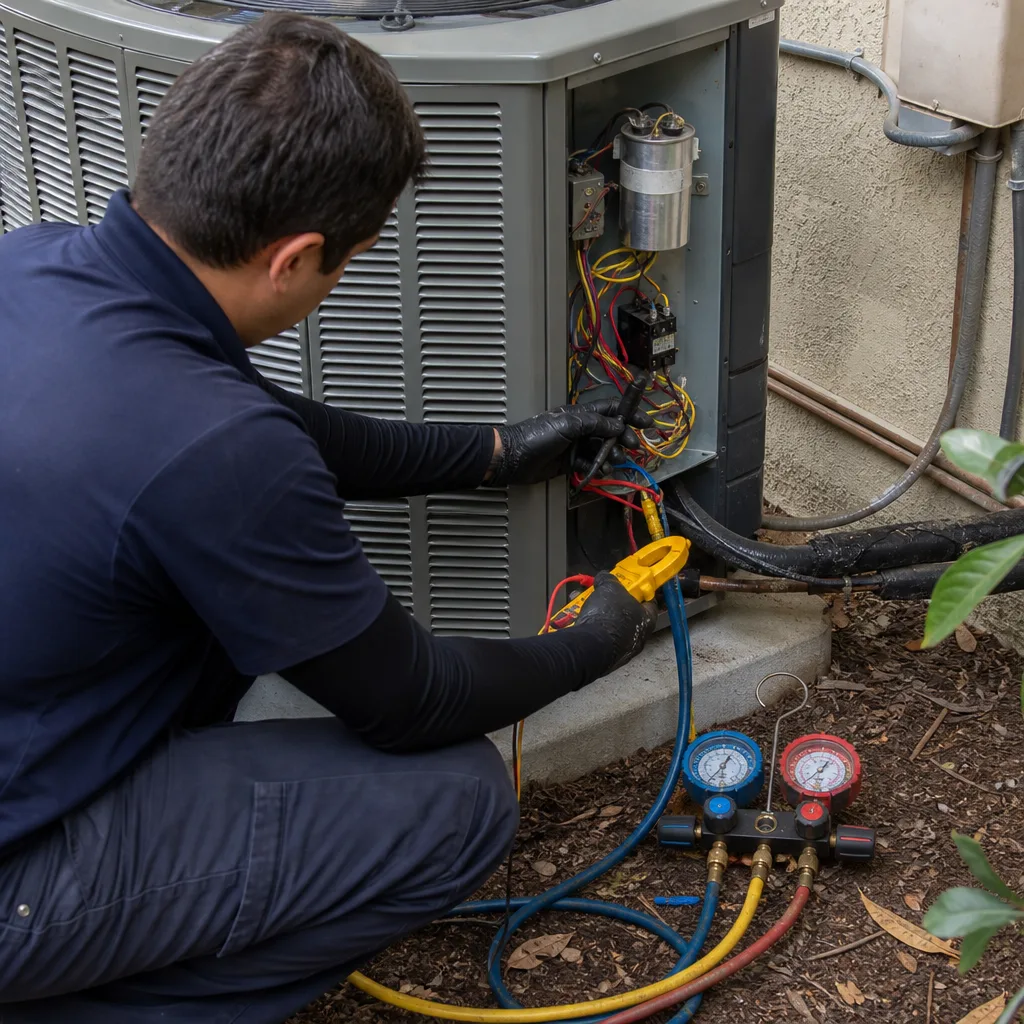
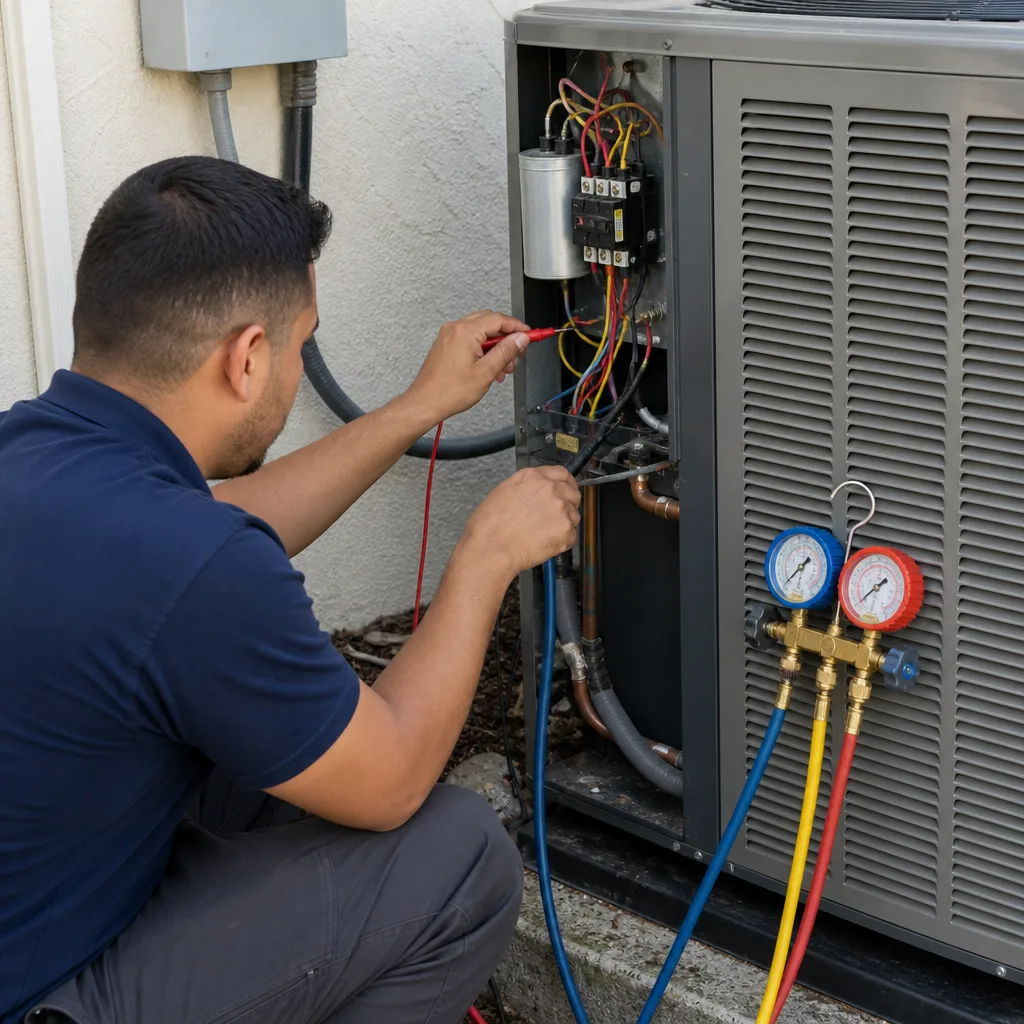
See the difference
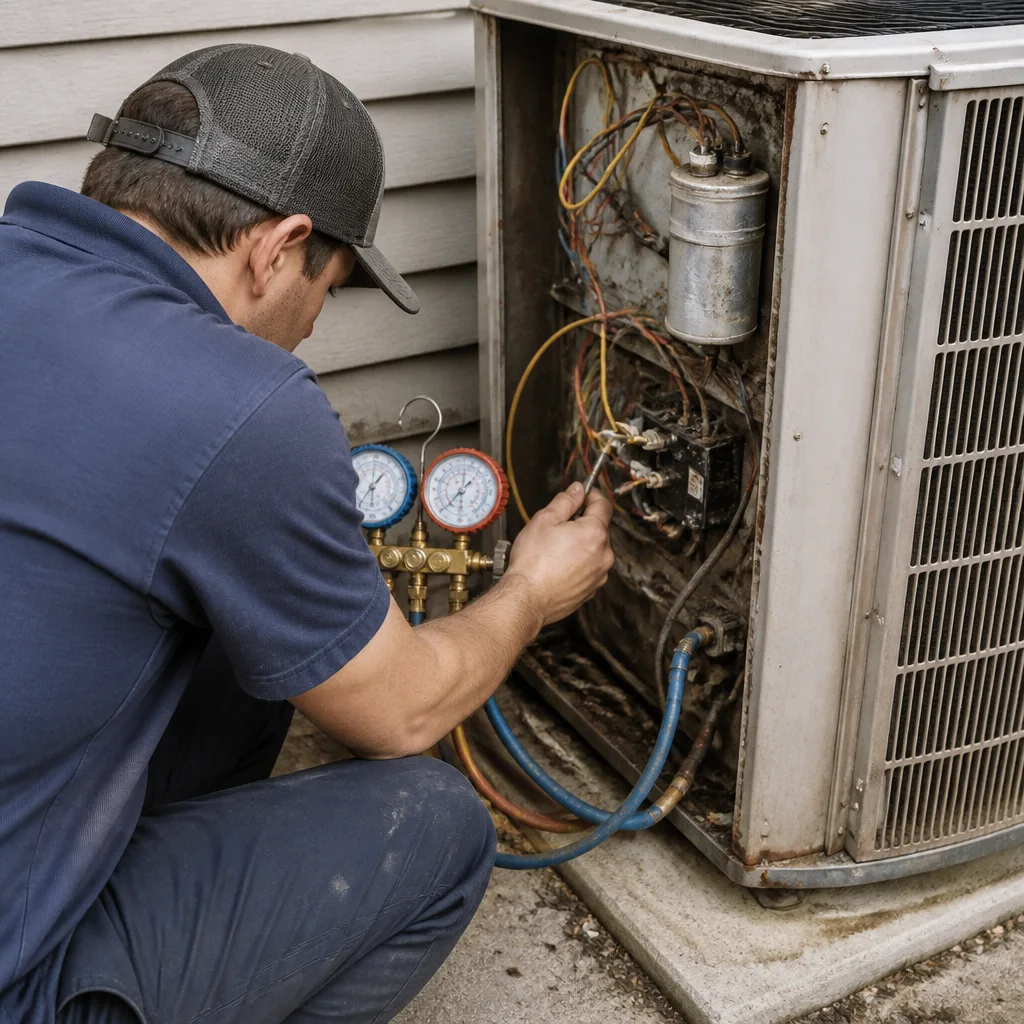 Before
 After
After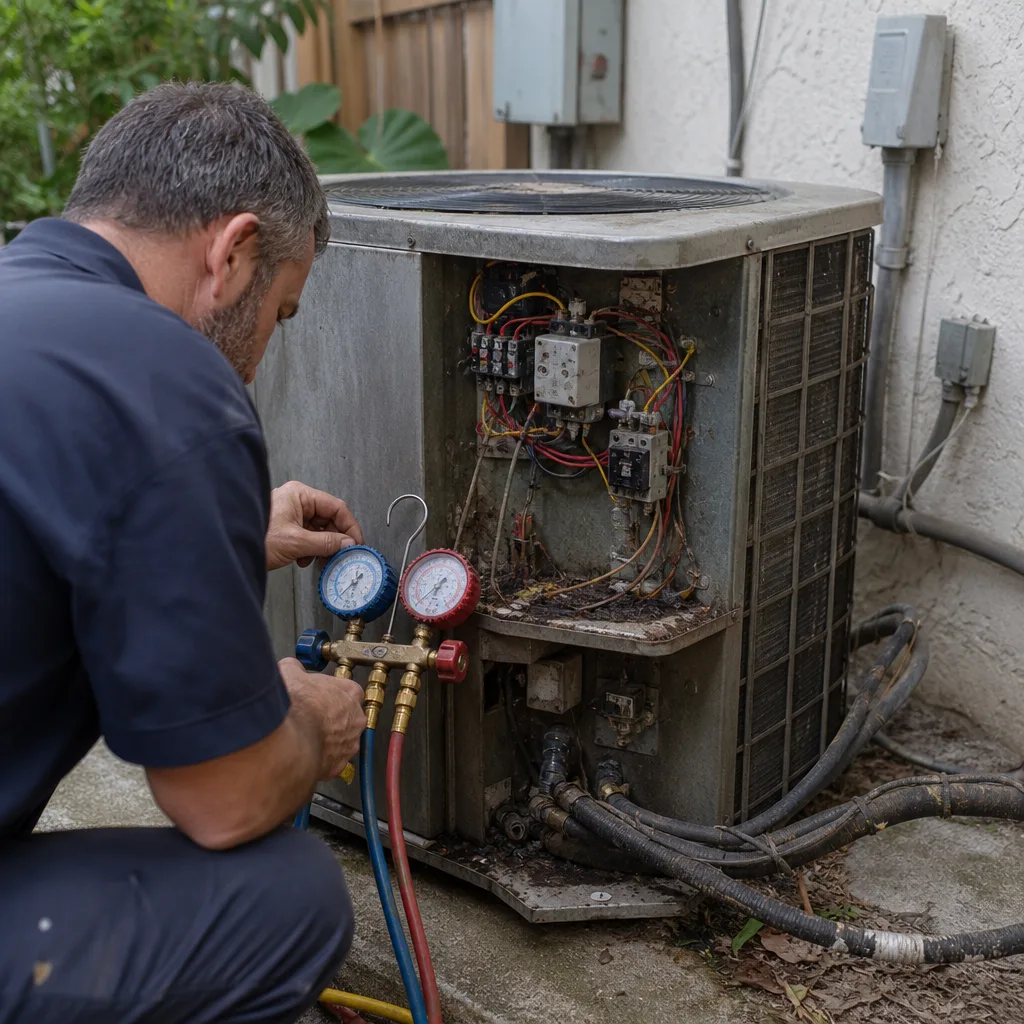 Before
 After
After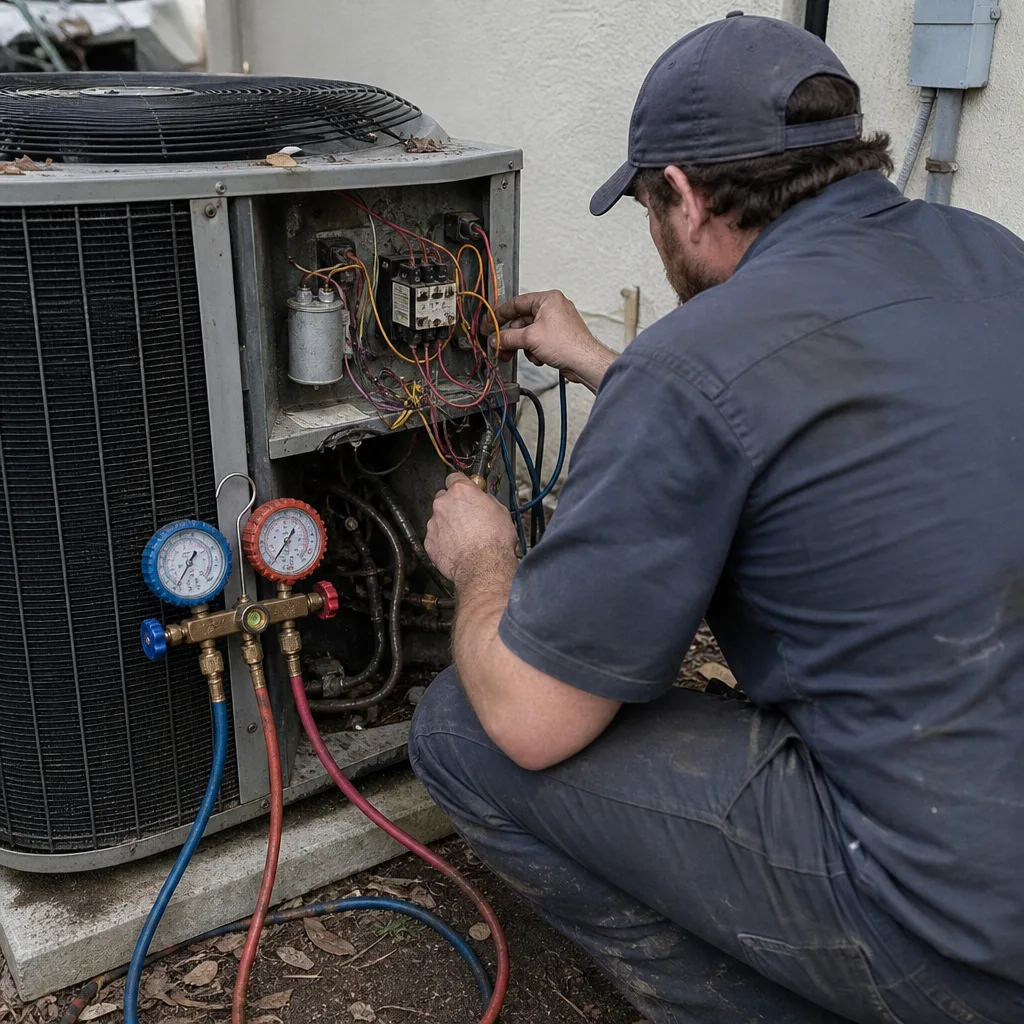 Before
 After
AfterWhen to Call a Professional
HVAC systems involve high-voltage electrical components, refrigerant that requires EPA certification to handle, and equipment that can cause serious injury if serviced improperly. If your system is blowing warm air, making unusual noises, leaking water, or running constantly without reaching the thermostat setting, it’s time to call a professional. Refrigerant handling in particular is regulated and requires specialized training and equipment, and attempting a DIY fix can damage a $4,000 compressor beyond repair. Halden Heating and Air Orlando offers free estimates in Orlando, call (850) 695-3178 and we’ll send a background-checked technician with a live arrival time you can track to your door. No four-hour windows, no surprise pricing at the doorstep.
Frequently Asked Questions
Twice a year: once in late February or early March before the hot season starts, and once in August or September mid-season. Orlando systems run 2,800 hours annually, roughly double the national average, and a single annual visit leaves long stretches where small problems go undetected. Halden Heating and Air Orlando offers maintenance plans with both visits included. Call (850) 695-3178 to schedule.
A 16 SEER system is the sweet spot for most Orlando homes, balancing upfront cost against long-run energy savings. Minimum federal standards now require 15 SEER for new installations in the Southeast, and anything above 17 SEER takes 8 to 10 years to pay back the premium unless you’re running your system more than 3,000 hours a year.
Expect 10 to 15 years for a properly sized and maintained system in Orlando. The constant runtime wears components roughly twice as fast as in northern climates, so a 20-year lifespan that’s common in Ohio is unrealistic here. If your system is past year 12 and repair costs are stacking up, replacement is usually the better financial call.
Full system replacements involve a load calculation, equipment ordering, permit pulling, and a scheduled installation date. That’s not a same-day process, and any company promising same-day replacement is cutting corners. What you should expect is a written fixed price, a set install date, and all permit and rebate paperwork handled for you. AC installation in Orlando with our team includes all three.
Use the 5,000 rule: multiply the repair cost by the system’s age. If that number exceeds $5,000, replace. A $600 repair on a 10-year-old system equals $6,000, which is replacement territory. Under $5,000, repair is usually the better short-term call. Our AC repair page for Orlando breaks down common repair costs to help you decide. Call (850) 695-3178 for a free estimate either way.
Most Orlando homes don’t need a traditional gas furnace, since our heating season lasts only 6 to 8 weeks. A heat pump handles both cooling and mild heating efficiently and is usually the right choice. If you do have a furnace, it still needs annual inspection, and furnace repair in Orlando is available year-round for those occasional January cold snaps.
The Bottom Line
HVAC in Orlando is a different animal than anywhere else in the country. The system runs nearly twice the national average, humidity loads demand attention that dry-climate advice ignores, and the margin for error on sizing is razor thin. The homeowners who get the most from their systems are the ones who insist on Manual J calculations, stay on a twice-yearly maintenance schedule, require permits in writing, and read every line of the quote before signing. The ones who don’t end up paying for the same system twice. If you’re in Orlando and want a quote that includes every line item, a written price before any work starts, and a 365-Day Done Right Promise on every completed job, call (850) 695-3178.
Written by Andre Fuller, Owner at Halden Heating and Air Orlando, serving Orlando since 2004.