
Last updated October 16, 2026
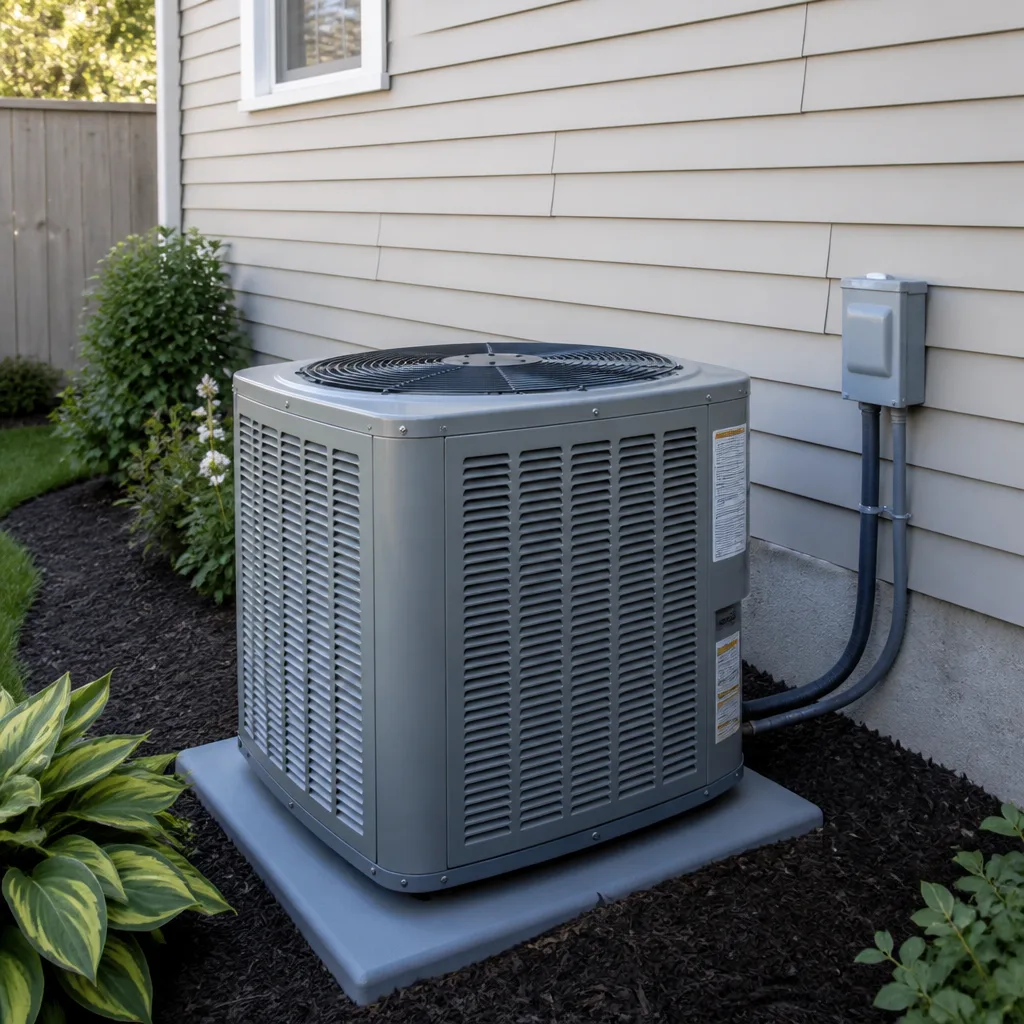 AC repair
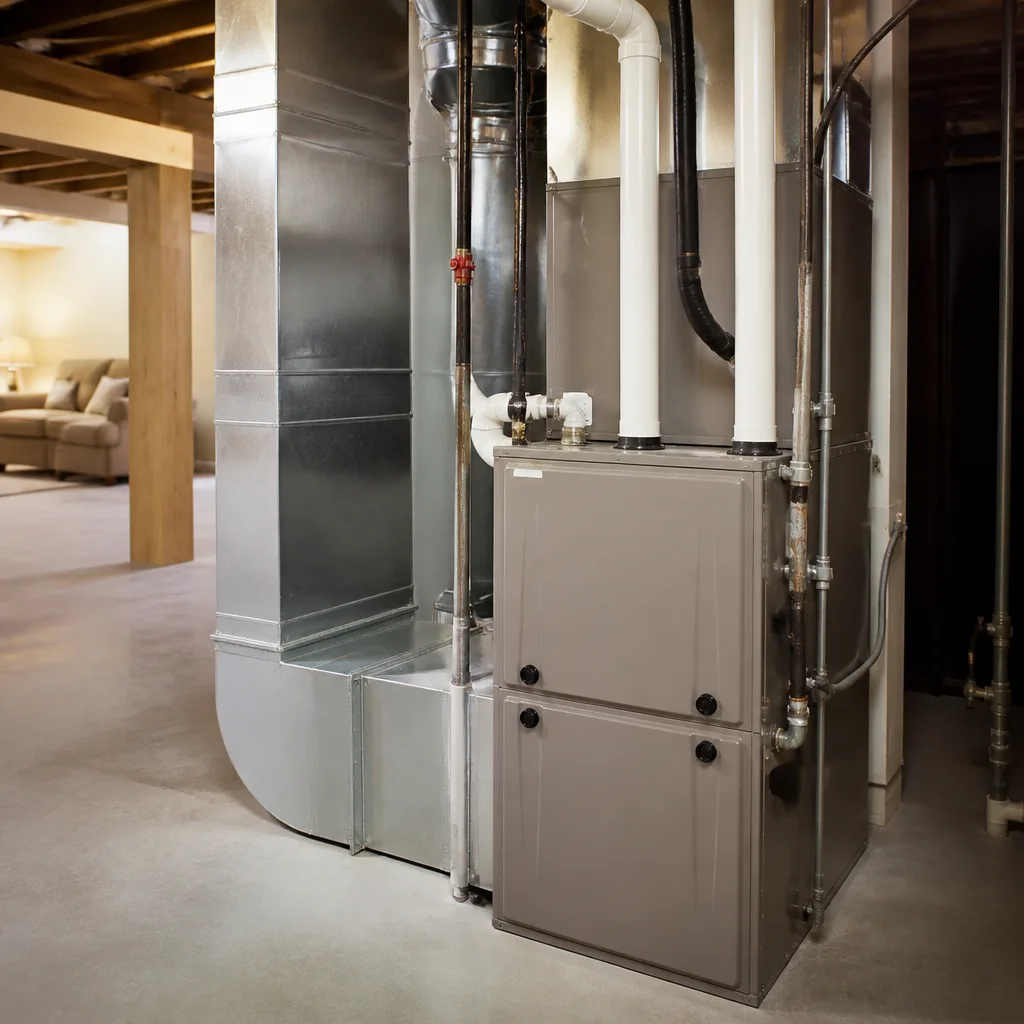 Furnace & heating
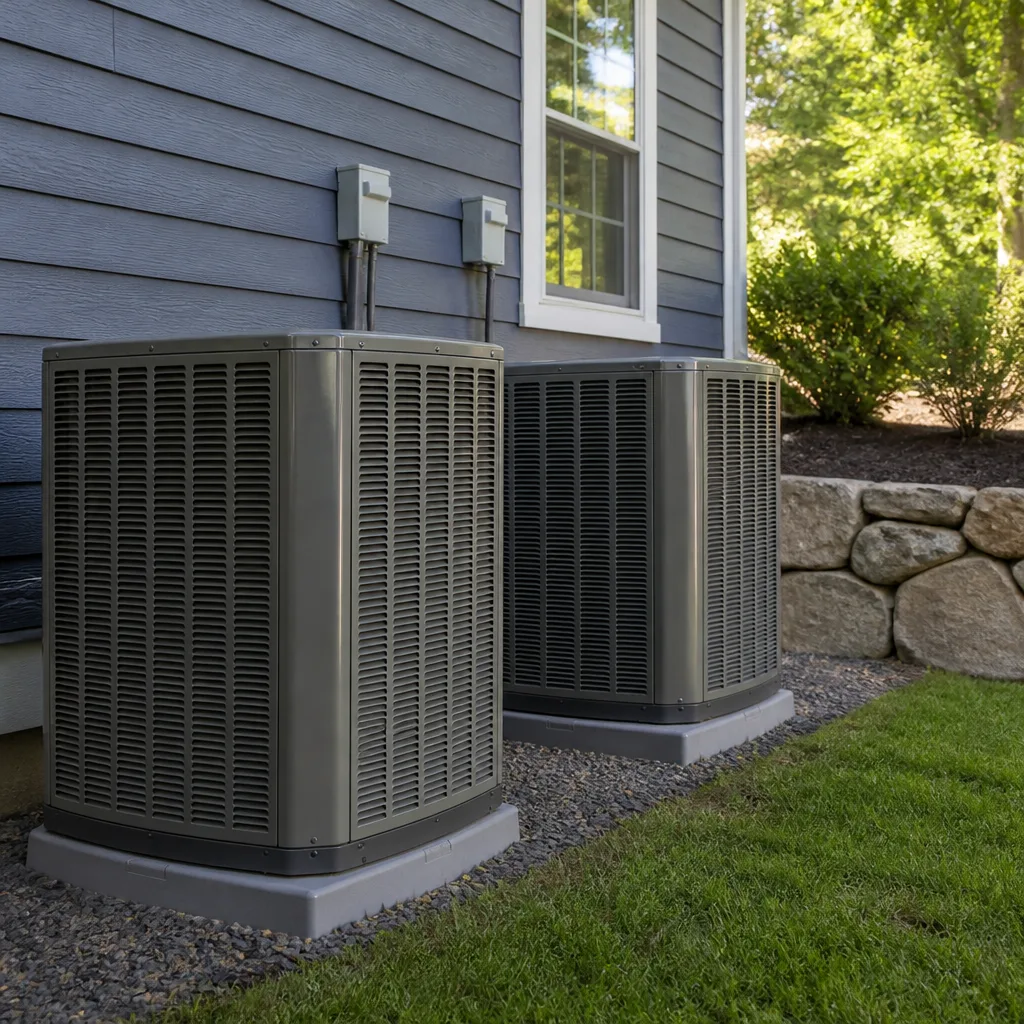 Heat pumps
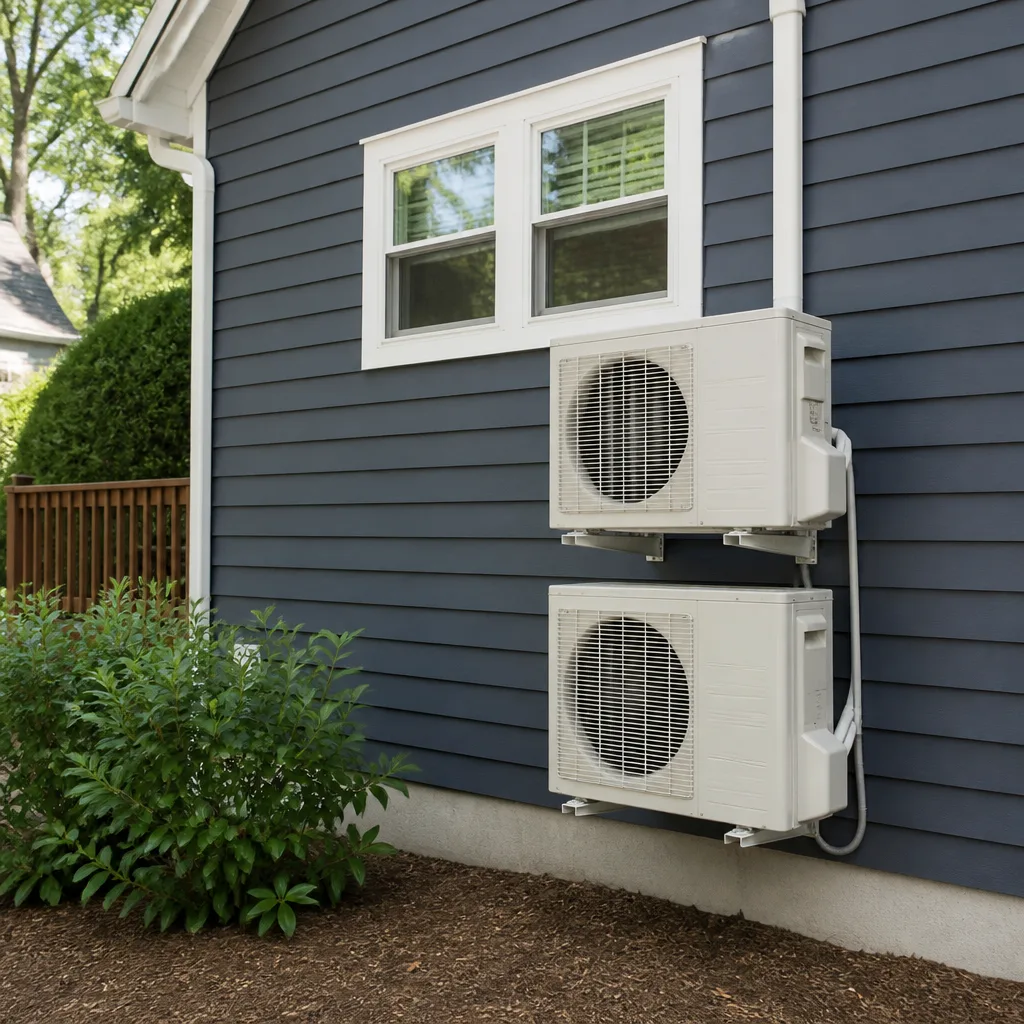 Ductless mini splits
 Carrier
 Trane
Trane Goodman
Seasonal tune-up and full diagnostic on your Carrier, Trane, or Goodman system - readings shown to you before any repair is proposed
Diagnosis first, numbers second - you approve the repair price before a single part goes in.
Get your free estimateSeasonal HVAC Care for Orlando: Year-Round Homeowner’s Guide
Here’s the thing most national HVAC guides get wrong about Orlando: we don’t have a heating season and a cooling season. We have a brutal, six-month cooling marathon, a short stretch where nothing runs much, and a winter that occasionally throws a 38-degree night at a system that hasn’t heated anything in ten months. The homeowners who treat January like a maintenance dead zone are the same ones calling us in July when their compressor gives out on a 96-degree afternoon. This guide walks you through the actual rhythm of Central Florida HVAC care, organized around the climate we actually live in, not a calendar written for Ohio. For a broader overview, see The Complete Guide to HVAC in Orlando. By the end, you’ll know exactly what to do in each of Orlando’s four climate phases, what you can safely check yourself, and when to call us before a small issue becomes a $4,000 replacement.
Styles & brands we work with
Quick Answer
Orlando HVAC maintenance works best when you schedule it around four climate phases rather than the traditional four seasons: (1) a February-to-April pre-summer commissioning and tune-up, (2) May-through-October peak-load monitoring with monthly filter and drain checks, (3) August-through-October storm-season condenser care, and (4) December-through-February heating-cycle checks during the off-season window when most AC contractors are actually available. The highest-value move is a professional tune-up during the winter off-season, which catches cooling problems early, before the first 90-degree week hits. For a full breakdown of what to check, see our AC Repair Maintenance Checklist for Orlando Homeowners.
Table of Contents
- Understanding Orlando’s Four Climate Phases
- Pre-Summer Commissioning: February Through April
- Peak-Load Monitoring: May Through October
- Storm-Season Care: August Through October
- The Winter Maintenance Window: December Through February
- Using Your Utility Bill as a Performance Benchmark
- Indoor Air Quality and Orlando’s September Mold Spike
- Common Mistakes to Avoid
- When to Call a Professional
- Frequently Asked Questions
- The Bottom Line
Understanding Orlando’s Four Climate Phases
Orlando’s climate follows a pattern that anyone who’s lived here for a full year recognizes: long, hot, humid summers; a short and often messy storm season; a mild and occasionally chilly winter; and a brief, lovely stretch in early spring when nothing much runs at all. Your HVAC system doesn’t care what month the calendar says. It responds to outdoor temperature, humidity, and runtime. Understanding these four phases is the foundation of a smart maintenance rhythm, because the task that matters most changes depending on where we are in the cycle.
Phase 1: The Cool-Down Shoulder (November through February). Daytime highs settle into the 70s, nights dip into the 50s, and your AC might run only a few hours per day, if at all. This is the lowest-stress period for your system and the smartest time to schedule maintenance, because our schedule is open and we can actually spend time inspecting your equipment instead of rushing between emergency calls.
Phase 2: The Pre-Summer Ramp (March through April). Temperatures climb into the 80s, and your AC starts working daily again. This is the commissioning window, the time to verify your system is ready for what’s coming, before the heat arrives in force.
Phase 3: Peak Cooling Season (May through October). This is the marathon. Highs in the 90s, humidity that makes the air feel like a wet blanket, and your system running 12 to 16 hours a day, often more. This phase accounts for roughly 70 percent of your annual cooling energy use and nearly all of the wear-and-tear that leads to mid-summer breakdowns.
Phase 4: Storm Season Overlap (August through October). This phase runs concurrently with peak cooling, but it adds a new threat: tropical storms, hurricanes, afternoon thunderstorms, lightning strikes, and wind-driven debris. Your outdoor condenser takes the brunt of it.
Here’s the key insight from our two decades in Orlando: the homeowners who schedule around these phases, not around a generic “spring and fall” calendar, have measurably fewer mid-summer breakdowns. They also pay less over time, because wear-related failures get caught during the cheap windows instead of the expensive ones.
Pre-Summer Commissioning: February Through April
Think of pre-summer commissioning as a dress rehearsal before the big show. You want to find out in March that your refrigerant is low or your capacitor is weak, not in July. The goal is simple: confirm your system can handle a 95-degree day, catch any wear that’s accumulated since last fall, and make sure everything is clean enough to run efficiently when the humidity arrives.
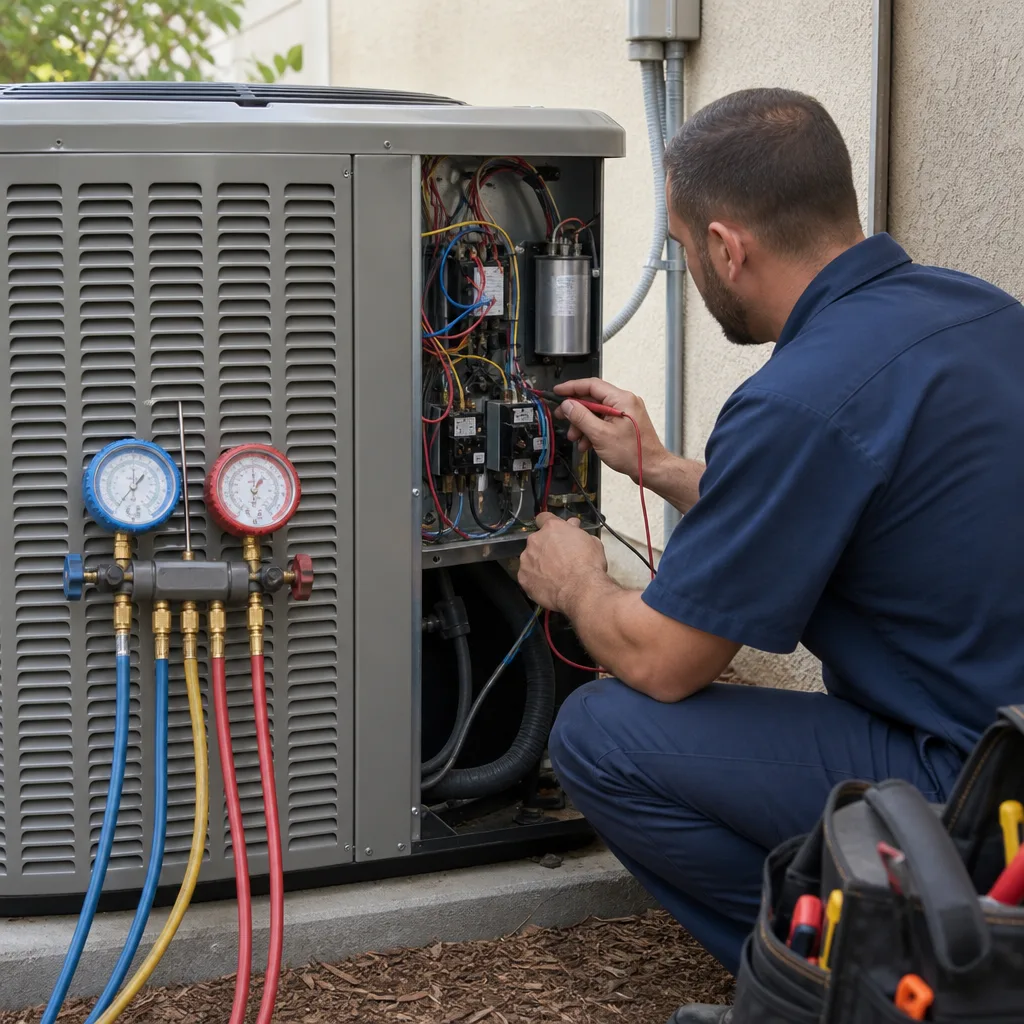
Pre-summer commissioning in Orlando typically costs between $89 and $200 for a standard tune-up, depending on the level of inspection and what needs cleaning. Here’s what a proper commissioning should include:
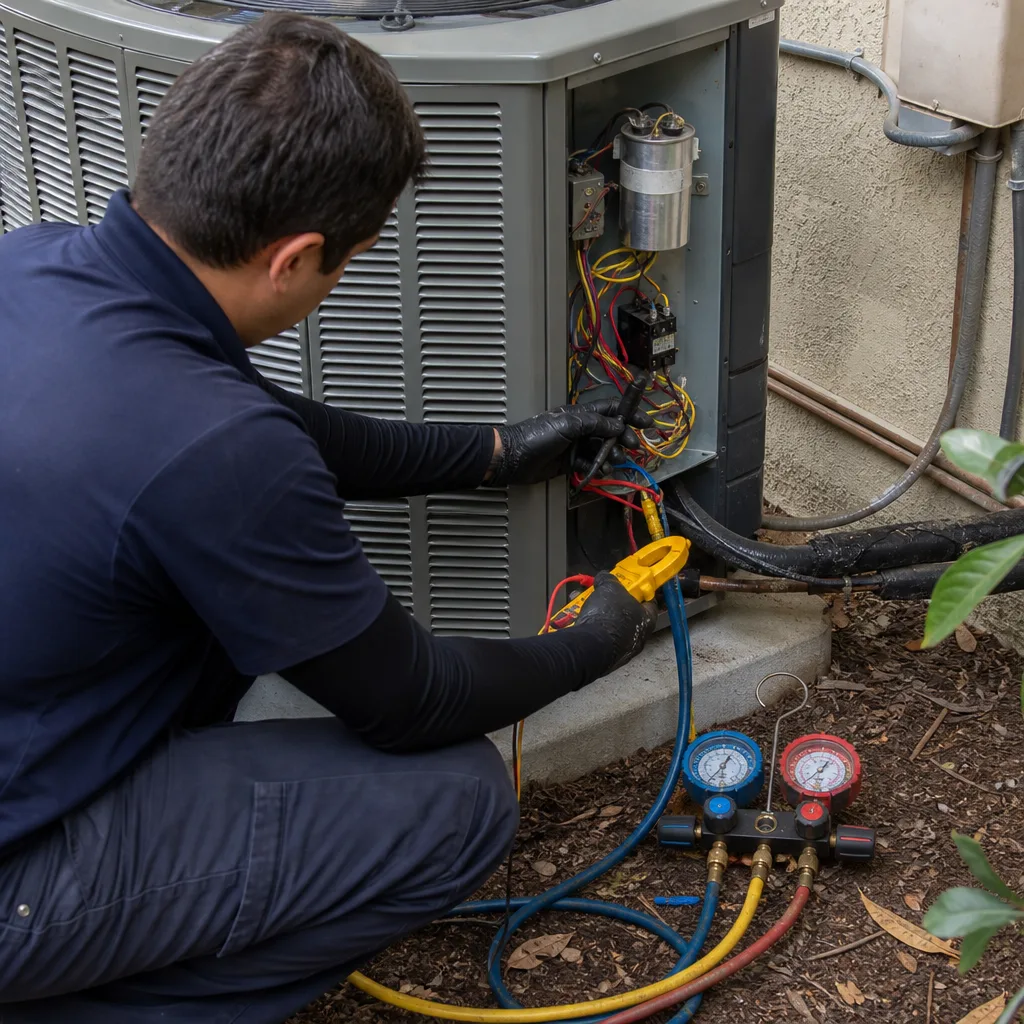
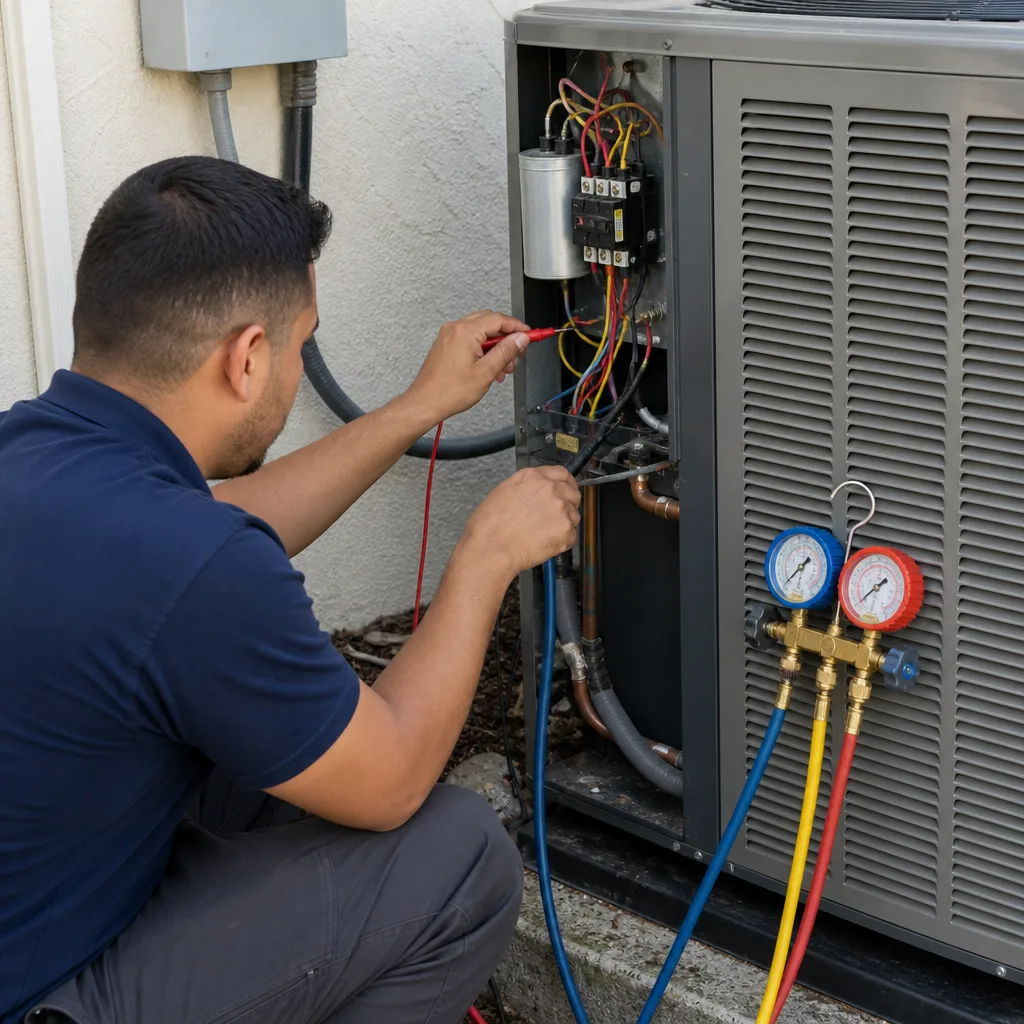
- Refrigerant charge verification. A technician checks the refrigerant level (the coolant that produces cold air) using gauges and adjusts it if needed. Low refrigerant reduces cooling capacity and efficiency by 10 to 20 percent, and it usually means there’s a small leak that will only get worse.
- Evaporator coil cleaning. The indoor coil, located above or below your air handler, gets coated with dust and biofilm during months of use. A dirty coil reduces heat transfer and can drop your system’s efficiency by 5 to 15 percent.
- Condenser coil cleaning. The outdoor unit’s coil gets clogged with grass clippings, cottonwood pollen, dust, and general Central Florida grime. Cleaning it restores proper airflow and reduces compressor strain.
- Capacitor and contactor inspection. These are the two electrical components most likely to fail under heavy use. A weakening capacitor is the single most common cause of mid-summer AC breakdowns in Orlando, and it’s a cheap fix in March compared to a no-cooling call in July.
- Drain line and condensate pump check. Orlando’s humidity produces gallons of condensation daily. A clogged drain line leads to water damage, ceiling stains, and system shutdowns. We flush the line and verify the pump works.
- Thermostat calibration and airflow check. We confirm the thermostat reads correctly and that airflow through the ducts and vents is what it should be.
If you’re doing this yourself, the best move is to schedule it in February or March, not April. April is when everyone else in Orlando wakes up and realizes summer is coming. That’s when AC repair in Orlando work spikes and appointment availability tightens. February is the sweet spot: your system isn’t running hard yet, the weather is pleasant, and you have scheduling flexibility.
One of the most common questions we hear in March is about system age. If your system is 12 to 15 years old and requires a major repair every year, pre-summer is the time to have a conversation about AC installation in Orlando before you’re forced into an emergency replacement in August. Planning a replacement in the spring gives you time to compare equipment options, take advantage of manufacturer rebates, and schedule the installation on your terms.
Peak-Load Monitoring: May Through October
Once peak cooling season arrives, your job shifts from proactive maintenance to monitoring and quick response. You’re not going to prevent every problem, but you can catch most of them early enough to avoid a full system shutdown on the hottest day of the year. Our technicians in Central Florida see the same patterns every summer, and most no-cooling calls could have been prevented with basic monthly observation.
The monthly checks that matter most during peak load:
- Change your air filter every 30 to 45 days. During peak season, your system moves millions of cubic feet of air through that filter. A clogged filter reduces airflow, makes the system work harder, increases energy use by 5 to 15 percent, and can cause the evaporator coil to freeze. In Orlando’s humidity, a frozen coil is common and often gets misdiagnosed as a refrigerant leak. If you have pets or live near construction, check the filter every two weeks.
- Check the drain line monthly. Look for water pooling around the indoor unit or water stains on the ceiling below the air handler. A slow-draining line is a warning sign that a full clog is coming. You can pour a cup of white vinegar down the drain line monthly to help prevent algae buildup, the most common cause of clogs in humid climates.
- Listen for new sounds. Your system will make noise, but you should know what normal sounds like. A new rattle, buzz, or hard start (a loud bang or thump when the compressor kicks on) is worth investigating sooner rather than later.
- Monitor your energy usage. A sudden spike in kWh on your utility bill that doesn’t correspond to warmer weather suggests the system is working harder than it should be. We’ll cover this in more detail below.
- Check temperature differential. On a hot day, the air coming from your supply vents should be 15 to 20 degrees cooler than the air entering the return vent. If it’s only 10 degrees cooler, something’s wrong, and it’s getting worse every week.
What to do when something seems off: The biggest mistake we see homeowners make in the summer is waiting. They notice the system is running constantly, or the house isn’t cooling past 78 degrees, or there’s a new noise, and they wait a week to see if it gets better. It doesn’t. By the time we’re called, a $200 capacitor replacement has become a $600 compressor repair. If your system is struggling in Orlando’s heat, call us sooner rather than later. Most of the time, a quick diagnostic visit during peak season costs less than $150 and prevents a full breakdown.
Storm-Season Care: August Through October
Orlando’s storm season overlaps with peak cooling, creating a tricky balance: your outdoor condenser needs protection from wind and debris, but it also needs to keep running because it’s 94 degrees outside. The most common mistake we see is homeowners covering their condenser unit with a tarp or fitted cover while it’s still running. This chokes airflow, overheats the compressor, and can destroy the unit in a matter of hours. Never run your AC with the condenser covered. Ever.
Before a storm approaches:
- Clear the area around the condenser. Move patio furniture, potted plants, trash cans, and anything else that could become wind-driven debris and damage the unit. A flying lawn chair can puncture the coil or bend the fan blades.
- Trim loose branches near the unit. Anything that hangs within a few feet of the condenser is a hazard in high winds.
- Check the unit’s anchor bolts. Condenser units should be secured to their concrete pad. Loose bolts allow the unit to shift or tip during high winds, potentially damaging the refrigerant lines.
- Consider a surge protector. Lightning and power surges are the most common cause of AC electrical damage during Orlando storms. A whole-home surge protector or a dedicated HVAC surge protector installed on the disconnect box is a few hundred dollars well spent. Power flickers alone can damage capacitors and control boards over time.
During the storm: Your AC can usually keep running through heavy rain. Rain hitting the condenser is fine, it’s designed for that. If you lose power, turn your thermostat to the OFF position, not just a lower temperature. When power is restored, the surge of electricity hitting a system that’s trying to start immediately is a common cause of compressor damage. Wait until power has been stable for 15 to 30 minutes before turning the system back on.
After the storm: Walk around the condenser and look for visible damage: bent fins, loose panels, debris that’s been blown inside, standing water around the unit. If the unit sat through flooding, have it inspected before restarting it. Water inside the electrical compartment is a fire hazard. If the system makes any unusual sound when it starts, or if it trips the breaker, shut it off and call us. These are signs of electrical damage that won’t self-heal.
We also recommend Houston homeowners pay extra attention to the drain line during storm season. Heavy rain saturates the ground and raises the water table, which can prevent your condensate drain line from draining properly if it runs underground. A clogged or backed-up drain is the most common post-storm issue we see in Orlando.
The Winter Maintenance Window: December Through February
Orlando doesn’t really do winter, but it does do cold snaps. When the temperature drops into the 30s or 40s, which happens a handful of times each year, your system has to switch from cooling to heating. And that’s where the trouble starts, because a system that hasn’t heated anything in nine months may not remember how.
Why heating cycles fail in Florida: Most Orlando homes use a heat pump, which is essentially an AC that can run in reverse. When you switch to heat mode, a valve called a reversing valve shifts the flow of refrigerant. If that valve sticks, which is more likely after months of disuse, you get no heat or lukewarm air. In many systems, a supplemental electric heat strip provides backup heat on particularly cold mornings. If the heat strip’s relay, sequencer, or element fails, you’ll get cool air blowing when you need heat most.
The irony is that these failures almost never happen when it’s warm. They happen on the one cold night when you finally turn the heat on, at 2 a.m., when the temperature in your house has dropped below 60. That’s when you discover the reversing valve is stuck or the heat strip burned out. The fix itself is often straightforward, usually between $150 and $400 for a heat strip element or reversing valve repair, but you pay for it in discomfort and urgency.
How to avoid the cold-snap scramble: Run a heating test in early December, before the first real cold front, which in Orlando usually arrives sometime between mid-December and early January. Here’s the simple test we recommend:
- Set your thermostat to HEAT mode and set the temperature 2 to 3 degrees above the current room temperature.
- Let it run for 20 to 30 minutes and confirm the air coming from the vents is noticeably warmer than room temperature.
- Listen for unusual sounds, especially from the outdoor unit. A heat pump in heating mode should sound similar to cooling mode, not louder or rattling.
- Check the temperature at the vents. Heat pump air is typically 85 to 95 degrees, which feels warm but not as hot as gas furnace air.
- If you smell a dusty or burning odor, that’s normal at the start of the first heating cycle as accumulated dust burns off the heat strip. If the smell continues beyond 10 to 15 minutes, shut it off and call us.
If the test fails, you’ve caught the problem in December, when our Orlando service schedule is much more flexible, rather than in January’s cold snap when every HVAC company in Central Florida is doing the same dance. The same applies to homes with gas furnaces, which are common in older Orlando neighborhoods like College Park and Winter Park. If you have a furnace, a pre-winter inspection should check the gas valve, burners, heat exchanger, and exhaust venting. A cracked heat exchanger is both a heating problem and a carbon monoxide safety concern.
The winter window is also the best time to schedule any deferred maintenance or replacement planning, because our technicians are less rushed and the weather is forgiving. This is when we can spend extra time diagnosing issues that might be tolerable in the summer but will eventually cause a breakdown. It’s also when many manufacturers run rebate programs, which can make a new system installation meaningfully cheaper than it would be in April.
One more note on winter in Orlando: many homeowners turn the thermostat to OFF or set it in a way that the fan doesn’t run. We don’t recommend letting the system sit completely idle for weeks. Running the fan occasionally, even for 15 minutes a week, circulates air through the ducts and prevents the musty smell that develops from stale, humid air sitting in the system. Mold in ductwork starts sooner than you’d think, especially with Orlando’s winter humidity.
Using Your Utility Bill as a Performance Benchmark
Your monthly utility bill tells you more about your HVAC system’s health than any single inspection. The reason is straightforward: your AC accounts for 45 to 60 percent of your home’s total electricity use in Orlando. When the system’s efficiency drops, the kWh numbers move, often before you notice any comfort complaints. The trick is knowing what normal looks like for your home.
What typical usage looks like in Orlando: For a 1,800 to 2,200 square foot home with a properly sized, reasonably efficient system, you can expect roughly 1,500 to 2,500 kWh per month during peak summer (June through September). During the mild winter months (December through February), the same home typically drops to 800 to 1,200 kWh. These are broad benchmarks, not exact predictions, because variables like insulation quality, window type, shade cover, thermostat setpoint, and the number of people in the home all move the numbers meaningfully.
How to use the benchmark:
- Track monthly kWh, not dollar amounts. Utility rates change, making dollar comparisons month-over-month unreliable. The kWh is the raw measure of how much electricity your home used.
- Compare year-over-year, not month-to-month. Compare this June to last June, this January to last January. The same month last year is your best baseline, because the weather patterns and your household habits are most similar.
- Look for unexplained increases. If your June kWh is 20 percent higher than last June and the weather was similar, your system is working harder than it used to. That’s a signal worth investigating.
- Check the seasonal ratio. If your peak-season usage is normal but your winter months stay unusually high, something else is driving consumption, like a failing heat pump running constant cycles or a heat strip stuck on.
We tell our Orlando customers to pull their utility bill data twice a year: once in May before peak season begins, and once in November after it ends. A slow, steady increase in summer kWh over two or three years, even without any breakdowns, is often the first sign of an aging system that’s losing efficiency and heading toward a replacement conversation. Catching it early gives you time to plan, rather than reacting to a failure.
Indoor Air Quality and Orlando’s September Mold Spike
Here’s a pattern we’ve seen repeat every year in Central Florida: come September, people start noticing a musty smell coming from their vents, or they develop allergy symptoms that don’t match outdoor pollen counts. The cause is usually mold and mildew growing inside the ductwork and the air handler, and the conditions for it were set over the summer, not in September.
Why September is the spike month: All summer long, your air conditioner pulls warm, humid air from your home, cools it, and condenses that humidity into water. That water is supposed to drain away through the condensate line, but in Orlando’s humidity, the process is never perfectly dry. Moisture collects inside the air handler, on the evaporator coil, and along the interior of ducts. For six months, that moisture accumulates. By September, it’s had enough time to support visible mold and mildew growth, especially in homes where the AC runs 14+ hours a day and the drain line isn’t perfectly clear.
The conditions that worsen mold growth:
- Dirty or missing filter. A filter saturated with dust and debris becomes a food source for mold and allows more particulate to settle in the ducts.
- Slow drain line. When the condensate line drains slowly, water backs up into the drain pan and promotes growth around the air handler.
- Oversized system. An AC that’s too large for the home cools the air too quickly without running long enough to remove humidity. The result is a cool, damp house and a system that never fully dries out. This is a common issue in some of Orlando’s older neighborhoods where homes were built with less insulation and systems were oversized to compensate.
- House kept at 76 or higher at night. Running the AC less at night allows humidity levels to creep up, which feeds mold growth in the ducts.
What to inspect in September: We recommend a visual inspection of the supply registers and the air handler cabinet. Take off a register and look for dark, fuzzy growth or moisture stains. Shine a flashlight into the air handler and look for standing water, biofilm, or a musty smell. Also, check the drain pan. If there’s water sitting in it, the line isn’t draining properly and the conditions for mold are ideal.
If you find mold in the ducts, a professional duct cleaning and sanitization service typically runs between $350 and $800 in Orlando, depending on the size and accessibility of the duct system. But addressing the underlying cause, which is usually excess moisture, is more important than the cleaning itself. Treating the mold without fixing the moisture source means it returns next September.
Common Mistakes to Avoid
- Covering the condenser unit while it’s running. This is the single most destructive mistake we see in Orlando, especially during storm season. A cover blocks airflow and overheats the compressor, potentially destroying the unit in hours. Never run the system with any cover on the outdoor unit.
- Skipping the winter heating test because “Florida doesn’t get cold.” Then the one cold snap comes, and you’re calling us at midnight with a system that hasn’t produced heat in nine months. A 20-minute heating test in December prevents this.
- Changing the filter once a season. Orlando’s humidity and pollen load, combined with long cooling runtimes, clog filters fast. During peak season, check the filter every two weeks and change it every 30 to 45 days, not once per season.
- Ignoring a slow drain line. A small water stain on the ceiling below the air handler is a warning sign, not a cosmetic issue. If the condensate line is backing up, it will eventually flood the pan, trip the safety switch, and shut the system down, usually on the hottest afternoon of the year.
- Setting the thermostat to 68 to “cool down faster” on a hot day. Your AC cools at the same rate regardless of the setpoint. Setting it lower than needed just makes the system run longer, burns more energy, and increases the chance of a freeze-up on a very humid day. Set it to the temperature you actually want, usually 75 to 78, and let it work.
- Neglecting to clean the outdoor coil annually. Dirt, grass clippings, and cottonwood debris accumulate on the condenser coil and reduce efficiency by up to 20 percent. A coil cleaning is a standard part of a tune-up and one of the best returns on investment in Orlando’s climate.
- Treating a 15-year-old system with repeated $500 repairs. At some point, the economics stop making sense. If you’re spending more than $500 per year on repairs, or if the system is past its expected lifespan and requires a major component like a compressor, replacing it with a newer, more efficient unit is usually the smarter long-term move. Planning a replacement in the spring or winter is always cheaper and less stressful than an emergency install in August.
When to Call a Professional
Some HVAC work is genuinely dangerous and should never be attempted by a homeowner. Electrical components carry live voltage even when the system is off. Refrigerant is pressurized and can cause serious burns if handled incorrectly. Compressors operate under high pressure and high temperature. A cracked heat exchanger in a gas furnace can leak carbon monoxide. If you see sparks, smell burning plastic, hear a loud banging from the compressor, or find water pooling around the indoor unit, shut the system off and call us. The same applies to any electrical issue, any refrigerant-related issue, and any suspected gas leak.
For everything else, our honest advice is that a professional tune-up is the best value you can buy in Orlando HVAC maintenance. We catch problems while they’re small and cheap, rather than waiting for them to become big and expensive. Halden Heating and Air Orlando offers free estimates in Orlando, call (850) 695-3178 to schedule a seasonal tune-up, a diagnostic visit, or a consultation about your system’s long-term health.
Frequently Asked Questions
In Orlando’s climate, you should check your filter every two weeks during peak cooling season and change it every 30 to 45 days. Homes with pets, high pollen exposure, or ongoing construction nearby may need changes every 2 to 3 weeks. During the milder winter months, every 60 days is usually sufficient.
You should not cover a condenser unit while the system is running, but you can cover it during a storm when the power is out or the system is shut off. If the system needs to run, any cover blocks the airflow the unit needs to dissipate heat, and running it covered can overheat and permanently damage the compressor. If a storm is approaching and you plan to keep running the AC, focus on clearing debris and securing the area around the unit instead of covering it.
Most Orlando homes are comfortable at 75 to 78 degrees during the day, with a 2 to 3 degree bump at night if you can tolerate it. Every degree below 78 adds roughly 3 to 5 percent to your cooling energy use. Setting the thermostat to 68 doesn’t cool the house faster, it just makes the system run longer. If your home isn’t reaching the setpoint on a hot day, the problem is likely a system issue, not a thermostat setting.
A standard seasonal tune-up in Orlando typically runs between $89 and $200, depending on the level of service and what needs cleaning. That’s a fraction of the cost of an emergency no-cooling call in July, which typically runs between $150 and $500 for common repairs like capacitors, contactors, and drain line clogs. The tune-up cost is recovered in energy savings and avoided breakdowns.
Yes, because even Orlando sees nighttime temperatures in the 30s and 40s several times each winter. Most local homes use heat pumps, which need a heating-cycle check before the first cold snap to verify the reversing valve and auxiliary heat strip are working. Gas furnaces in older homes should be checked for heat exchanger integrity every fall, both for heating reliability and carbon monoxide safety.
You can reduce the smell by changing the filter, cleaning the condensate drain line, and running the fan for longer cycles to dry out the ducts. But persistent musty odors usually indicate mold growing inside the ductwork or the air handler. A professional inspection and duct cleaning, combined with fixing the underlying moisture source, is the reliable solution. Call us for a September air quality check before the smell gets worse.
The Bottom Line
Orlando’s climate breaks down into four clear phases, and each one has a specific HVAC task that protects your system and saves you money: pre-summer commissioning in February through April, peak-load monitoring from May through October, storm-season condenser care in late summer and early fall, and a winter heating test plus maintenance window from December through February. The homeowners who follow this rhythm have far fewer mid-summer breakdowns, lower energy bills, and more comfortable homes year-round. The single highest-value move you can make is the winter heating test and tune-up, scheduled when everyone else is ignoring their system. Catch the problem in January, and you’ll never have to meet your HVAC company in July at midnight. For help with any of this, call Halden Heating and Air Orlando home for maintenance, furnace repair in Orlando services, or a full seasonal inspection, at (850) 695-3178.
Written by Andre Fuller, Owner at Halden Heating and Air Orlando, serving Orlando since 2004. Explore more guides & resources on keeping your home comfortable year-round.
See the difference
 Before
 After
After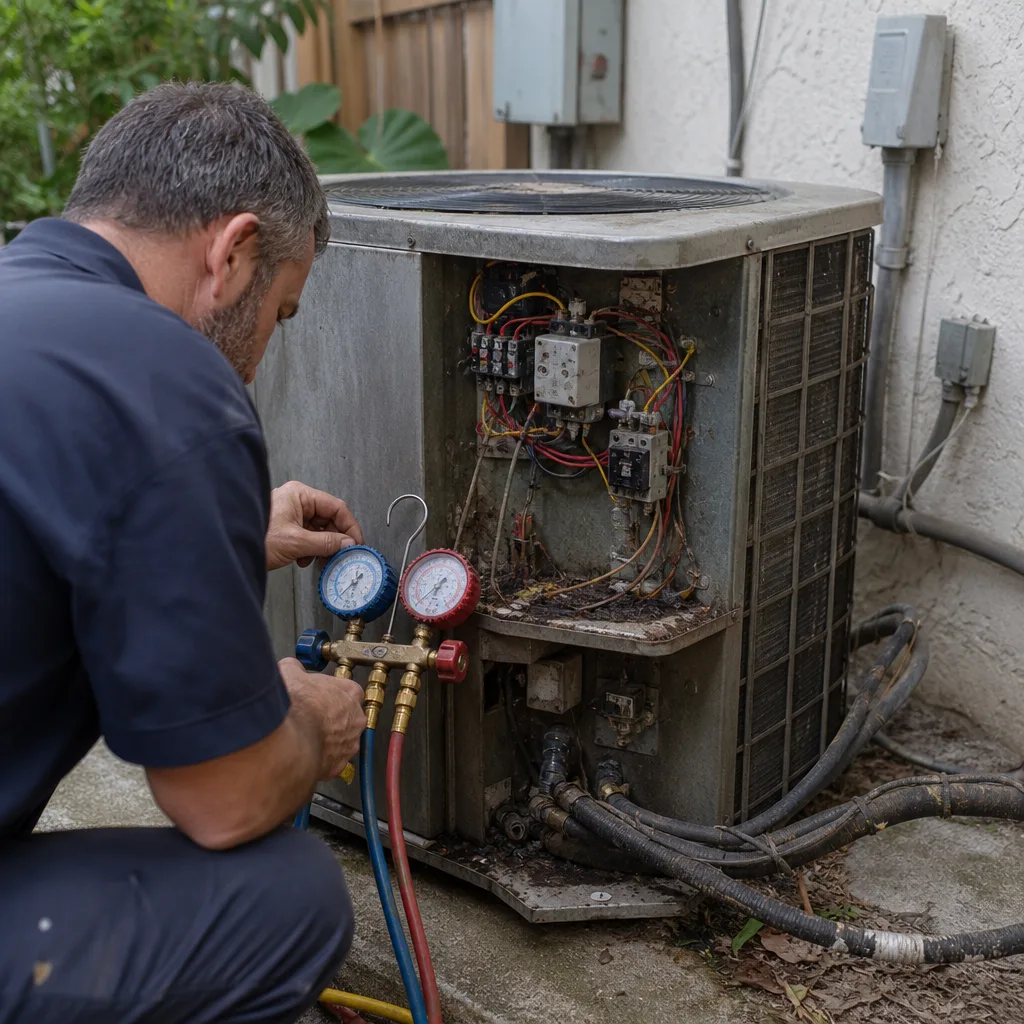 Before
 After
After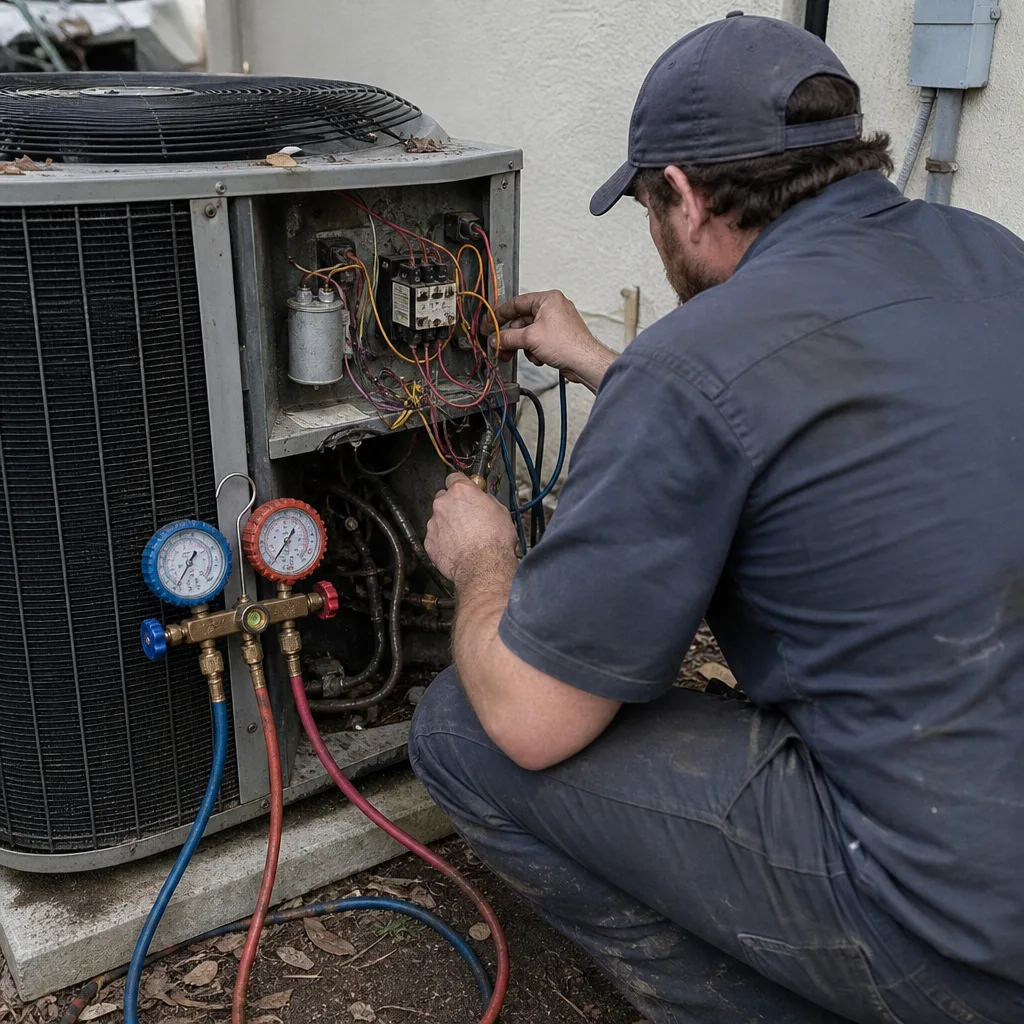 Before
 After
After