
Last updated October 16, 2026
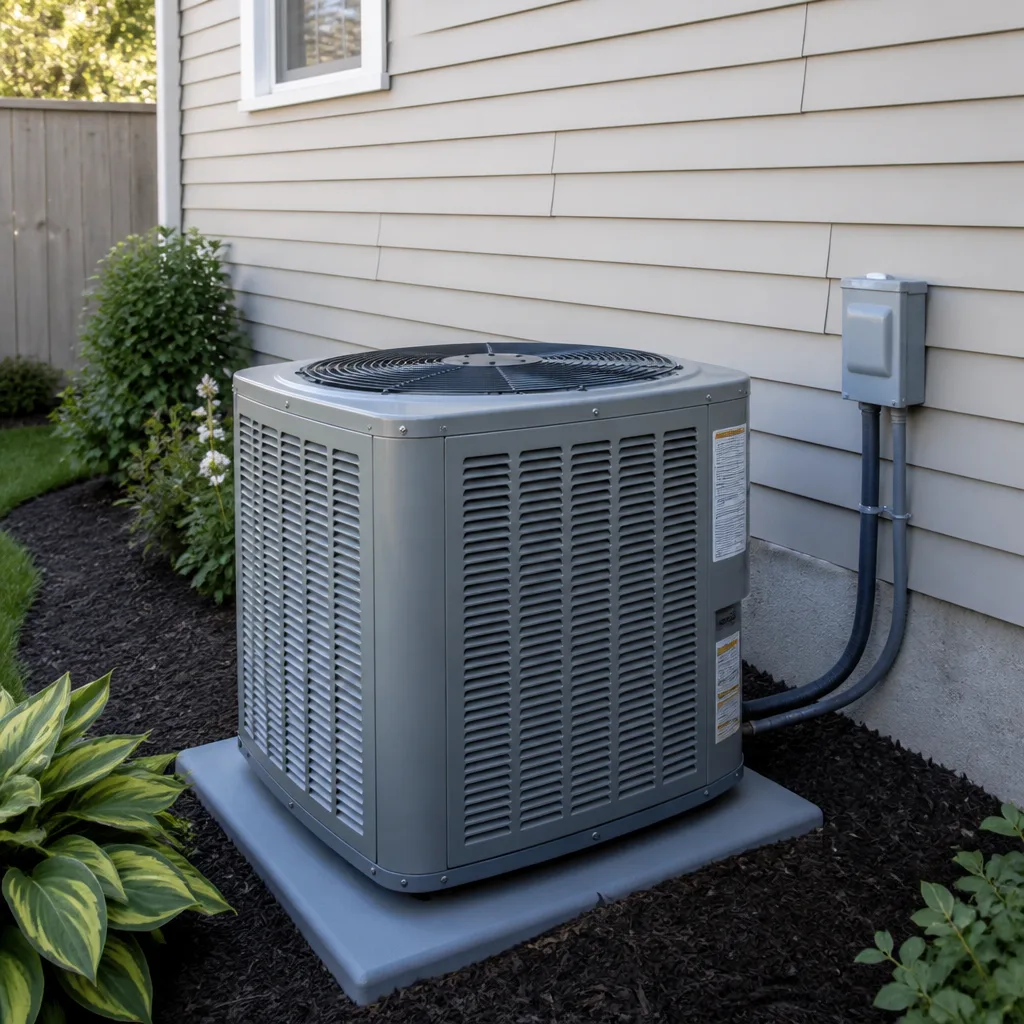 AC repair
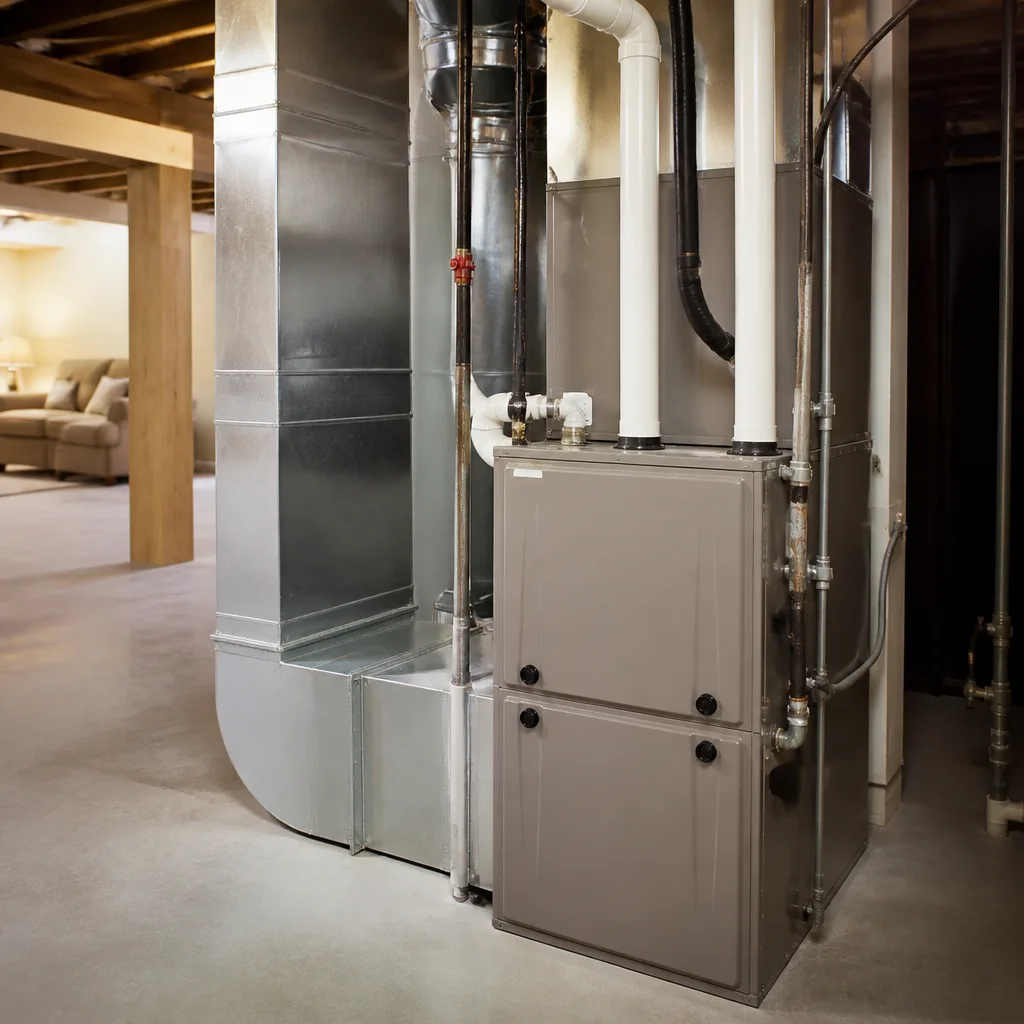 Furnace & heating
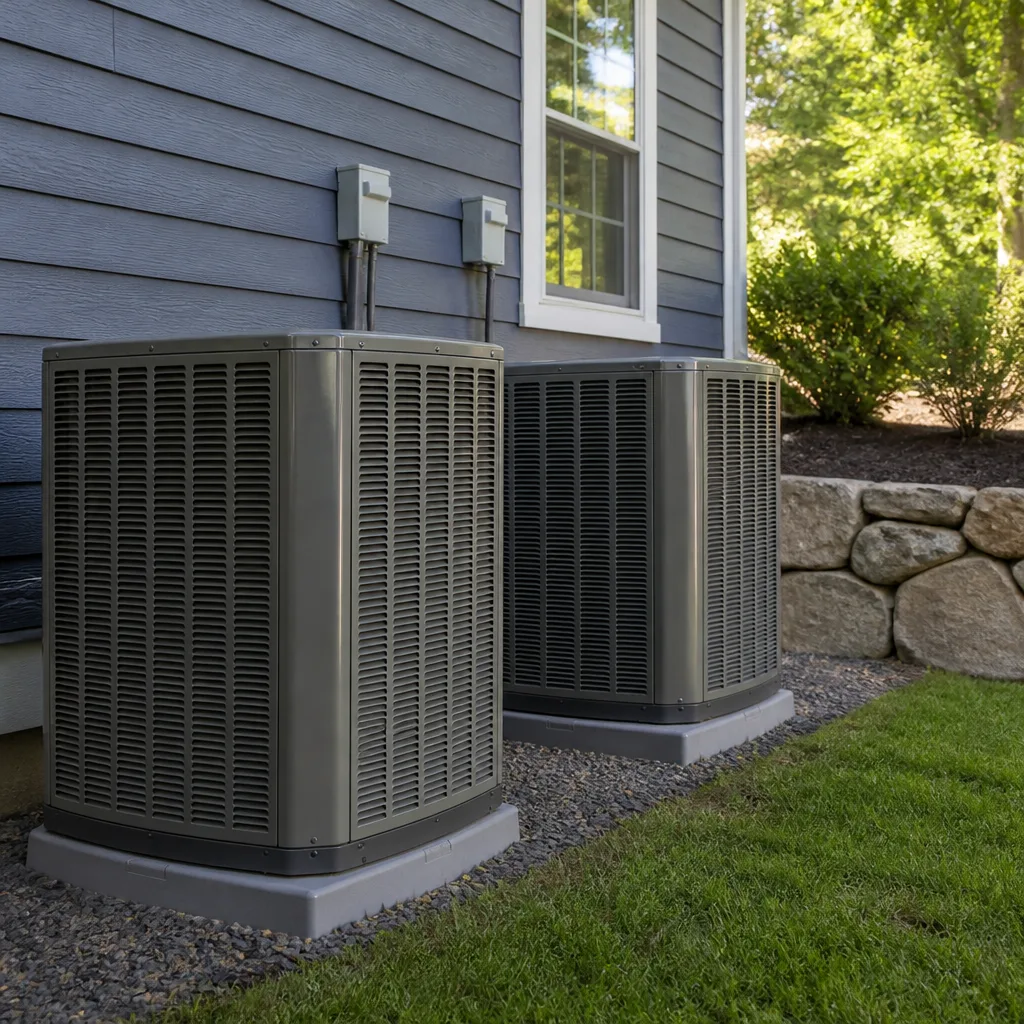 Heat pumps
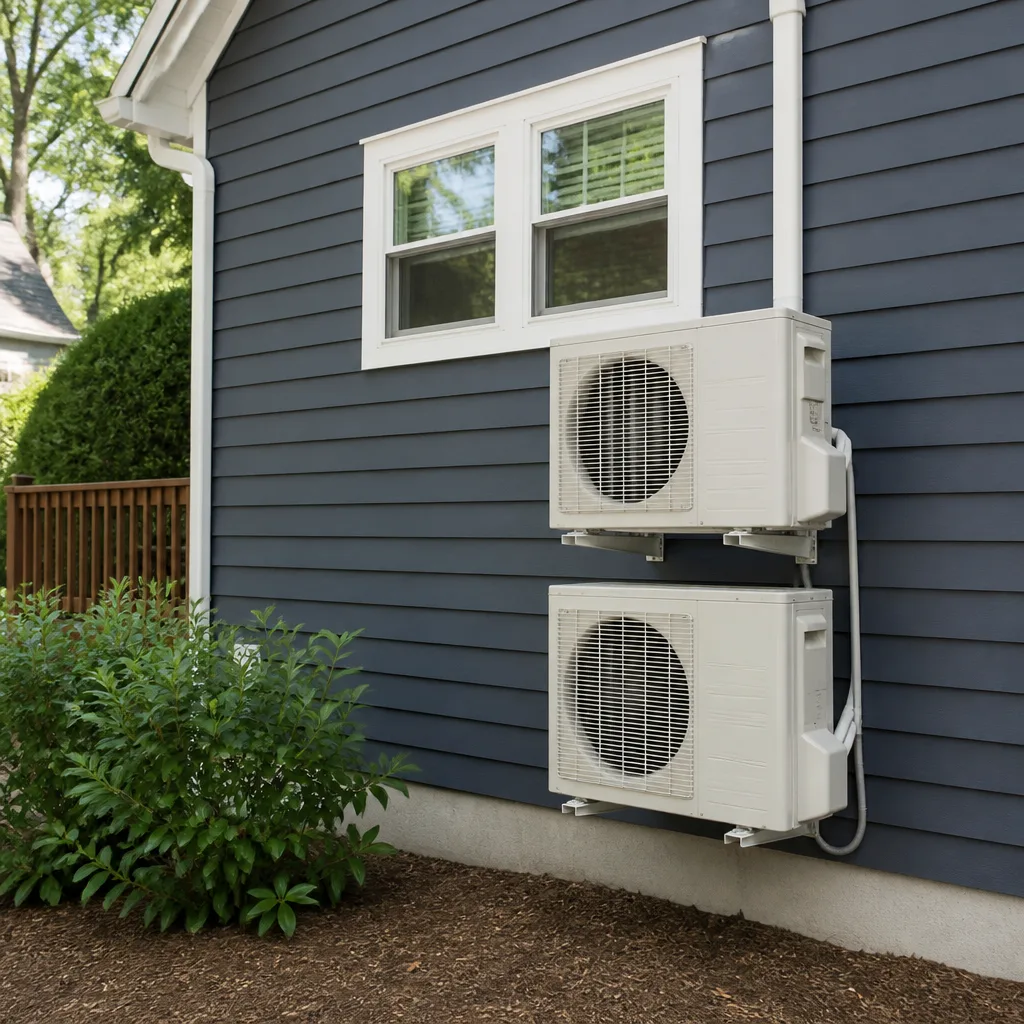 Ductless mini splits
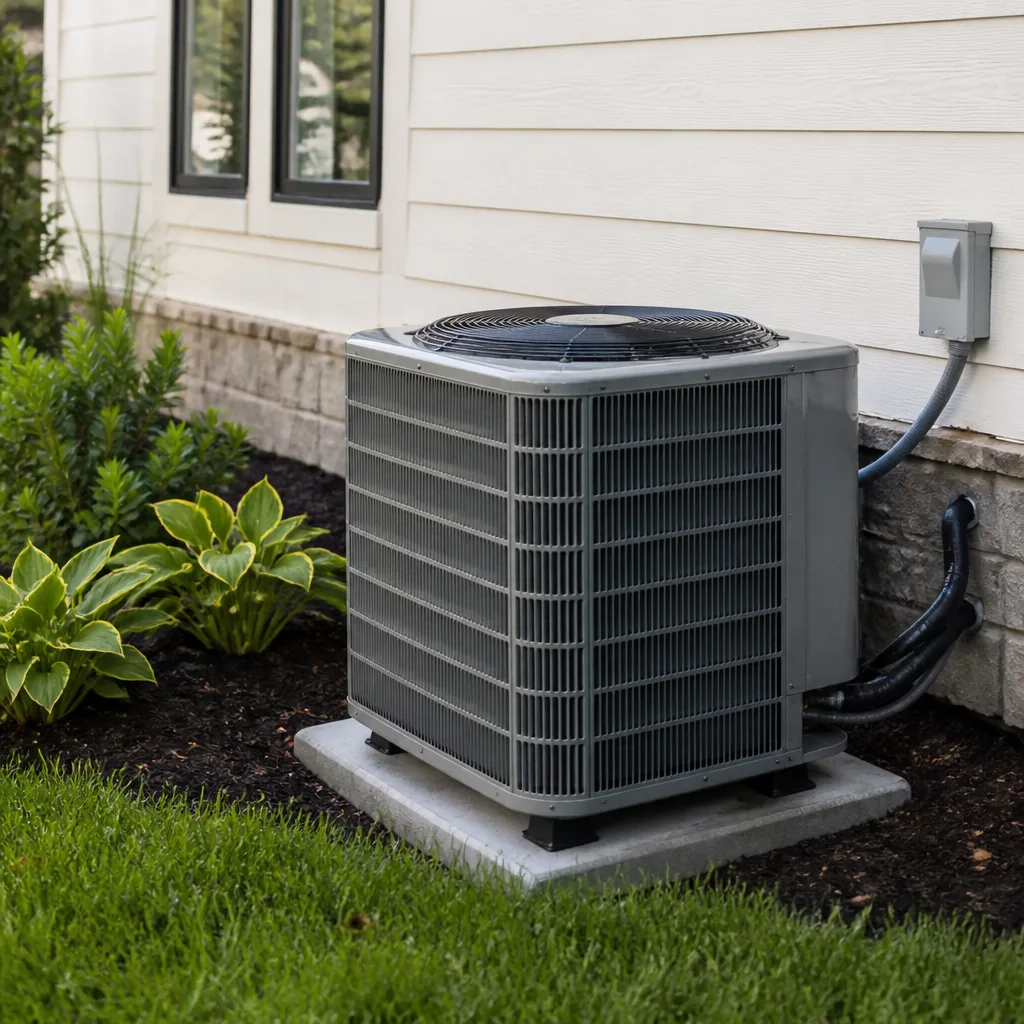 Carrier
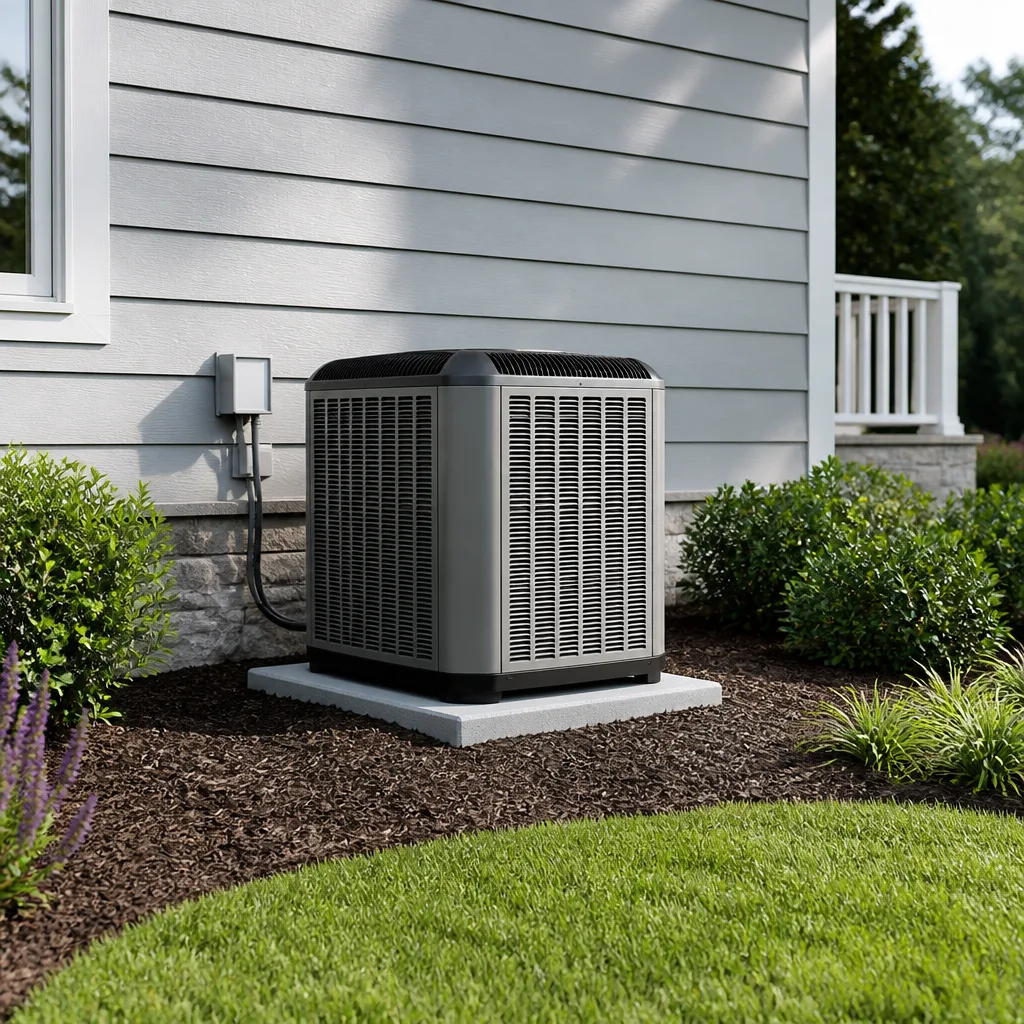 Trane
Trane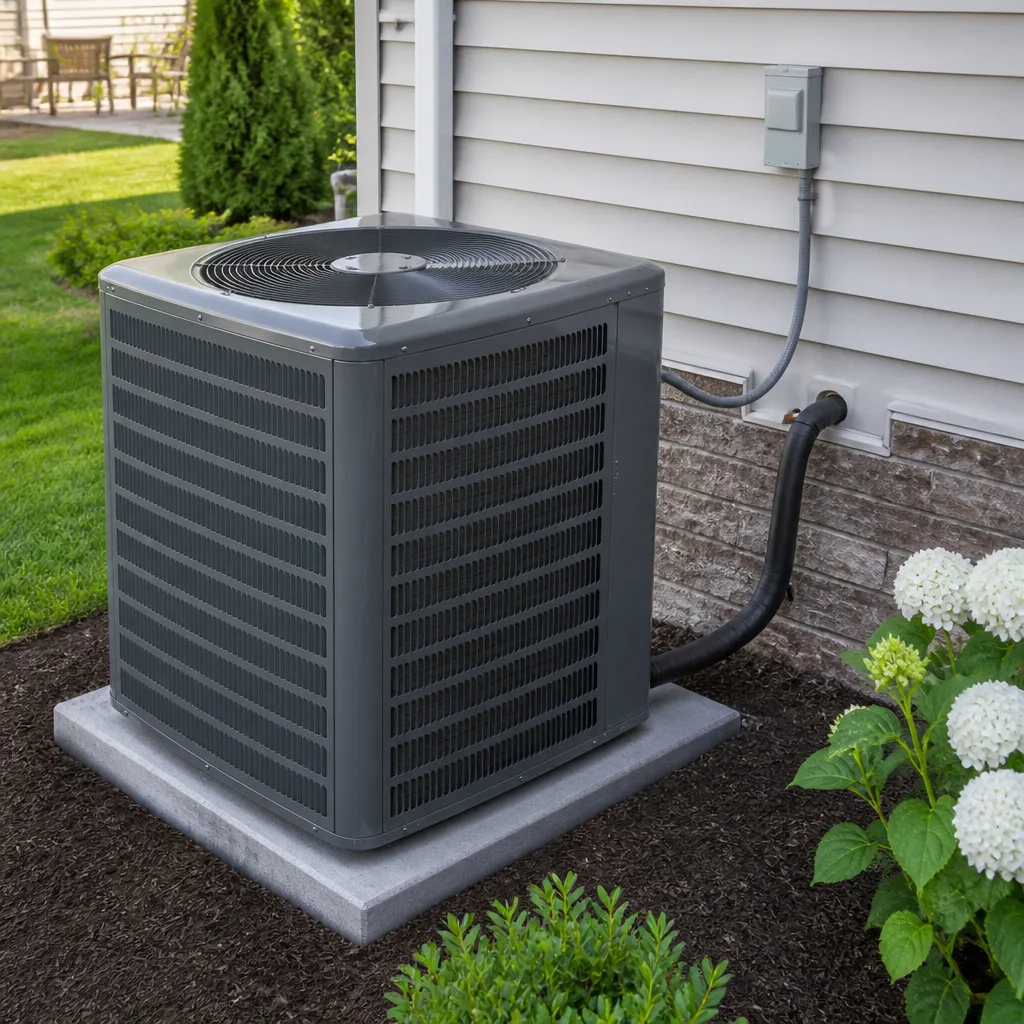 Goodman
Seasonal tune-up and full diagnostic on your Carrier, Trane, or Goodman system - readings shown to you before any repair is proposed
Diagnosis first, numbers second - you approve the repair price before a single part goes in.
Get your free estimateAC Repair Maintenance Checklist for Orlando Homeowners
Every July, Orlando HVAC technicians roll up to the same scene: a blower motor burned out because a $12 filter hadn’t been changed since March, a condensate line backing water into a drywall ceiling, a compressor cycling off on thermal overload because the coil looked like a felt blanket. These aren’t freak accidents. They’re predictable outcomes of running an air conditioner 2,900-plus hours a year in one of the most humid climates in the continental U.S. Most of those repair calls land between $250 and $600. A 20-minute monthly walkthrough catches nearly all of them. This guide is built around the failure points Orlando’s heat and humidity actually create, sequenced by season so you know exactly what to do, when to do it, and what to leave alone. For deeper context, see The Complete Guide to HVAC in Orlando. Think of it as a living checklist, not a PDF you save and forget.
Styles & brands we work with
Quick Answer
The core AC maintenance checklist for an Orlando homeowner is: replace or clean your air filter every 30 – 45 days, flush the condensate drain line monthly with white vinegar, clear debris from around the outdoor condenser, keep the thermostat set consistently (not swinging wildly), and schedule one professional inspection in late February or early March before the real heat arrives. Those five actions prevent roughly 80% of the repair calls we see between June and September.
Table of Contents
- Why Orlando AC Systems Fail Differently Than Anywhere Else
- The Month-by-Month Orlando AC Maintenance Calendar
- Condensate Drain Maintenance: The Most-Missed Task in Florida
- How to Read Your Thermostat’s Runtime Data to Catch Efficiency Loss Early
- DIY Tasks vs. Warranty-Voiding Mistakes: What’s Safe to Touch
- What a Professional Maintenance Visit Should Document (and Why It Matters)
- Common Mistakes to Avoid
- When to Call a Professional
- Frequently Asked Questions
- The Bottom Line
Why Orlando AC Systems Fail Differently Than Anywhere Else
Orlando’s climate punishes air conditioning equipment in ways that a Denver or Chicago technician simply never contends with. The annual cooling load here is staggering: most Orlando systems run between 2,500 and 3,200 hours per year, compared to 1,200 to 1,800 hours in more temperate regions. That’s the equivalent of driving a car 90,000 highway miles annually instead of 35,000. Condensers sit outside in 93-degree ambient heat with 70-plus percent relative humidity, which means the refrigerant pressures run higher, the compressor works harder, and every electrical component ages faster. Bryant and Rheem both publish service literature acknowledging that coastal and subtropical installations require more aggressive maintenance intervals than their own standard recommendations. York and Daikin units face the same reality.
What this means in practical terms: a capacitor that might last 8 years in Ohio often fails in 4 to 5 years here. A contactor’s contacts pit and arc faster when the unit cycles more frequently. Drain lines grow algae and biofilm at an accelerated rate because they’re always wet and always warm. The filter loads up with dust, pet dander, and humidity-driven particulate faster than the manufacturer’s “change every 90 days” language suggests. If you own a home in the Orlando metro and you’re following a generic maintenance schedule, you’re already behind.
Our technicians have also noticed a pattern tied to Orlando’s specific housing stock. Homes built during the 1980s and 1990s expansion (Conway, Pine Hills, much of Winter Park’s older sections) often have return ducts sized for the original, weaker systems. When a newer, higher-efficiency unit gets installed on undersized ductwork, the blower works harder, static pressure climbs, and evaporator coils freeze more readily. That’s not a maintenance issue per se, but it’s exactly the kind of thing a sharp homeowner can spot early by paying attention to runtime behavior.
The Month-by-Month Orlando AC Maintenance Calendar
Generic checklists tell you to “inspect in spring and fall.” Orlando doesn’t have spring and fall in any meaningful HVAC sense. The system shifts between “hot and wet” (May through October) and “mild and dry-ish” (November through April). Here’s the calendar we give our customers, built around what the equipment is actually doing each month.
January and February: The Low-Load Window
Your system is running fewer hours. This is the time to handle maintenance tasks that require the system to be off or that benefit from cooler, drier conditions.
- Deep-clean the outdoor condenser coil. Kill power at the breaker, remove the fan guard if you’re comfortable doing so, and gently rinse the coil from the inside outward with a garden hose. Do not use a pressure washer. We see fins flattened by pressure washers every single year.
- Inspect the condensate drain system thoroughly. Pour a cup of white vinegar into the drain line access point near the indoor air handler. Wait 30 minutes. Flush with a quart of warm water. If it drains slowly, call for a professional drain clearing before it backs up in July.
- Check all supply registers and return grilles. Vacuum them. Make sure none are blocked by furniture, rugs, or storage. A blocked return in an Orlando home is a guaranteed frozen-coil call waiting to happen.
- Replace the air filter. Every 30 days in a household with pets. Every 45 days without pets. Write the date on the filter frame with a marker.
March: The Critical Pre-Summer Tune-Up Window
This is the most important month on the Orlando AC calendar. By mid-March, daytime highs are already touching the low 80s. If your system has a latent problem, this is when you want to find it, before the service schedule fills up and before a failure means a 90-degree house.
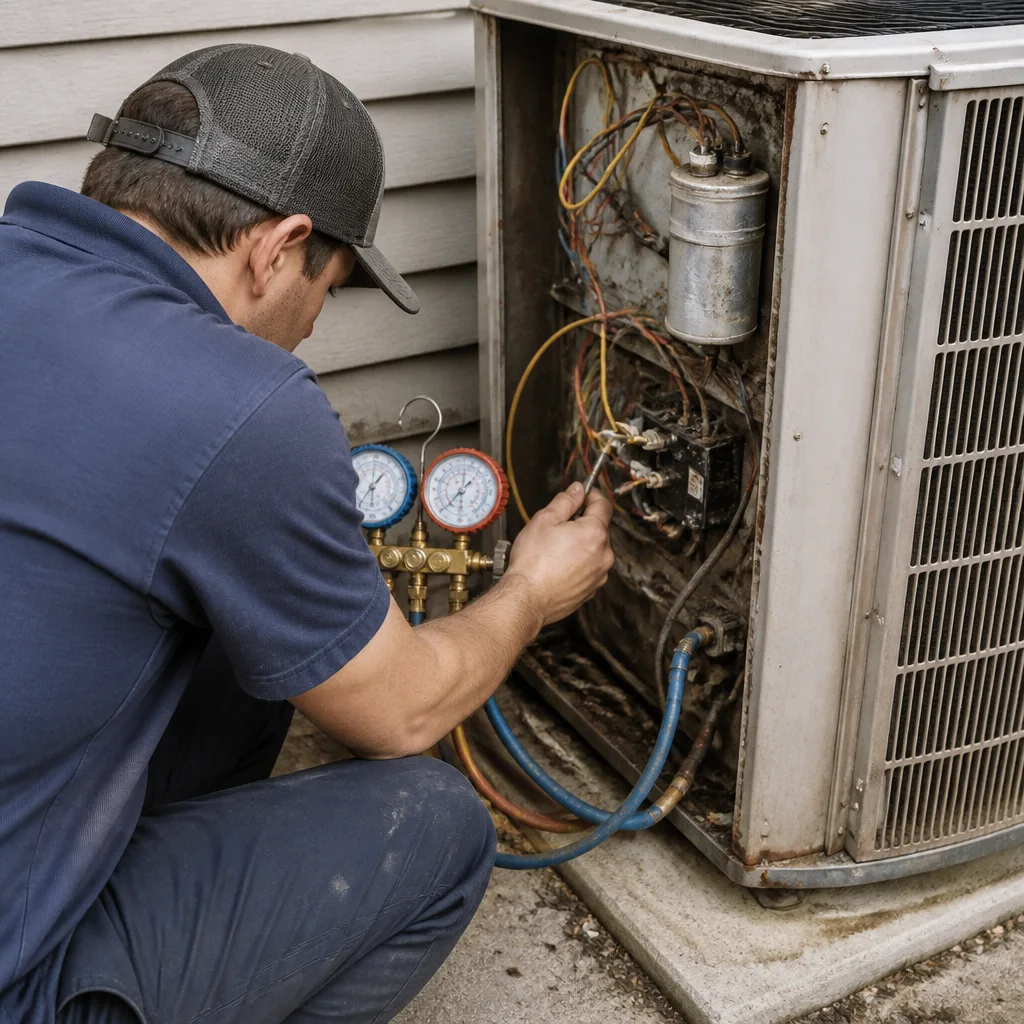
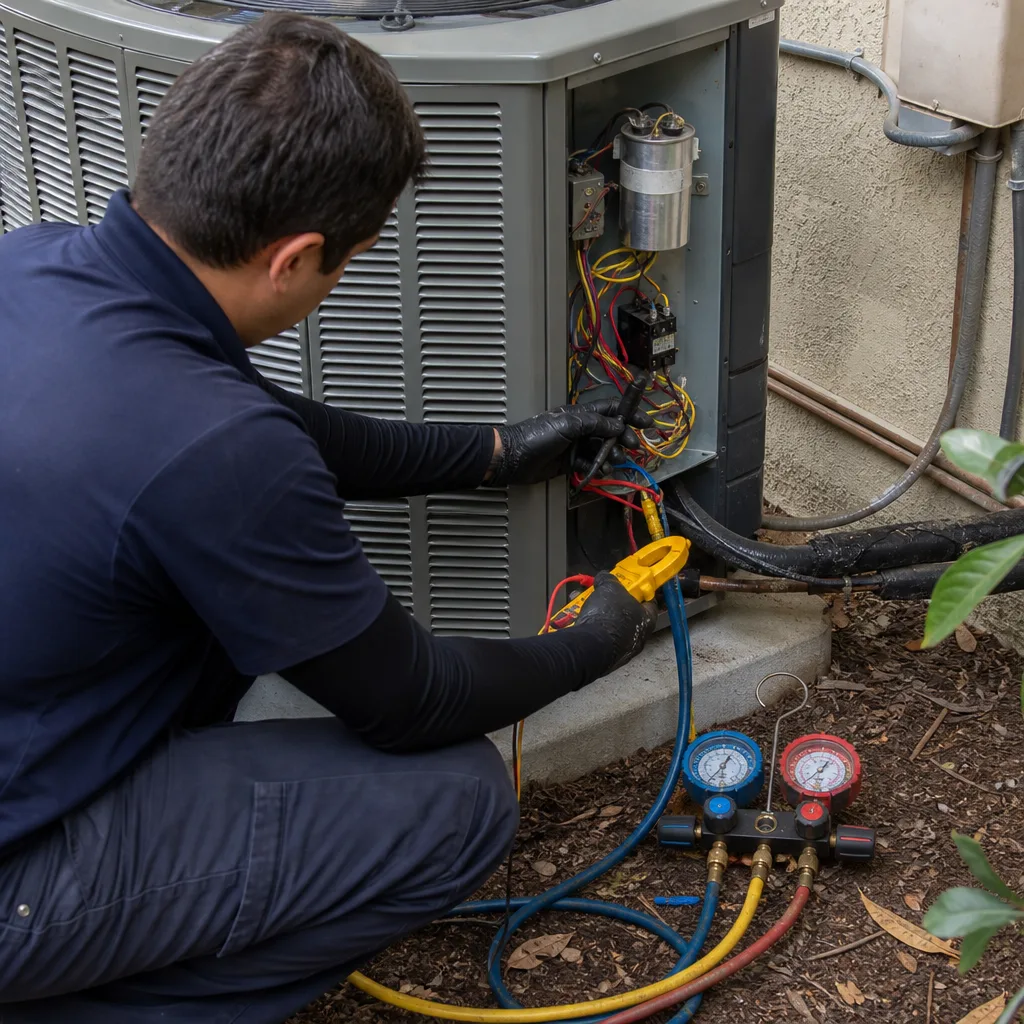
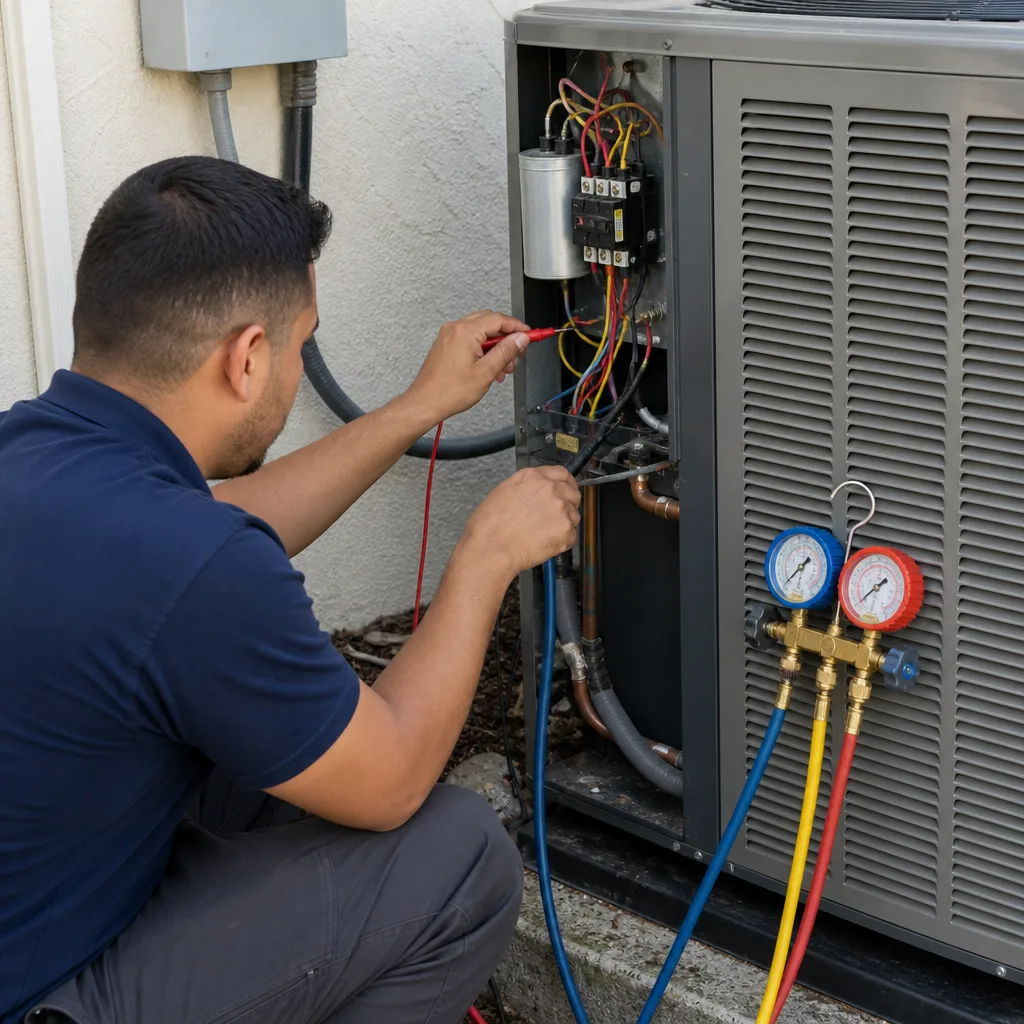
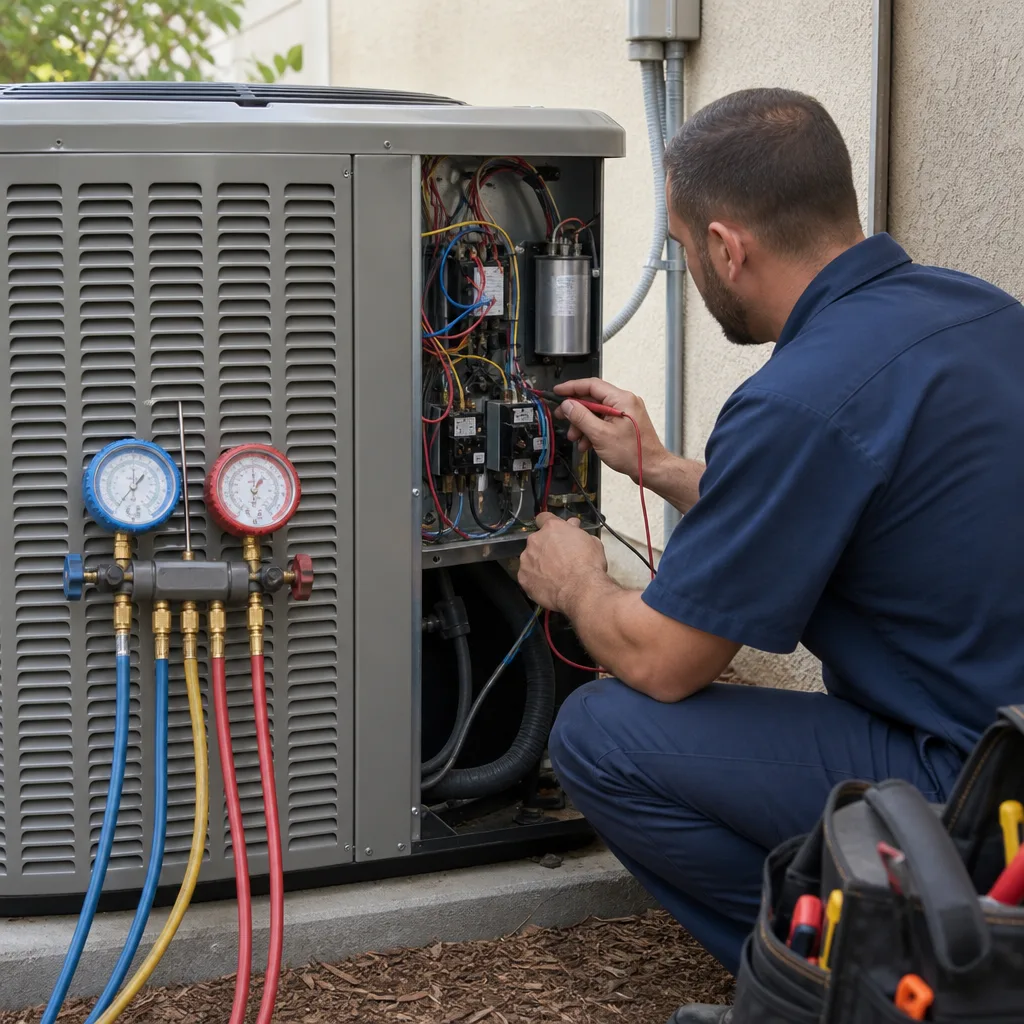
- Schedule a professional cooling system inspection. A qualified tech should measure refrigerant pressures, check superheat and subcooling, test the capacitor’s microfarad rating under load, inspect contactors for pitting, verify the amp draw on the compressor and blower motor, and measure the temperature drop across the coil. These are diagnostic tests, not visual checks. If a company’s “tune-up” doesn’t include them, it’s a filter change with a sticker.
- Run the system for a full cycle and listen. A healthy system is steady and boring. Hissing, buzzing, chattering, or a fan that sounds like it’s straining to spin up are all early warning signs.
- Check your thermostat’s schedule. If it’s still running a winter schedule that lets the house get to 78 during the day, reset it. A consistent setpoint (76 to 78 in cooling months) reduces cycling, which is what actually kills compressors and contactors.
April through June: The Ramp-Up
The system is now running several hours a day, sometimes 10-plus. Humidity levels are climbing.
- Check the condensate line twice a month. April and May are when biofilm growth accelerates. White vinegar monthly, a visual check at the drain outlet every two weeks.
- Replace the filter on a strict 30-day cadence. If you’re seeing visible gray dust on the filter after 30 days, that’s not a sign to wait longer. That’s a sign the filter is doing its job and you should consider a higher MERV rating (but not above MERV 13 without checking static pressure).
- Clear vegetation around the condenser. Orlando’s growing season is aggressive. Shrubs, vines, and tall grass can reduce airflow to the condenser coil within a few weeks of spring growth. Keep at least 18 inches of clearance on all sides.
- Watch your electric bill’s kWh usage, not just the dollar amount. A 20% jump in kWh for the same thermostat setting and similar weather is a reliable early indicator of efficiency loss.
July through September: Peak Load, Peak Stress
The system is working at maximum capacity. Your job is monitoring and protecting it.
- Do a weekly walk-around. Listen for odd sounds from the condenser. Confirm the outdoor unit is blowing hot air (it should be noticeably hot). Confirm the indoor supply air is 15 to 20 degrees cooler than the room air.
- Check the drain pan for standing water. If you have access to the air handler, look for water in the emergency drain pan. Water in the pan means the primary drain is restricted.
- Don’t set the thermostat below 72 during heat waves. This is a genuinely counterintuitive one. Orlando systems are sized using Manual J calculations for typical summer conditions. During a 95-degree week, setting the thermostat to 68 forces the system to run continuously, and the evaporator coil temperature can drop below freezing even in summer. A frozen coil shuts the system down entirely.
- If the system is short-cycling (on for 5 minutes, off for 5 minutes, repeatedly), call a tech. That pattern is commonly a failing capacitor or an overcharged system. Both get worse and more expensive the longer they run.
October through December: The Cooldown and Reset
The system begins its slow transition. Orlando still sees plenty of warm days in October and November.
- Give the condenser a thorough exterior clean in late October. Remove leaves, twigs, pine needles, and pollen. Orlando’s oak and pine canopy drops a surprising amount of debris into condenser coils every fall.
- Consider a mild disinfecting flush of the drain line in November. A 50/50 mix of white vinegar and warm water. This resets the biofilm before the cooler months when the AC runs less and the drain can dry out and harden any remaining sludge.
- Have the heat strip or heat pump function tested in early December. Not because December is cold in Orlando, but because if the reversing valve or heat strips failed during the summer, you want to know before the one genuinely cold week in January or February.
Condensate Drain Maintenance: The Most-Missed Task in Florida
Ask any Orlando HVAC technician what single maintenance item causes the most expensive damage in local homes, and the answer is almost always the same: the condensate drain line. A central AC system in Orlando can pull 5 to 20 gallons of water out of the air every single day during the summer. That water has to go somewhere. The drain line carries it from the indoor coil to either a plumbing drain, an exterior outlet, or a condensate pump. When that line clogs, the water backs up into the air handler, overflows the drip pan, and soaks whatever is underneath. In many Orlando homes, that’s a ceiling, a closet, or the interior of a wall cavity.
We have personally handled calls where a two-story home in the Dr. Phillips area needed $4,000 in drywall and insulation work because a condensate line clogged over a long weekend and ran inside a wall for three days before anyone noticed. That’s the worst case. The average case is water staining on a ceiling and a $150 – $250 drain-clearing service call. But the pattern is avoidable with a simple monthly routine.
Here is the exact condensate drain routine we recommend for Orlando homes:
- Find your drain line access point. Most Orlando installations have a PVC pipe near the indoor air handler with a cap or a tee fitting. If you don’t know where it is, ask your technician to show you during your next maintenance visit.
- Pour 1 cup of white vinegar into the line once a month. Vinegar kills the algae and biofilm that thrive in the warm, wet, dark environment of the drain pipe. It’s gentle on PVC and won’t damage the plumbing.
- Wait 30 minutes, then flush with 2 cups of warm water. This pushes the loosened material through the line and out the other end.
- Locate the drain outlet outside and confirm water is flowing during each flush. If the line is draining but slowly, it’s restricting. If nothing comes out, the line is already blocked. Do not wait. A blocked drain will back up within days.
- Check the emergency drain pan under the air handler monthly during summer. If there’s standing water, the primary drain is not functioning and you should call a technician before the secondary drain also clogs or the pan overflows.
A note for pet owners, which applies to a huge share of Orlando households: cat and dog hair is a major contributor to clogged evaporator coils and restricted condensate lines. Homes with shedding pets should replace filters every 30 days without exception and should consider having the evaporator coil inspected and cleaned every 2 years. The coil is upstream of the drain line, so whatever collects on the coil eventually ends up in the drain.
How to Read Your Thermostat’s Runtime Data to Catch Efficiency Loss Early
Every modern thermostat, from a basic Honeywell to a Nest or Ecobee, records runtime data. Most homeowners never look at it. That’s a mistake, because runtime data is the single best early-warning system for efficiency loss, and efficiency loss is a leading indicator of future component failure. Here’s what to look at and what it means.
Total daily runtime hours. In July and August, an Orlando system will run 10 to 14 hours a day, depending on insulation, window quality, and setpoint. If you track your daily runtime and see it climb from 11 hours to 14 hours over a two-week period with no change in outside temperature or thermostat setting, your system is losing cooling capacity. Common causes: a dirty evaporator coil, a refrigerant charge that’s drifted low, or a failing capacitor that’s reducing compressor efficiency.
Short-cycling frequency. A system that’s running 15 times per day for 8 minutes each is working much harder than a system that runs 6 times per day for 20 minutes each. The extra cycles wear out contactors, capacitors, and compressor windings. Short-cycling is most often caused by an oversized system (a common issue in older Orlando homes where a previous owner “upgraded” to a unit that’s too big) or a thermostat placed in a bad location, like a hallway that gets direct afternoon sun.
Temperature differential. On a healthy system, the difference between the return air temperature and the supply air temperature should be 15 to 20 degrees. You can check this with an inexpensive infrared thermometer at any supply register and return grille. A smaller differential means the system is running but not extracting heat efficiently. A larger differential suggests low airflow, which is usually a filter problem but can also indicate a failing blower motor or a collapsing duct.
The “event log” on smart thermostats. Most smart thermostats keep a log of when the system called for cooling, how long it ran, and sometimes auxiliary data. Review it monthly during summer. Look for trends. One off day is noise. A week of climbing runtime is signal.
If you see any of these patterns, don’t panic. Note the data and call a qualified technician in Orlando. A good diagnostic visit will confirm what the runtime data is suggesting, and you’ll often catch a small problem (a $12 capacitor or a half-pound of refrigerant) before it becomes a $900 compressor or a full coil replacement.
DIY Tasks vs. Warranty-Voiding Mistakes: What’s Safe to Touch
There is a line between homeowner maintenance and technician-only work. Staying on the right side of that line matters for two reasons: safety and warranty protection. Manufacturer warranties from brands like Daikin, Rheem, York, and Bryant are explicit about what voids coverage. If a homeowner opens the refrigerant circuit, handles electrical components beyond the disconnect, or modifies the system, the warranty is typically void. Period. The manufacturer doesn’t care whose fault it is.
Here is a clear breakdown.
Safe for homeowners to do themselves
- Replacing the air filter. This is the single highest-value DIY task. It’s safe, it’s simple, and it’s impossible to overstate how many Orlando repair calls trace back to a neglected filter.
- Flushing the condensate drain line with vinegar and warm water. No tools required, no risk of injury, no warranty implications.
- Clearing debris and vegetation from around the outdoor condenser. Use a leaf blower or gloved hands. Keep the area clear in an 18-inch radius.
- Rinsing the outdoor coil with a garden hose and gentle spray. Never a pressure washer. Power off the unit first. Rinse from top to bottom, outside to inside if you can.
- Visual inspection of the drain pan, the condensate line outlet, and the general condition of the system. You can look at anything. You just can’t twist the wrench on everything.
- Checking and adjusting thermostat schedules and setpoints. Setbacks are fine; extreme setbacks in summer are counterproductive. Keep the daily swing under 5 degrees.
Leave to a qualified HVAC technician
- Any work involving refrigerant. Adding refrigerant, recovering refrigerant, replacing a valve, checking pressures. Refrigerant is under high pressure. Getting it wrong causes immediate damage and creates a safety hazard. It’s also regulated by the EPA. Doing it without a license is illegal.
- Electrical troubleshooting or repairs. Capacitors, contactors, relays, control boards, motor wiring. Capacitors hold a charge even when the unit is off. Touching the wrong terminal can result in a serious shock. This is not a place to learn.
- Anything involving the compressor, the reversing valve, or the expansion valve. These are sealed-system components. Tampering voids the warranty instantly.
- Ductwork modifications. Improper sealing or sizing changes static pressure and can freeze coils, overheat blowers, and shorten the life of the entire system.
The rule we tell every Orlando homeowner: if it requires a wrench, a multimeter, a manifold gauge set, or opening a panel that has a safety switch, it’s a professional job. The cost of a diagnostic call is trivial compared to the cost of voiding a 10-year parts warranty on a Bryant or Daikin system because a well-intentioned homeowner opened the sealed system.
What a Professional Maintenance Visit Should Document (and Why It Matters)
Not all “tune-ups” are created equal. Some companies in the Orlando market charge $39 for what amounts to a filter change and a visual once-over. Others charge $129 and deliver a genuine diagnostic inspection. The difference matters, especially if you ever face a warranty dispute or a denied insurance claim.
A proper professional AC maintenance visit should produce a written report that includes:
- Before-and-after photos of the coil, the blower wheel, the outdoor condenser, and the drain line. These photos are your evidence. If a coil was clean and dry in March but a technician later claims it’s “too dirty to be considered a defect,” the photos tell the real story.
- Measured refrigerant pressures (suction and discharge), along with superheat and subcooling values. These are the numbers that tell you whether the system is charged correctly. “It’s blowing cold” is not a measurement.
- Capacitor microfarad readings under load. A capacitor rated at 45 microfarads that’s reading 38 is failing. A good tech will flag it. A lazy one will wait for it to fail.
- Amp draw on the compressor, the condenser fan motor, and the blower motor. High amp draw means the motor is working too hard. Low amp draw can mean the motor is underperforming or the system is overcharged.
- Temperature drop across the evaporator coil and static pressure readings. These tell you whether the system’s airflow is healthy. An Orlando home with a 0.9-inch static pressure reading has a duct issue that will eventually kill the blower.
- Any specific concerns documented in writing with a photo. “Drain line showed moderate biofilm buildup; recommended flush within 60 days.” That’s a useful note. “Drain checked, OK” is not.
Why does this matter? Because manufacturers ask for maintenance records when you file a warranty claim. If you can’t prove the system was maintained, the claim gets denied. Because insurance companies ask for proof of maintenance when you file a water damage claim from a failed condensate line. Because a complete record is the difference between a covered repair and an out-of-pocket one. At Halden Heating and Air Orlando, every maintenance visit includes a written report with these measurements and photos. The AC repair in Orlando process starts with the same diagnostic rigor, not a clipboard and a sales pitch.
Common Mistakes to Avoid
- Setting the thermostat to 68 degrees during an Orlando heat wave. The system can’t produce sub-72 supply air in extreme humidity without freezing the coil. You’re not cooling the house faster, you’re creating a service call.
- Using a pressure washer on the outdoor condenser. Those fins are thinner than a credit card. A pressure washer flattens them, permanently reducing airflow and efficiency. A garden hose with a gentle spray is all you need.
- Closing supply vents in unused rooms. This raises static pressure throughout the system. In an Orlando home with already-marginal ductwork, closing vents pushes the system toward a frozen coil or a burnt-out blower.
- Buying the cheapest 1-inch fiberglass filter and running it for six months. A dirty fiberglass filter does almost nothing but restrict airflow. You want a pleated filter, MERV 8 to 11, changed every 30 to 45 days. If you have a 4-inch media cabinet, you have more flexibility, but 60 to 90 days is still the practical limit in a humid climate.
- Ignoring the emergency drain pan because it’s “been dry all year.” The first time you see water in that pan, the primary drain is already blocked. That’s not the moment to start a routine. That’s the moment to call a tech.
- Letting the outside unit get buried in landscape mulch and hedge growth. Orlando landscaping grows fast, and within one growing season, a condenser that had 2 feet of clearance can be choked to 6 inches. That starves the coil of air and drives up head pressure, which destroys compressors over time.
- Skipping the pre-summer professional inspection to save $100. The single most expensive words in Orlando HVAC are “it was working fine until last week.” A March inspection catches the failing capacitor, the pitted contactor, and the slow drain before any of them become a summer emergency.
When to Call a Professional
Some AC issues are maintenance problems. Others are genuine breakdowns that require a technician today. Call a professional if you notice any of the following: ice or frost on the indoor coil or the refrigerant line outside, water pooling around the air handler or staining the ceiling below it, a burning smell from the vents, a grinding or screeching noise from either unit, the outdoor condenser running but the indoor blower not moving air, the breaker for the AC tripping repeatedly, or the system running constantly without reaching the setpoint. None of these resolve themselves, and most get more expensive the longer they run. If you’re in the Orlando area and something feels off, Halden Heating and Air Orlando offers free estimates. Call (850) 695-3178 and a live person will answer, day or night. We also handle furnace repair in Orlando for the winter months and Halden Heating and Air Orlando home services across the metro.
Frequently Asked Questions
Every 30 to 45 days, depending on pets and household size, regardless of what the filter package says. In Orlando’s heat and humidity, your system runs 2,500 to 3,200 hours per year, which means a 90-day filter is equivalent to a 150-day filter in a cooler climate. A clogged filter causes frozen coils, reduced airflow, higher humidity indoors, and premature blower motor failure. If you have pets, set a 30-day reorder reminder on your phone and don’t overthink it.
A professional cooling system inspection in Orlando typically runs between $90 and $180 for a thorough diagnostic visit that includes refrigerant pressure checks, electrical testing, and coil inspection. Some companies advertise $39 or $49 “tune-ups,” but those are usually loss leaders designed to get a technician in the door. Expect to pay a fair price for a real inspection. Call (850) 695-3178 for AC Repair or an exact quote, and a written price will be provided before any work starts.
Filter changes, drain line flushing, outdoor coil rinsing, and debris clearing are all safe, warranty-preserving homeowner tasks. Anything involving refrigerant, electrical components, the sealed system, or ductwork should be left to a licensed technician. Opening the sealed system or modifying electrical components will void the manufacturer’s warranty on brands like Rheem and Bryant, and it creates genuine safety risks.
An AC unit freezes when the evaporator coil temperature drops below 32 degrees, which happens when airflow is restricted, refrigerant is low, or the blower isn’t moving enough air across the coil. In Orlando, the most common trigger is a clogged filter, followed closely by a dirty coil or an undersized return duct. Turn the system off immediately and let it thaw, then call a technician before running it again. Running a frozen system can destroy the compressor.
With proper maintenance, a well-installed system in Orlando should last 12 to 15 years. Without it, 8 to 10 years is more typical for compressors in our climate. The heat and humidity in Orlando take a measurable toll on capacitors, contactors, and compressor windings. If your system is over 12 years old and facing a repair over $800, it’s often worth comparing the cost of AC installation in Orlando rather than sinking money into an aging system.
A failed capacitor or contactor, followed closely by a clogged condensate drain. Both are electrical or mechanical components that give early warning signs: a capacitor that’s reading low on microfarads will show it on a digital meter months before it fails, and a drain line that’s draining slowly will show it in a 30-second vinegar flush. The parts are cheap. The emergency call on a 95-degree Saturday afternoon is not.
The Bottom Line
Orlando’s climate is hard on air conditioning equipment. The homeowners who stay cool without emergency repair bills are the ones who treat maintenance as a monthly habit, not an annual event. Change the filter on a schedule. Flush the drain line with vinegar. Keep the condenser clear. Watch the runtime data. Schedule that March inspection before the heat arrives. And when something does go wrong, call a company that will put a written price in front of you before any work begins. That’s how you keep a $12 filter from becoming a $600 repair, and a $600 repair from becoming a $4,000 water damage claim. Your AC works hard in Orlando. Return the favor.
Written by Andre Fuller, Owner at Halden Heating and Air Orlando, serving Orlando since 2004.
See the difference
 Before
 After
After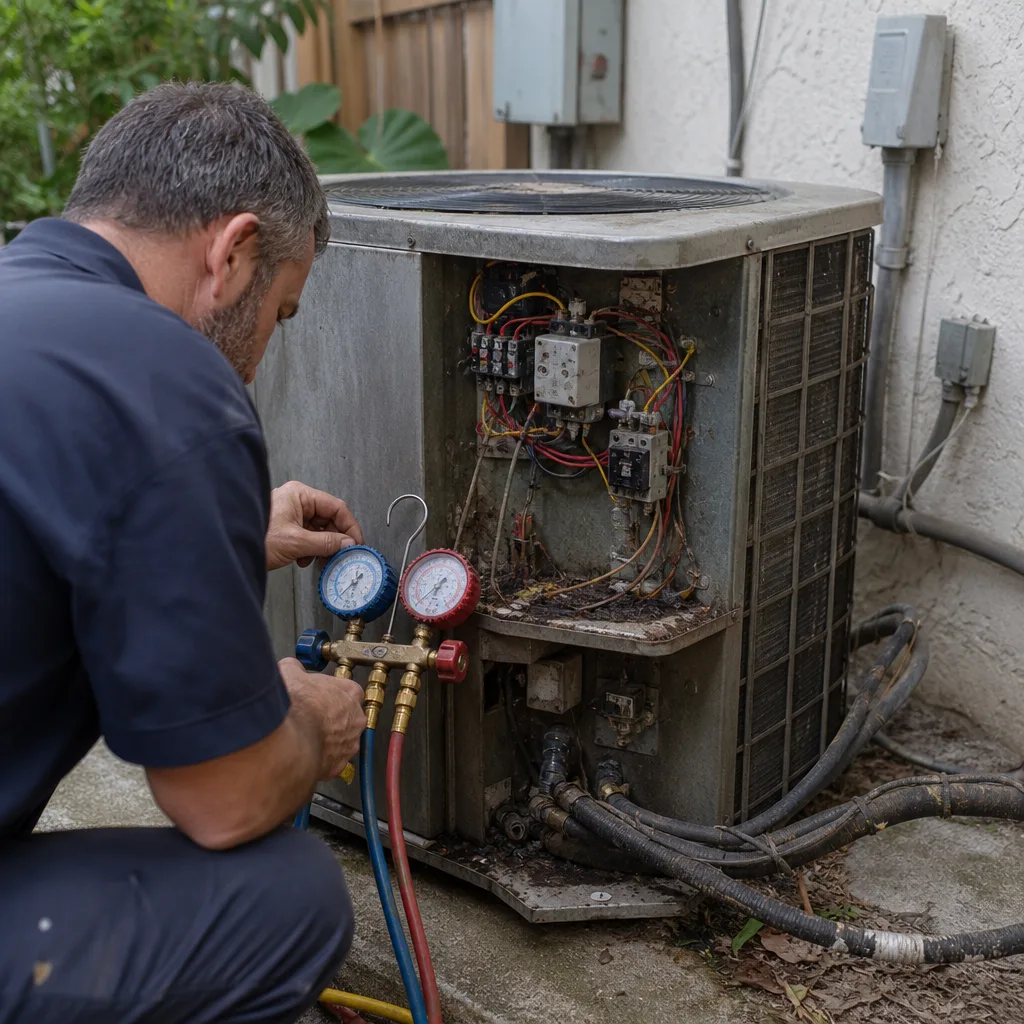 Before
 After
After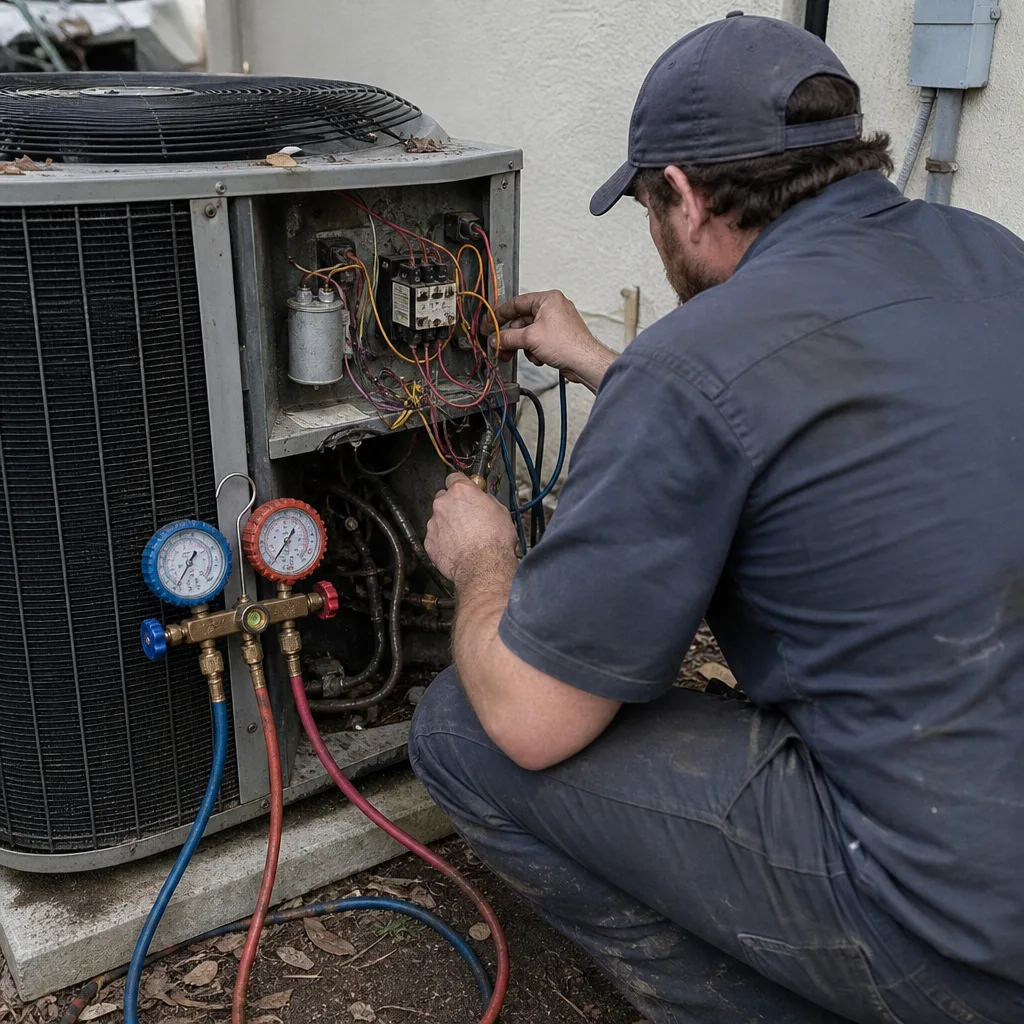 Before
 After
After