
 AC repair
 Furnace & heating
 Heat pumps
 Ductless mini splits
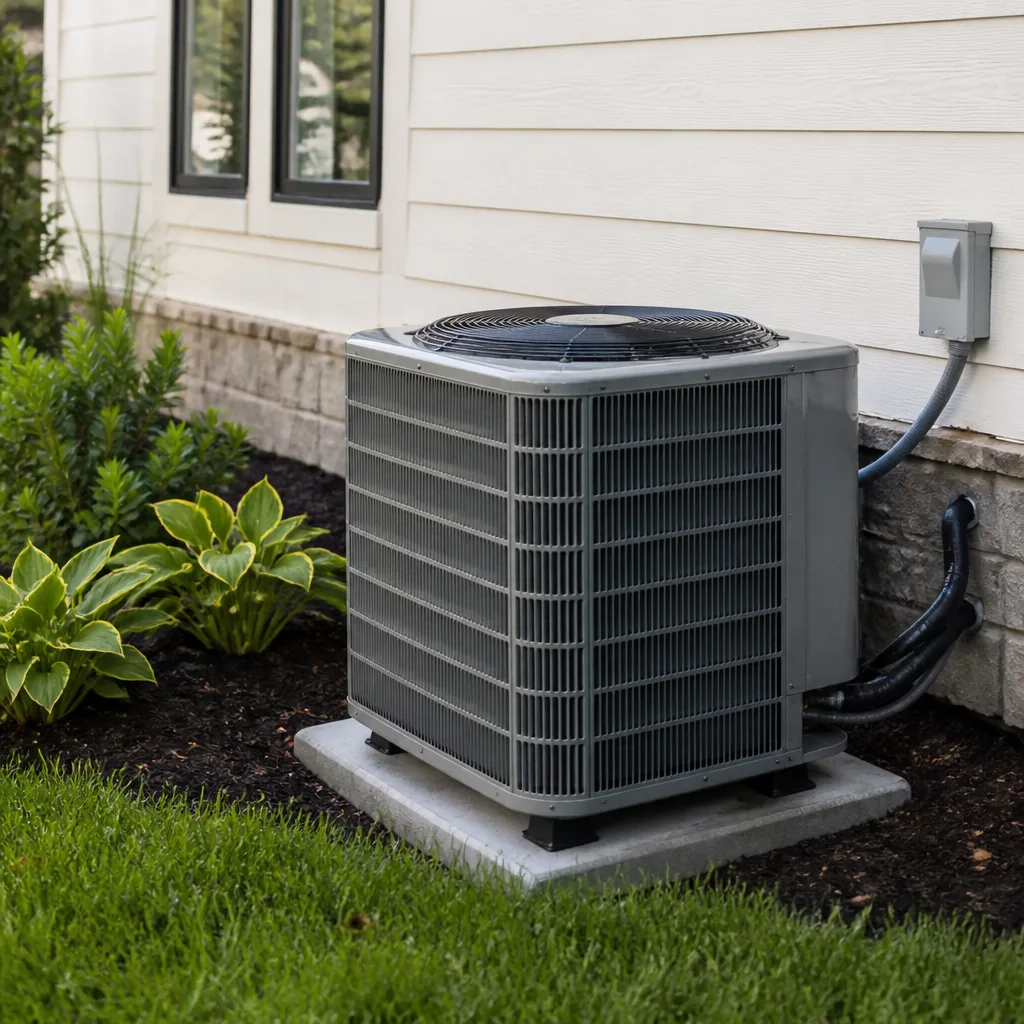 Carrier
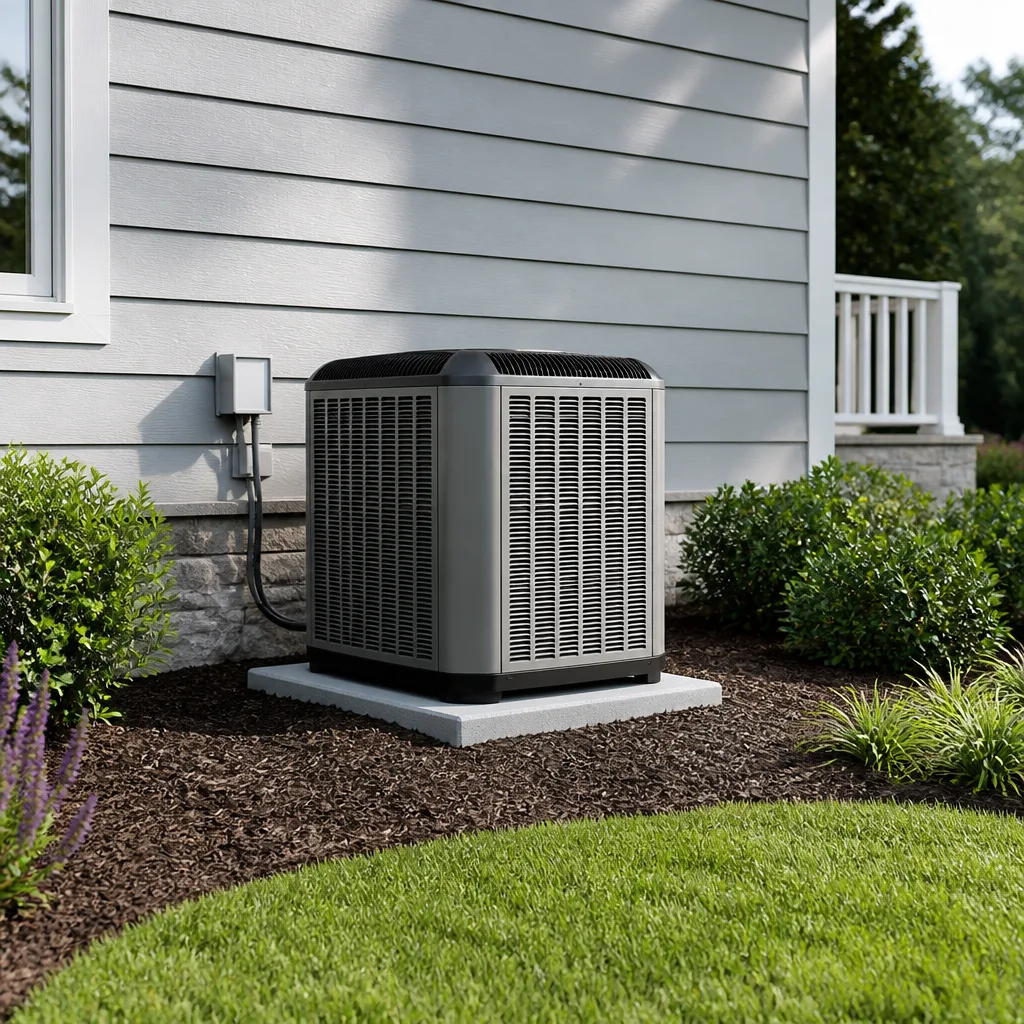 Trane
Trane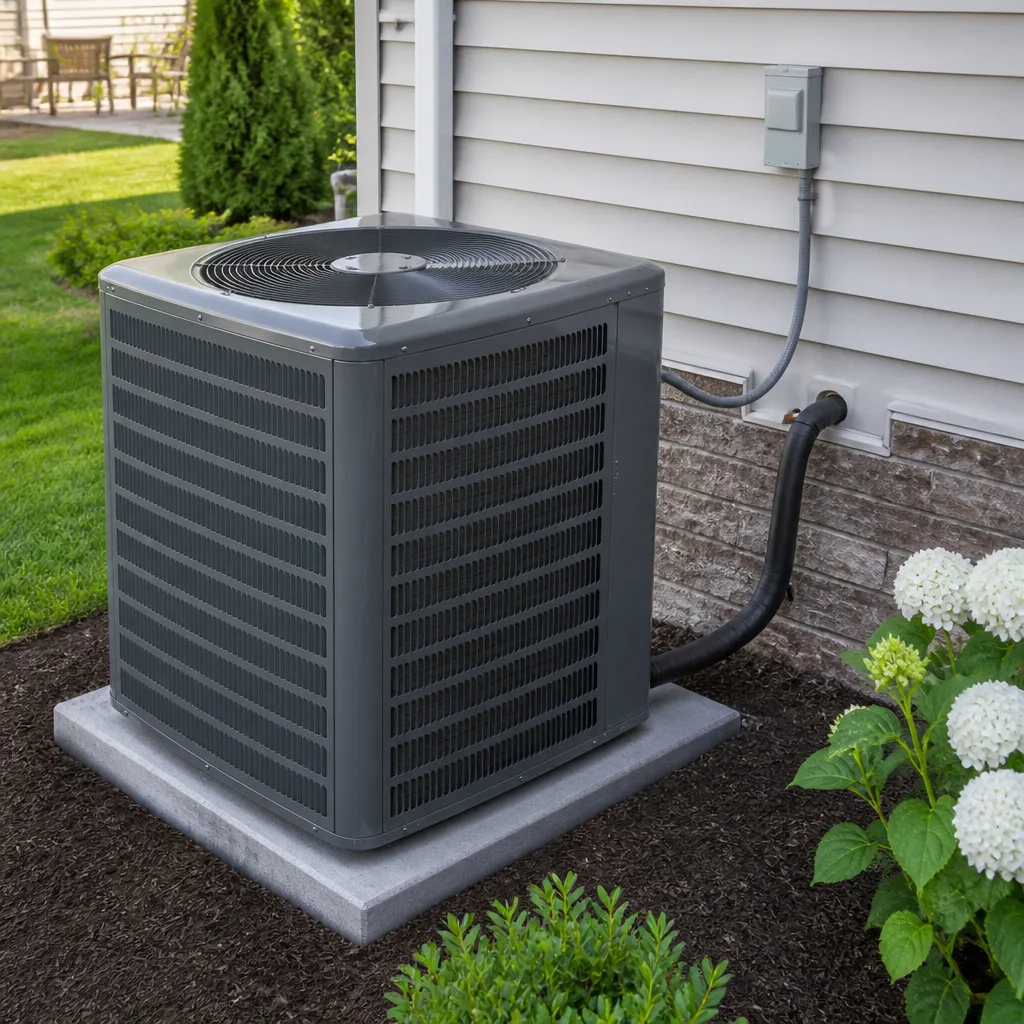 Goodman
Seasonal tune-up and full diagnostic on your Carrier, Trane, or Goodman system - readings shown to you before any repair is proposed
Diagnosis first, numbers second - you approve the repair price before a single part goes in.
Get your free estimateDaikin Ductwork Repair: The Orlando Owner’s Guide
Daikin ductwork repair in Orlando typically runs between $150 and $650 depending on what’s actually failed: a collapsed flex run, a separated plenum connection, a torn duct liner, or rotted insulation that’s bleeding cold air into your attic. We stock the common Daikin-compatible fittings, collars, flex duct (R-6 and R-8), mastic, and take-offs on our trucks, so most repairs are done same-day. The way homeowners usually find the problem is a room that won’t cool while the rest of the house feels fine, or an electric bill that jumped 30% while you changed nothing about how you run the system.
Ductwork is the circulatory system of your Daikin heat pump or AC. When it leaks, you’re paying to condition your attic, not your living room. In Orlando’s humidity, a leaking duct also pulls attic air (think 130°F in August, plus dust and whatever’s living up there) into your supply stream. That’s not just an efficiency problem. It’s a comfort and air-quality problem. Our repair approach is straightforward: find the leak, measure the static pressure drop, seal or replace the failed section, and verify airflow at the register before we call the job done.
Which Daikin Models This Applies To
Ductwork repair isn’t tied tightly to a specific Daikin model number, because the ducts are field-installed and sized to your home, not factory-matched to the unit. That said, the repair scope changes based on which Daikin platform you have. The Fit series (DX6/DZ6) and side-discharge systems often run with shorter, tighter duct runs in attic conversions or through-the-wall installations typical in Orlando’s older neighborhoods like College Park and Audubon Park. The standard split systems – DX16, DX17, DX18, and the variable-speed DZ18/DZ20 heat pumps – are typically paired with traditional trunk-and-branch flex duct layouts. Where the model matters is airflow requirements: Daikin’s variable-speed units are more sensitive to duct restrictions and leakage, because the system constantly adjusts blower output. A duct leak that a single-stage system tolerates will cause the variable-speed blower to hunt, overwork, and ice up in low-stage operation.
For identifying what you have, pull the outdoor unit label. You’ll see a model number like DZ18TC with a capacity code (024, 036, 048, 060 – that’s thousands of BTU/hour). The indoor air handler (look for the model plate on the front, often under the top cover) will list its own designation, like CVP or DVP series. For duct sizing on a Daikin, the critical spec is the air handler’s maximum static pressure, usually printed on that same plate. Most Daikin air handlers are rated for 0.5 inches of water column total external static pressure. If your ductwork is undersized or restrictive – common in Orlando homes where the original design never anticipated a high-efficiency heat pump – the system works against itself. When we repair or replace duct sections, we measure static pressure after the fix. You can’t accurately size a repair by eye.
On OEM versus aftermarket: Daikin doesn’t manufacture ductwork. It’s generic building material, made by suppliers like Atco, Thermaflex, or generic Florida-licensed fabricators. What matters is the R-value rating. Florida building code for ductwork in attics requires R-8 insulation minimum (R-6 in conditioned space). If your ducts are older R-4.2 or worse, or the insulation is compressed and pulling away from the liner, repair often means replacement, not tape. We keep R-8 and R-6 flex in common diameters (4″ through 16″) on the truck, along with the collars, hangers, and mastic that actually hold up in an Orlando attic.
Styles & brands we work with
Signs Your Daikin Ductwork Repair Is Failing
- One room never reaches temperature. The most common call we get in Orlando. A branch duct has collapsed, separated at the take-off, or been crushed by someone walking through the attic. The air is leaving the system, but it’s not reaching that bedroom. Fingers get pointed at the Daikin unit; the unit is usually fine. It’s the duct.
- Electric bill spikes with no change in usage. A 20-30% jump in cooling cost with the same thermostat settings is a classic duct leak signature. You’re paying to cool attic air. In July, that’s brutal.
- Visible water staining or condensation on ceilings. A torn duct liner lets humid attic air hit a cold duct surface, and condensation forms. Over time, it soaks the surrounding insulation and shows up on the ceiling drywall. This is a repair-and-remediate issue, not something to watch and wait.
- Dust accumulating on furniture faster than normal. A return-side duct pulling attic air means your system is circulating whatever’s in the attic – dust, fiberglass particles, whatever else is up there – through every vent in the house. You’ll notice it on shelves and on your air filter, which will be dirty faster than it should be.
- Whistling or whistling that changes with the blower. A small hole under static pressure makes a high-frequency whistle. Push on a section of flex duct and the pitch changes. That’s air escaping under pressure. It’s usually a minor separation at a collar or an unsealed seam, but it adds up.
See the difference
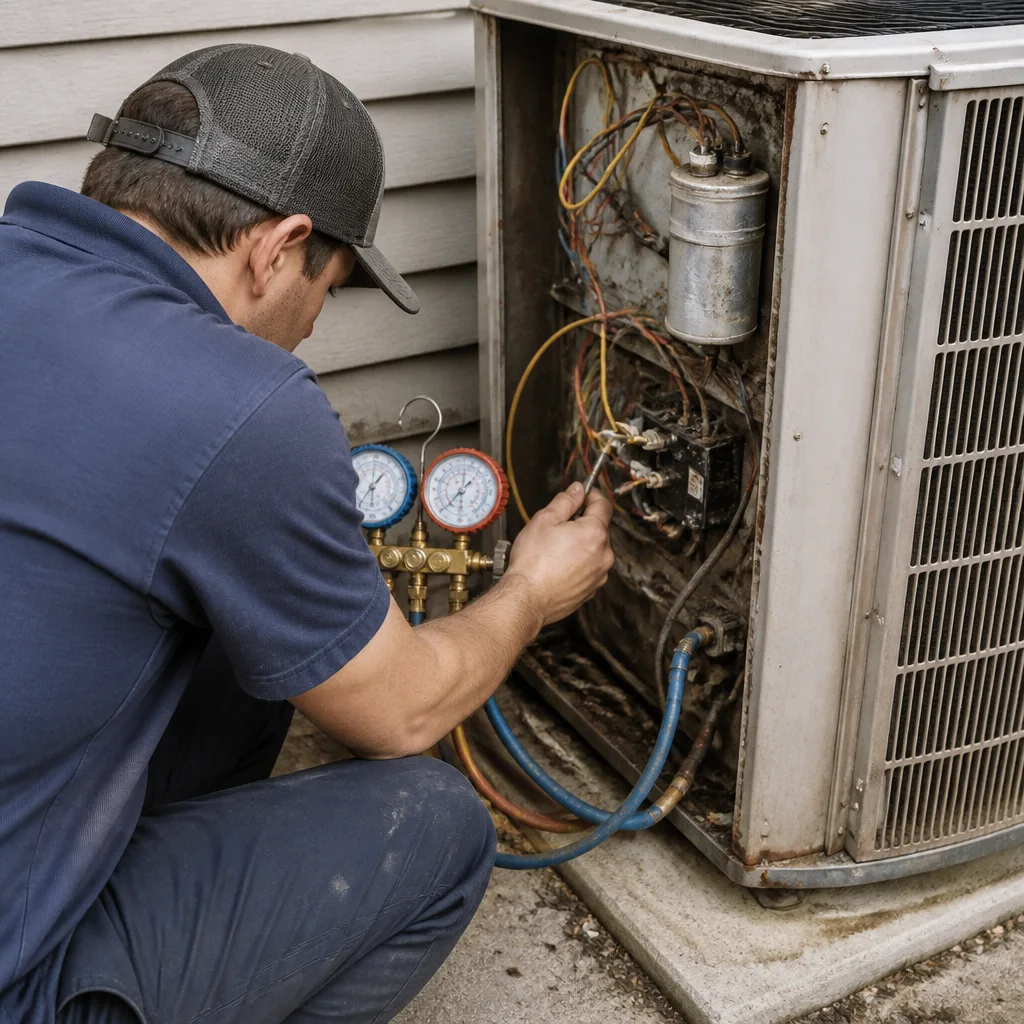 Before
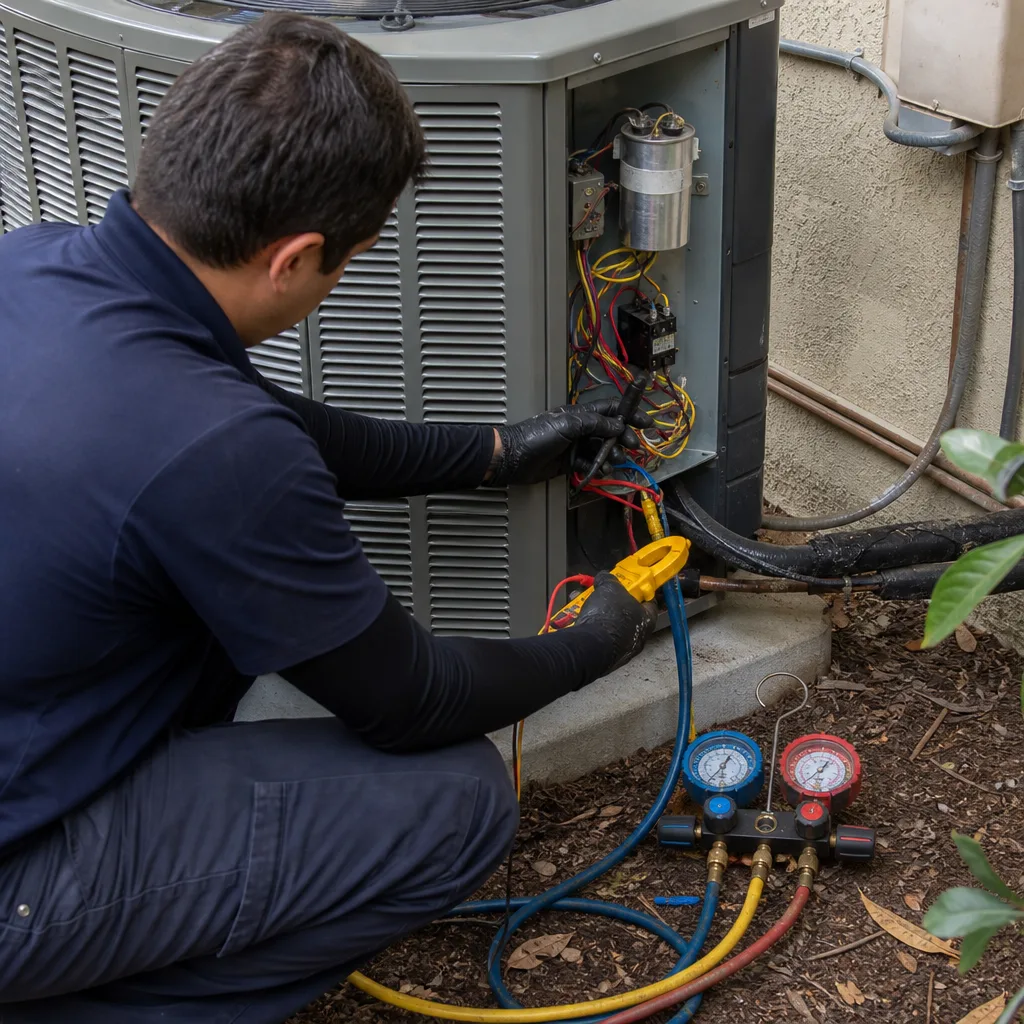 After
After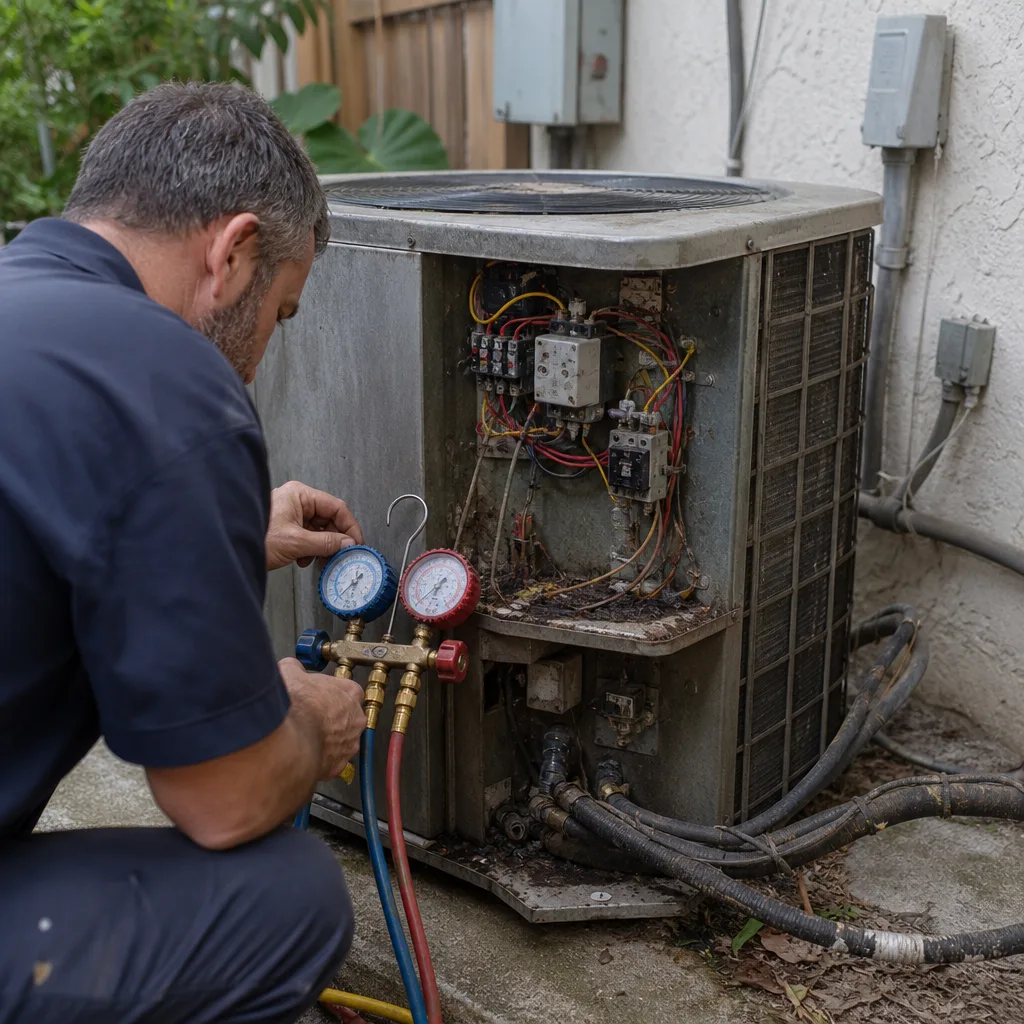 Before
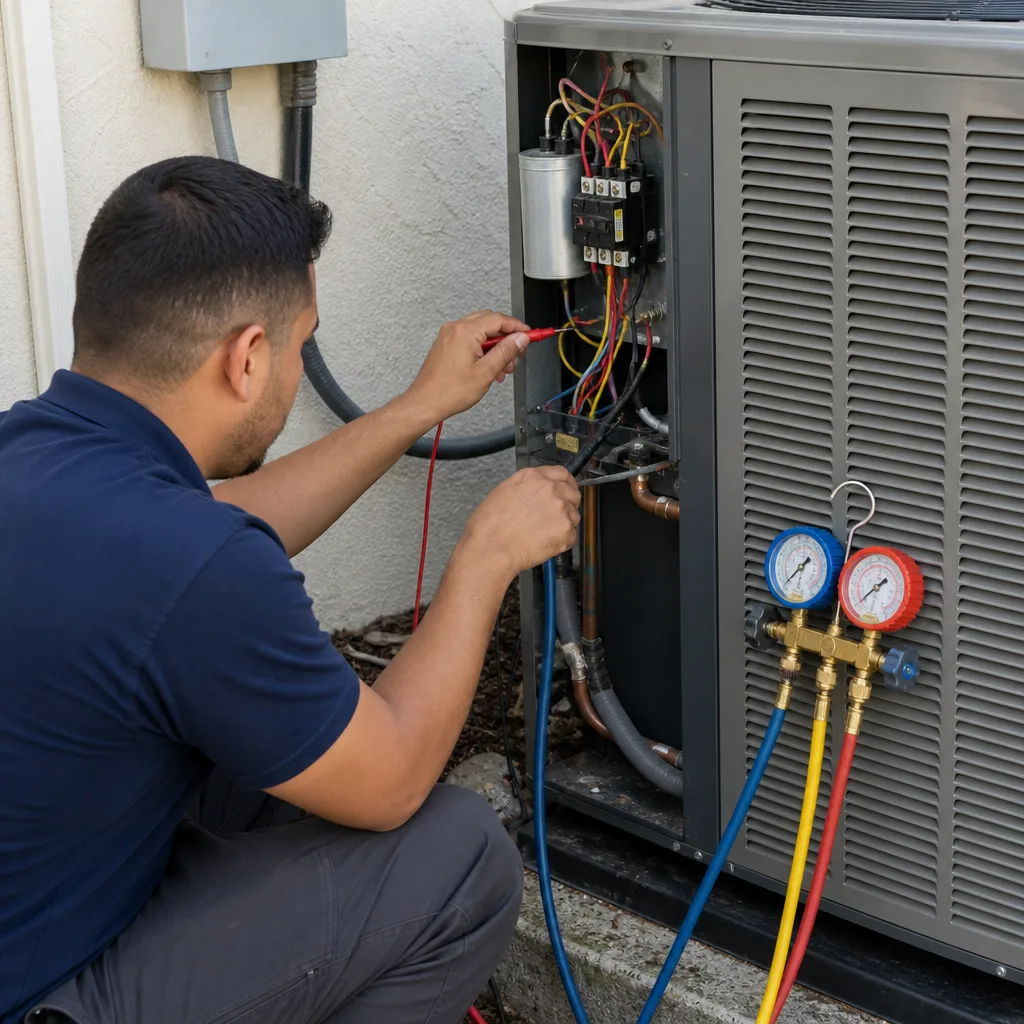 After
After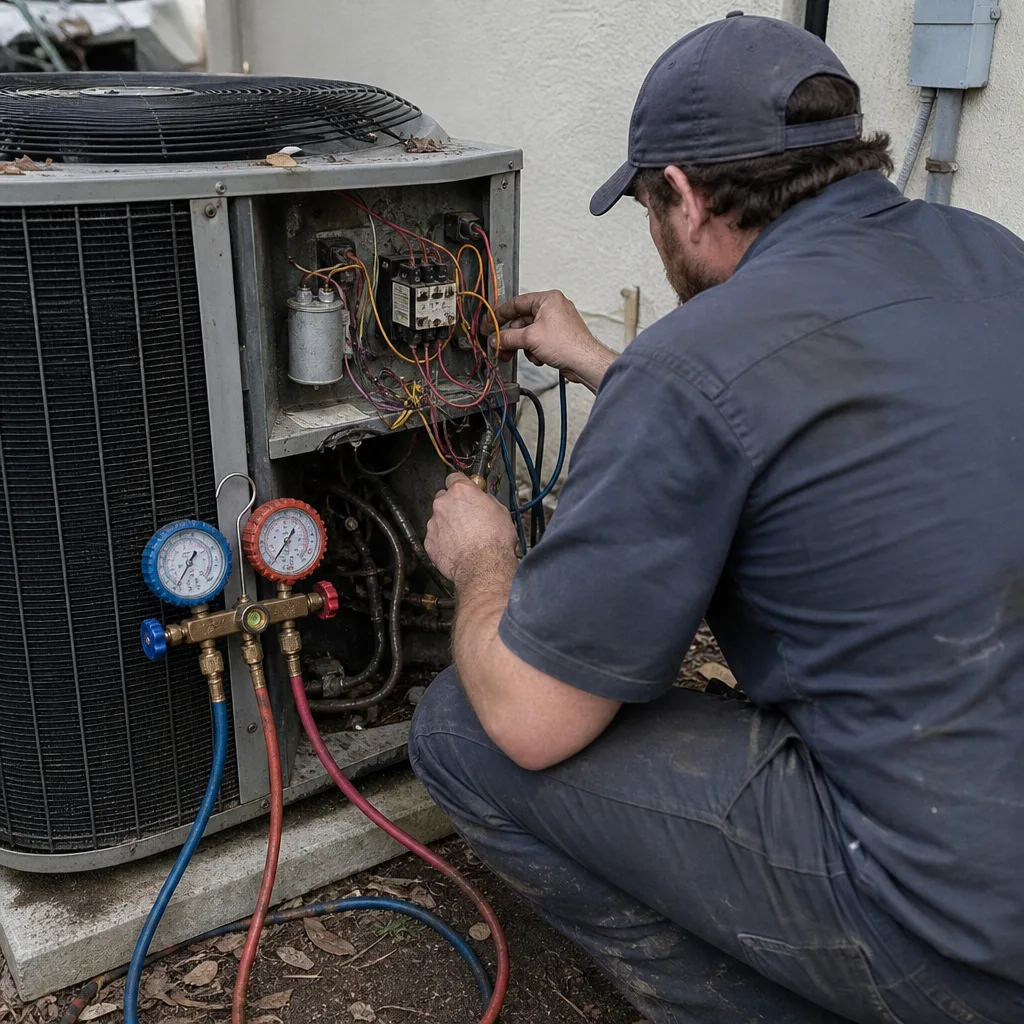 Before
 After
AfterReplacement Cost & What’s Included
In Orlando, Daikin ductwork repair falls within our standard AC repair range: $150 to $650 installed, with the average job landing around $300 to $450. The spread depends on what we find. A simple re-secure and mastic seal at a separated take-off collar is on the low end. Replacing a crushed or torn flex run – including cutting out the failed section, installing new R-8 flex, sealing with mastic and zip-ties, and re-hanging to code – runs higher, especially if the access is tight or the failing duct is buried under insulation in a low-clearance attic.
Every quote includes the part, the labor, the sealants and fasteners, and verification. We give you a written price before anything gets touched. That’s the Halden way, and it’s non-negotiable. The work is backed by our 365-Day Done Right Promise. If the repair fails within a year, we come back and make it right at no charge. No fine print, no arguing about whose fault the attic is.
DIY or Call Us?
You can spot-check your flex ducts safely. Look for kinked sections, crushed runs where someone stored boxes on top of ducts, disconnected collars, and visible tears in the outer jacket. You can also feel at each register in the house and note which rooms have weak airflow. That information helps us diagnose faster when we arrive.
Where DIY goes wrong: cutting into a pressurized duct system without a manometer telling you the static pressure will lead to misdiagnosis. And working in an Orlando attic in summer is genuinely dangerous. Attic temperatures routinely hit 120-130°F between June and September. Heat exhaustion hits fast, and a misstep through a ceiling joist is a serious injury. Mastic sealing is also easy to do wrong – we’ve fixed plenty of DIY seals where the homeowner used duct tape (it degrades in heat and peels), didn’t clean the surface, or sealed a fitting that wasn’t actually seated. Call (850) 695-3178 and we’ll give you a written price and a live arrival time. You know what it costs before we pull a single tool off the truck.
FAQs
Flex duct in an Orlando attic typically lasts 10 to 15 years before the insulation breaks down or the inner liner develops tears. Fiberglass duct board runs longer, but we see plenty of older Orlando homes with original ductwork from the 1990s that should have been replaced a decade ago. If your ductwork is older than 15 years and showing the symptoms above, plan for section-by-section replacement, not endless patching. Call (850) 695-3178 and we’ll inspect what’s actually up there.
You can absolutely repair a single section. We replace only what’s failed – a crushed flex run, a detached take-off, a torn plenum connection. Whole-system duct replacement is only justified when the majority of runs are degraded, usually on ducts over 15 years old or installed below current code standard. We’ll show you photos of exactly what we found and what needs fixing before any work is approved.
Most single-section duct repairs are done in 2 to 4 hours, including the diagnostic check, the fix itself, and airflow verification at the register. Multi-section jobs can stretch to a full day. We’ll give you an arrival time when you book, and you can track us to your door on the day of the appointment. No four-hour windows.
Yes. We carry R-8 and R-6 flex duct in common diameters, collars, take-offs, hangers, mastic, and zip-ties on every service truck. Since Daikin doesn’t make proprietary ductwork, we’re installing industry-standard materials sized to your system’s airflow requirements – the same material a Daikin factory rep would specify. We also stock parts for Carrier, Trane, and Lennox systems, so mixed-brand homes are covered too.
No. Ductwork is field-installed and not covered by your Daikin equipment warranty. It’s a separate, site-built component. What we cover is our work: every repair carries a written one-year guarantee, and if it fails in that window, we return free of charge under our Done Right Promise. Tell you what it costs, tell you what’s broken – then we fix it. In that order.
Call (850) 695-3178 for a free estimate. Andre Fuller and the Halden Heating and Air Orlando team will give you a written price on Daikin ductwork repair before any work starts, with a live arrival time and a year of accountability on the back end.
Written by Andre Fuller, Owner & Lead HVAC Technician, Halden Heating and Air Orlando at Halden Heating and Air Orlando, serving Orlando and nearby areas.