
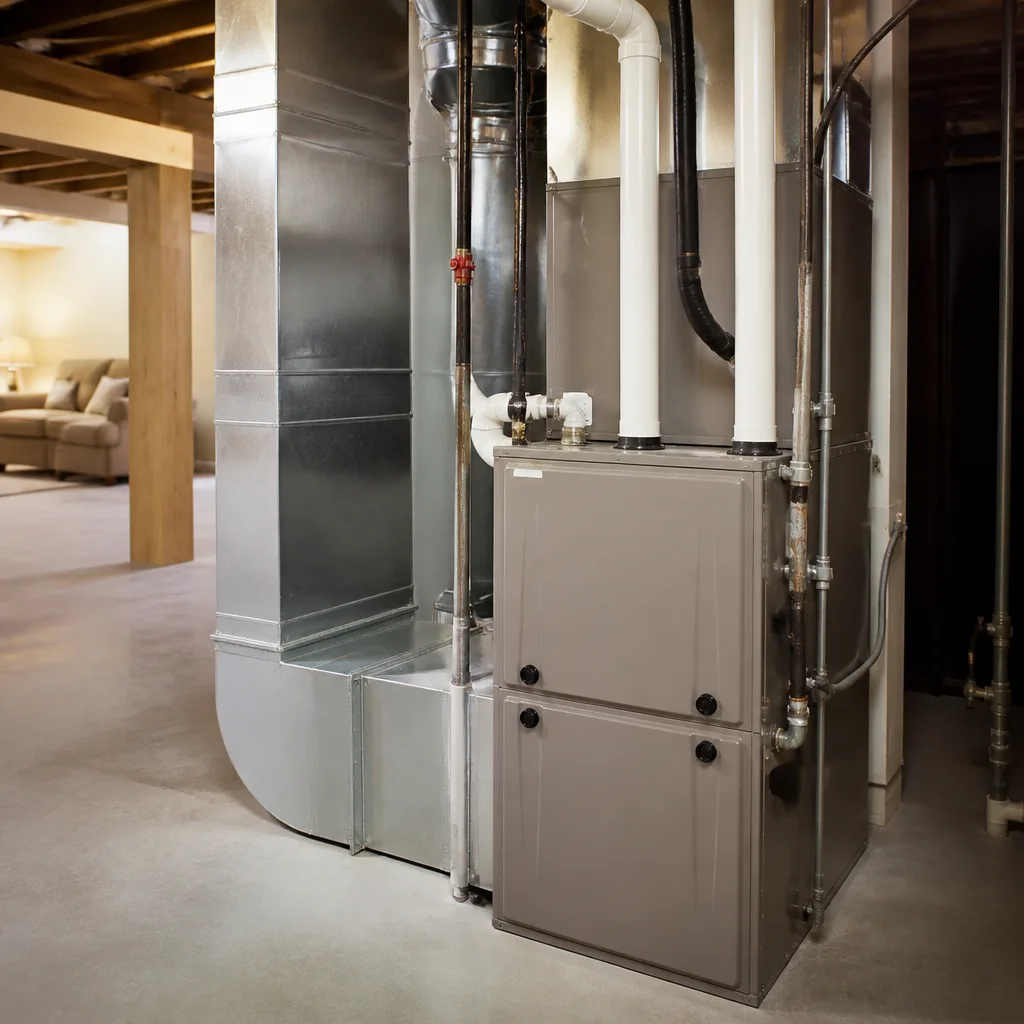
 Furnace & heating
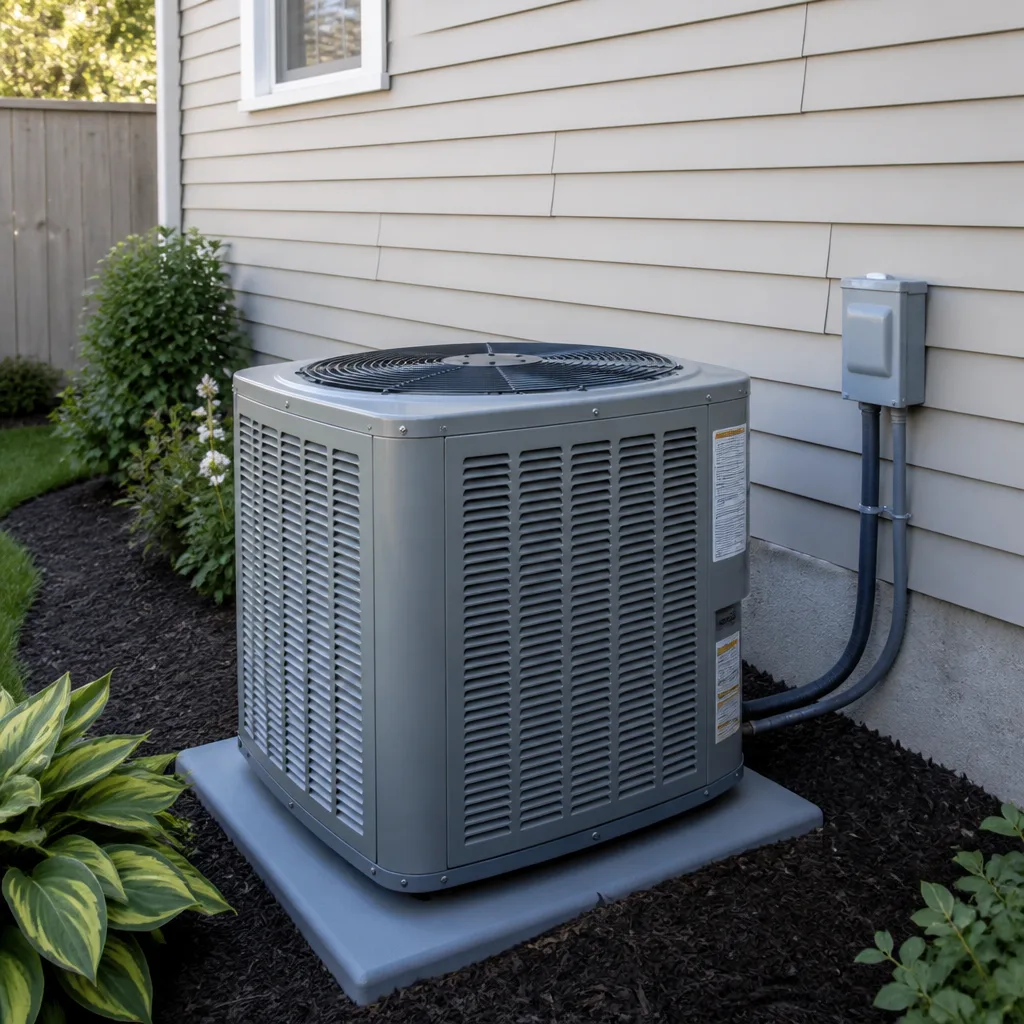 AC repair
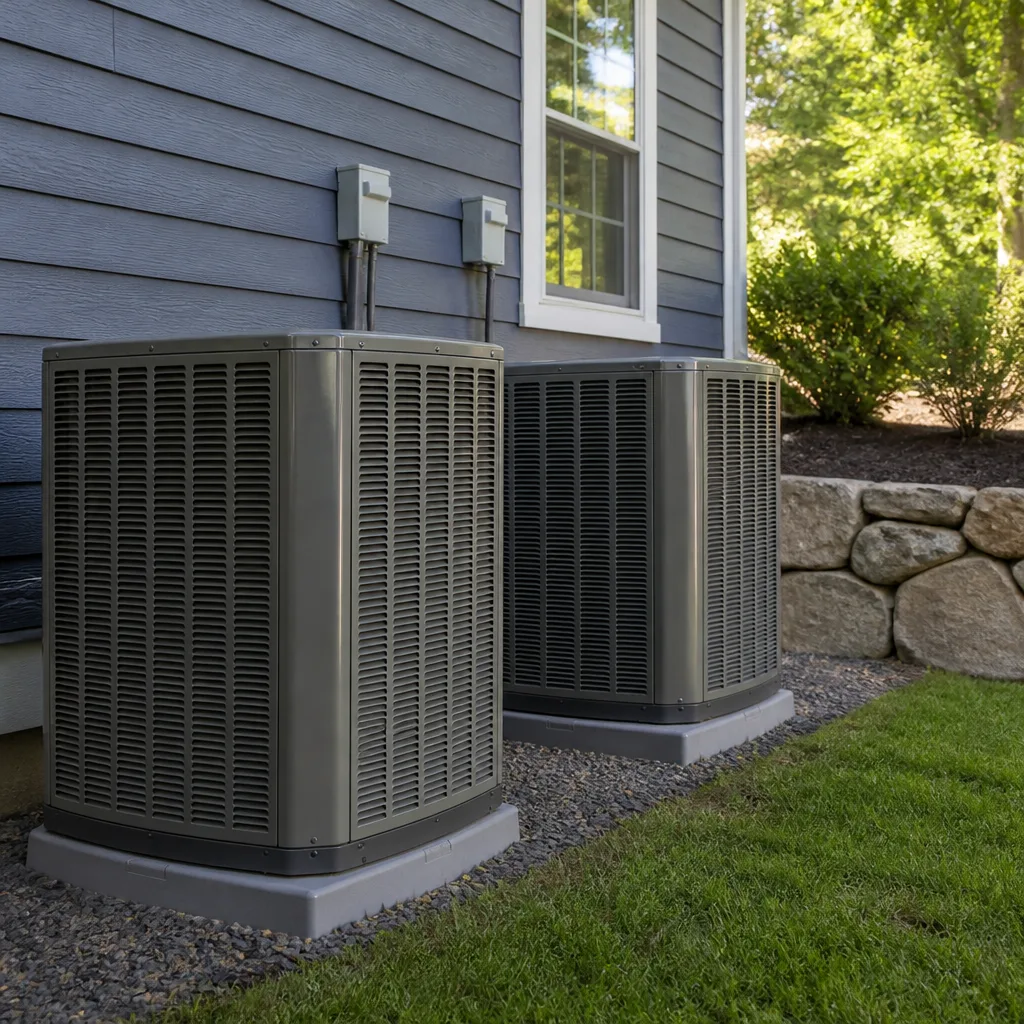 Heat pumps
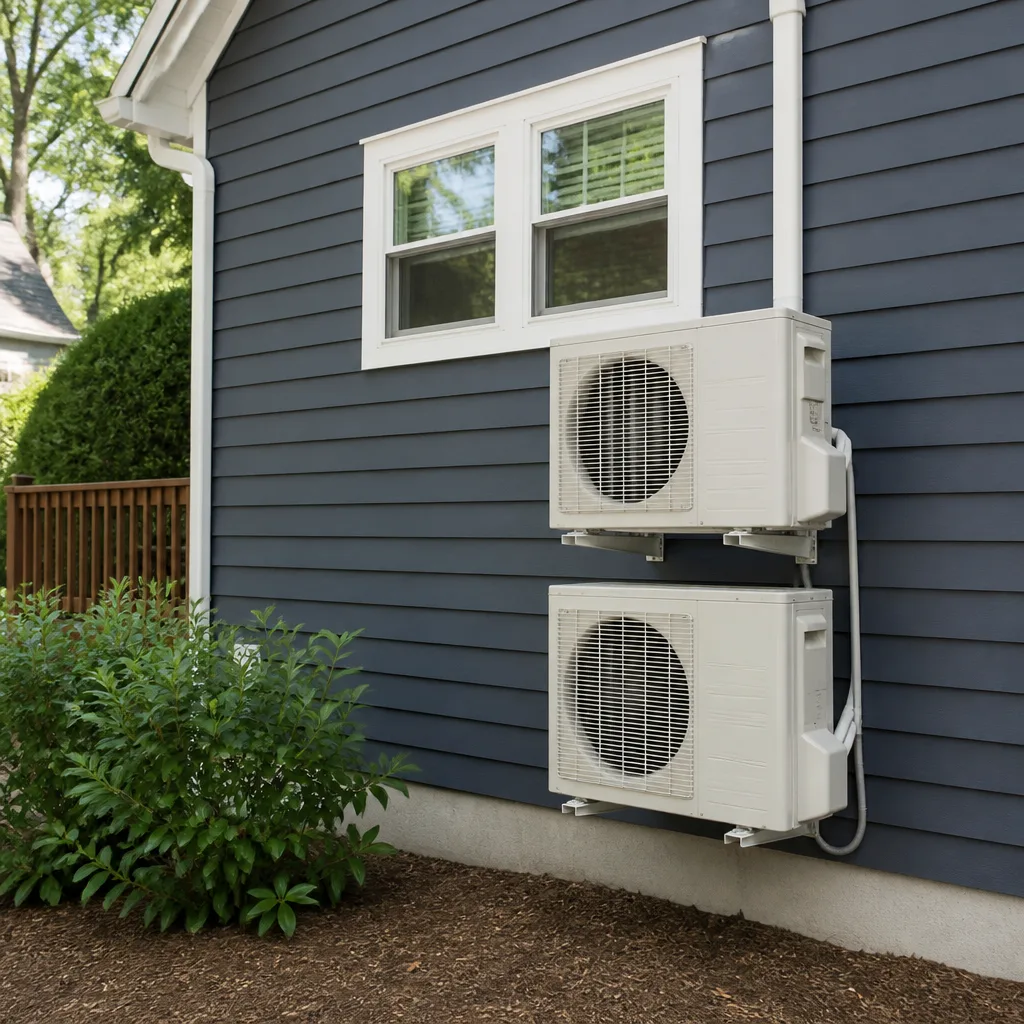 Ductless mini splits
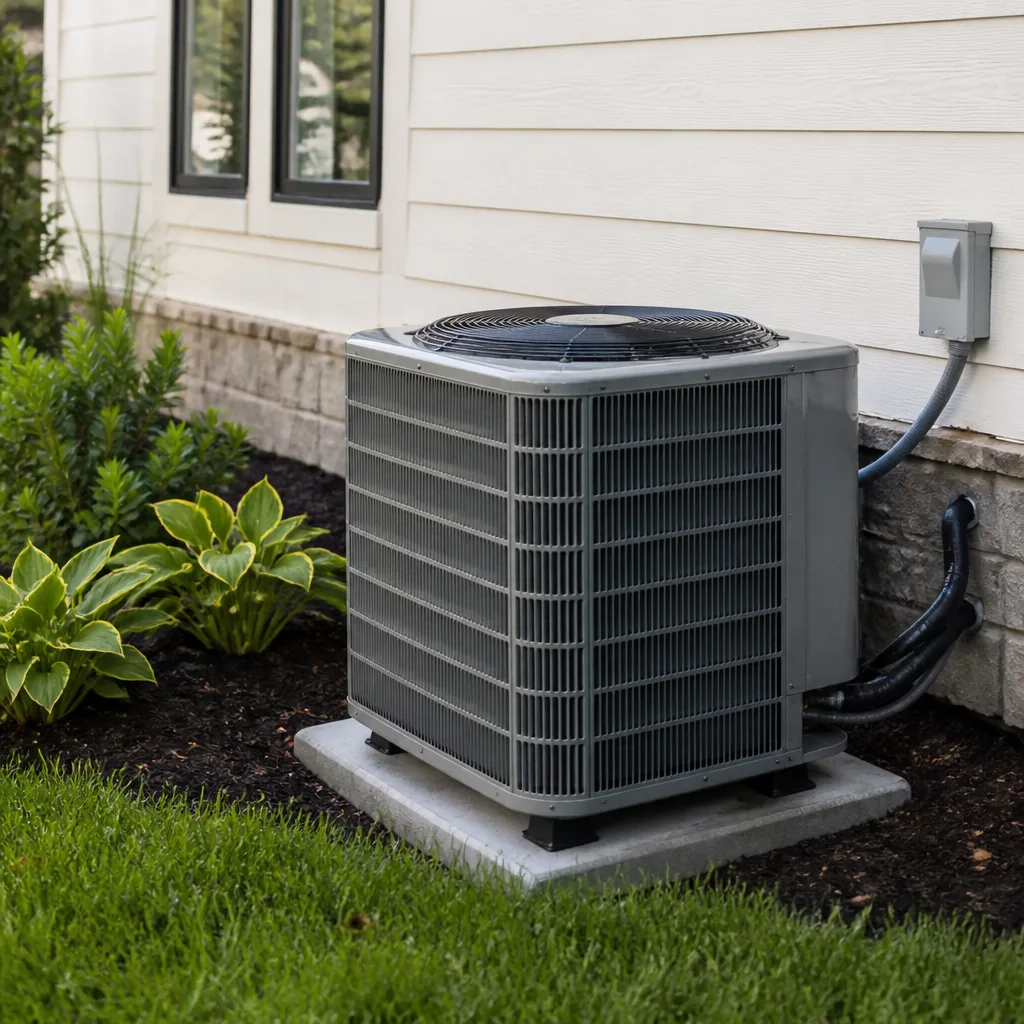 Carrier
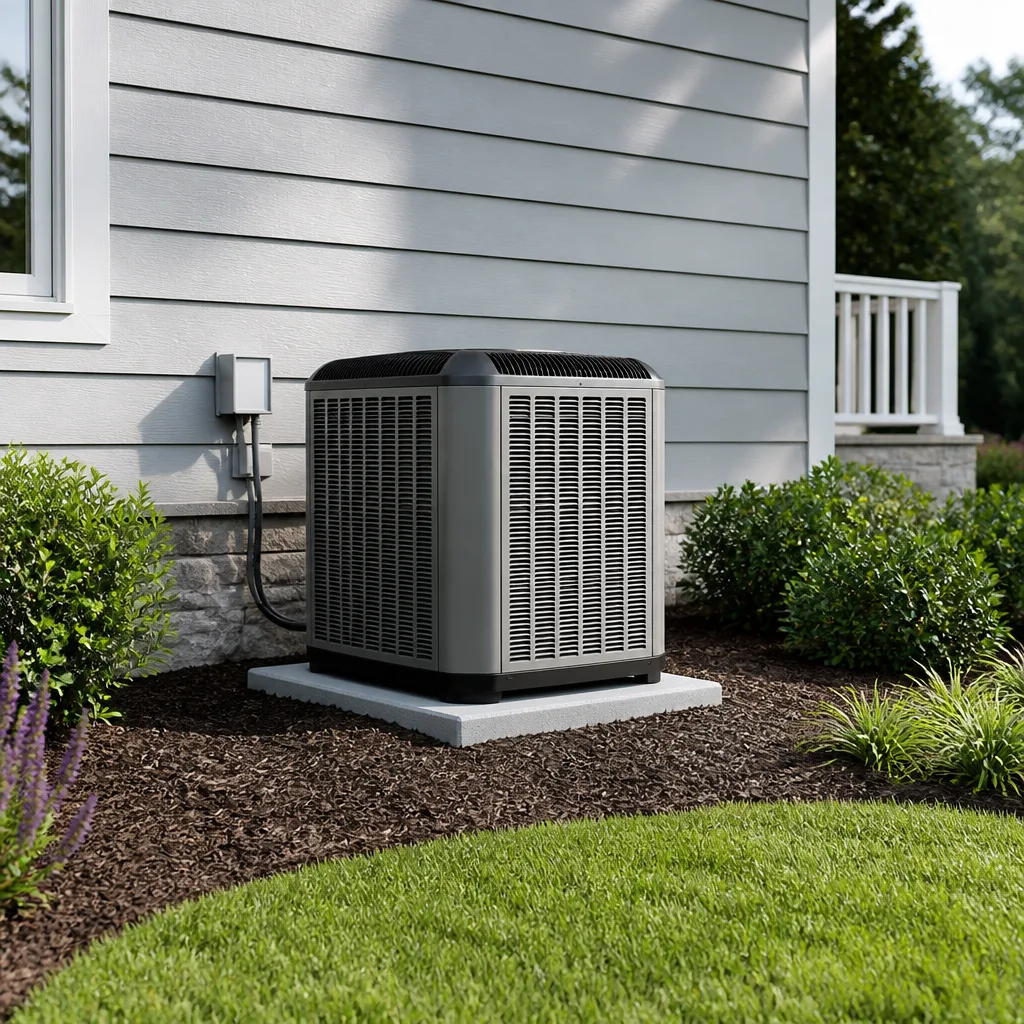 Trane
Trane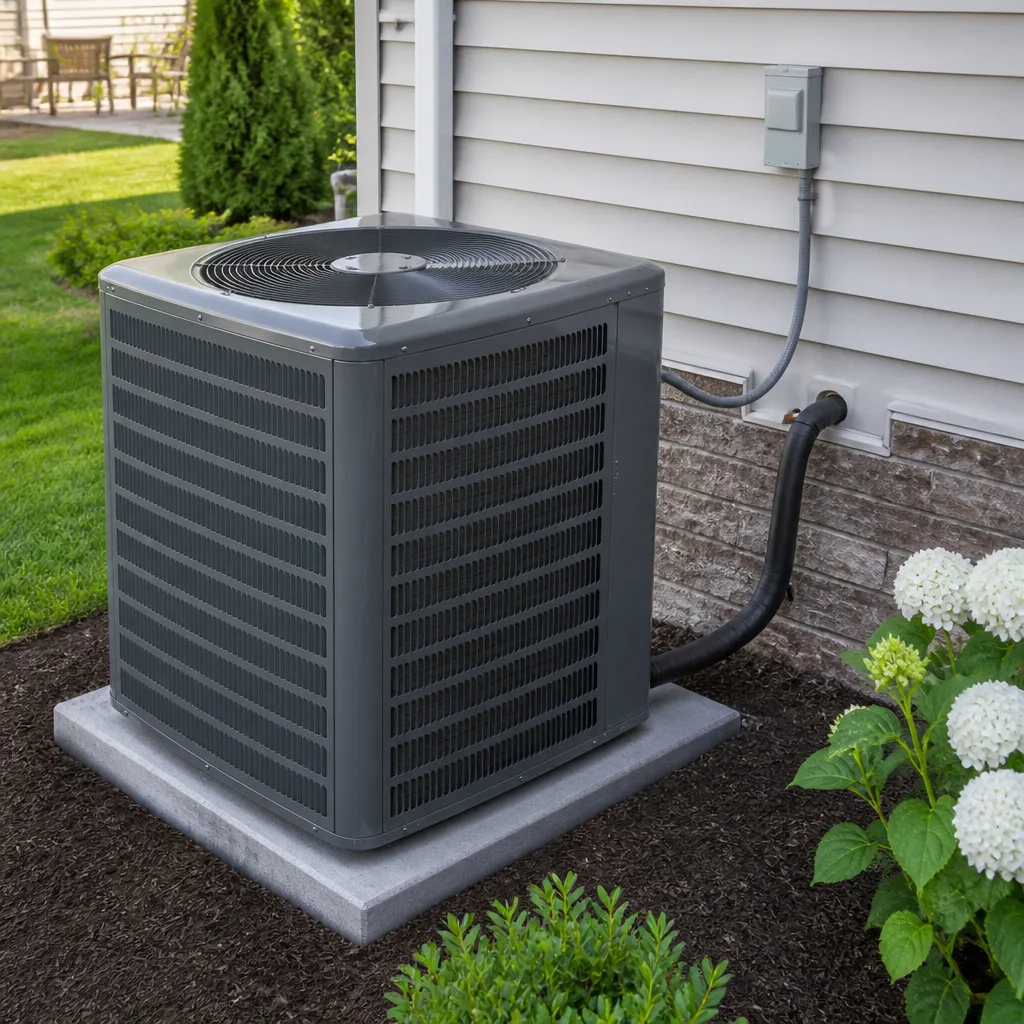 Goodman
Seasonal tune-up and full diagnostic on your Carrier, Trane, or Goodman system - readings shown to you before any repair is proposed
Diagnosis first, numbers second - you approve the repair price before a single part goes in.
Get your free estimateCarrier Heat Pump Service: The Orlando Owner’s Guide
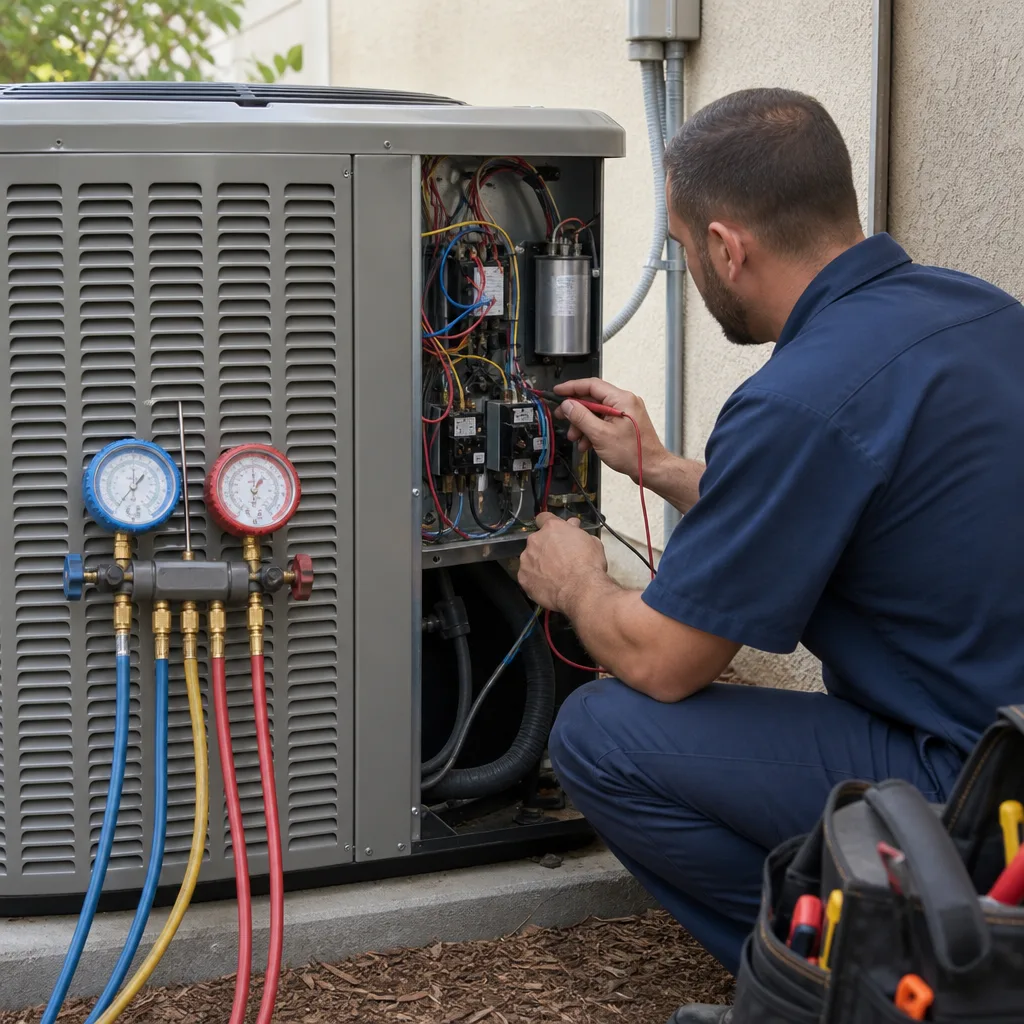
Carrier heat pump service in Orlando typically runs $150 to $650 installed, depending on the part that failed. We stock Carrier-compatible components on our trucks and can usually diagnose and repair your heat pump the same day you call. Most Orlando homeowners discover they need service when the system starts blowing warm air in the middle of July, the outdoor unit runs constantly without cooling the house, or the thermostat reads one temperature while every room in the house feels like another.
Here’s the reality of owning a heat pump in Central Florida: your system works year-round. It cools you through the brutal Orlando summers and heats you during those January nights when the temperature drops into the 40s. That’s twice the runtime of a furnace-only setup up north, which means parts wear out faster here. We see it constantly, especially in neighborhoods like Dr. Phillips and Baldwin Park, where systems run nearly nonstop from March through October.
Which Carrier Models This Applies To
If your heat pump was made in the last 15 years or so, it’s likely from one of four Carrier product families: Infinity, Performance, Comfort, or the budget-friendly Payne line (which Carrier owns). Each series uses slightly different control boards, defrost sensors, and reversing valves. The Infinity line, for example, uses communicating technology that requires matching components, while the Comfort series is simpler and has more universal part compatibility. This matters because a part that fits a Comfort 25HCB might not work at all in an Infinity 25VNA.
The fastest way to identify what you need is the model number on the outdoor unit’s data plate. It’s usually stamped on a metal tag on the side or back of the condenser. That number tells us the exact series, tonnage, and refrigerant type (R-410A for most Orlando systems installed after 2010). For Carrier specifically, OEM parts are worth the extra cost on control boards and sensors because Carrier’s tolerances and communication protocols are tighter than most aftermarket manufacturers build for. For basic parts like capacitors and contactors, quality aftermarket equivalents from brands like Mars or Titan HD work just fine and save you money. When Andre Fuller and our crew roll up, we identify the exact match before we touch a single screw.
Styles & brands we work with
Signs Your Carrier Heat Pump Service Is Failing
- Warm air blowing from vents in cooling mode. This usually points to a failed reversing valve (the part that switches your heat pump between heating and cooling) or a refrigerant leak. If the valve sticks, your system thinks it’s still heating the house even when the thermostat says cool.
- Outdoor unit running but no air moving inside. Your blower motor or run capacitor may have failed. In Orlando’s humidity, blower motors work overtime pushing air across wet coils, and capacitors cook in the heat on the condenser side.
- System short-cycling (turning on and off every few minutes). This is often a failing thermostat sensor, a clogged condensate line tripping the safety switch, or a compressor that’s overheating and shutting down on thermal overload. Short-cycling is a fast track to a dead compressor if you ignore it.
- Ice building up on the outdoor unit in hot weather. That’s your defrost control board or defrost sensor acting up, or low refrigerant causing the coil to freeze. In Orlando’s humidity, this happens faster than you’d think, and pushing the system while it’s iced over can destroy the compressor.
- Unusual grinding, squealing, or buzzing noises. Grinding usually means a failing fan motor bearing. A loud buzz with no start often points to a bad start capacitor or contactor. These are repairable if caught early, but letting them ride for a few weeks can turn a $150 part swap into a $600 motor replacement.
See the difference
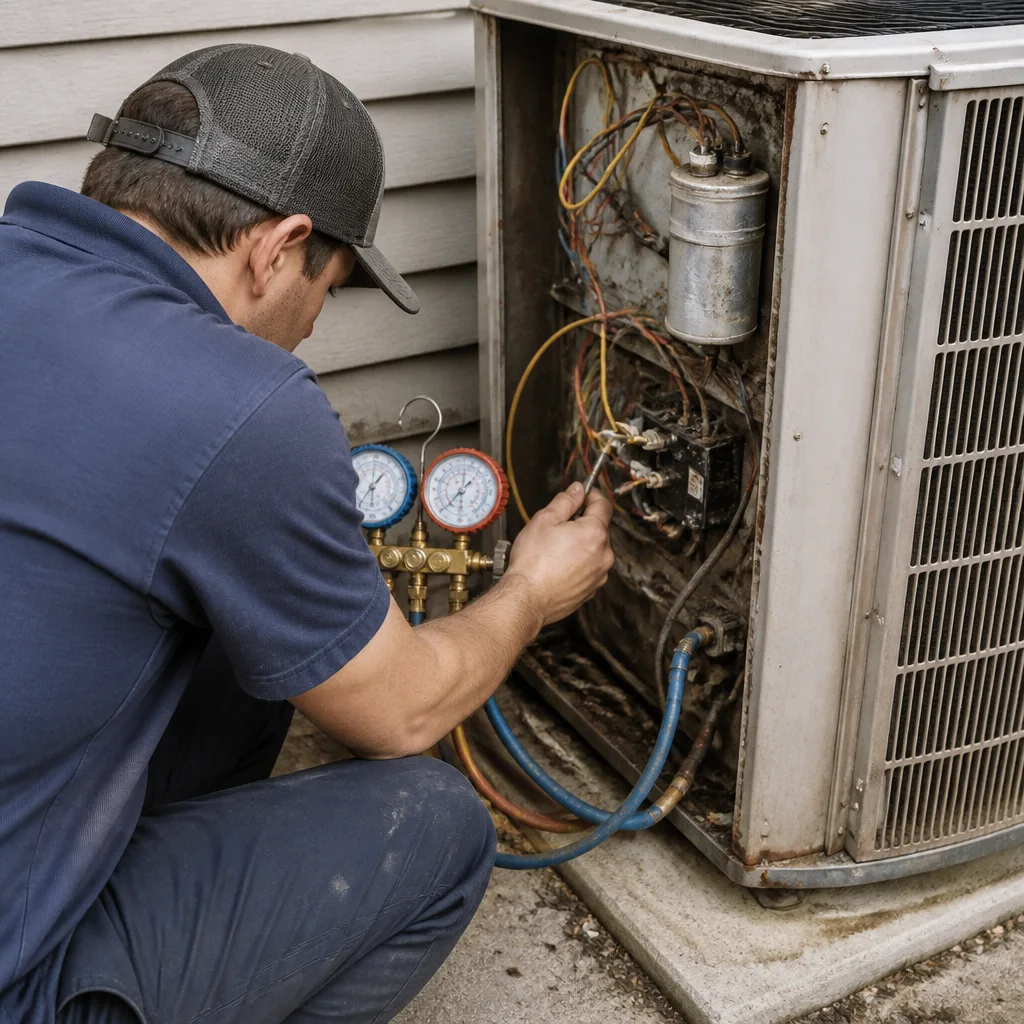 Before
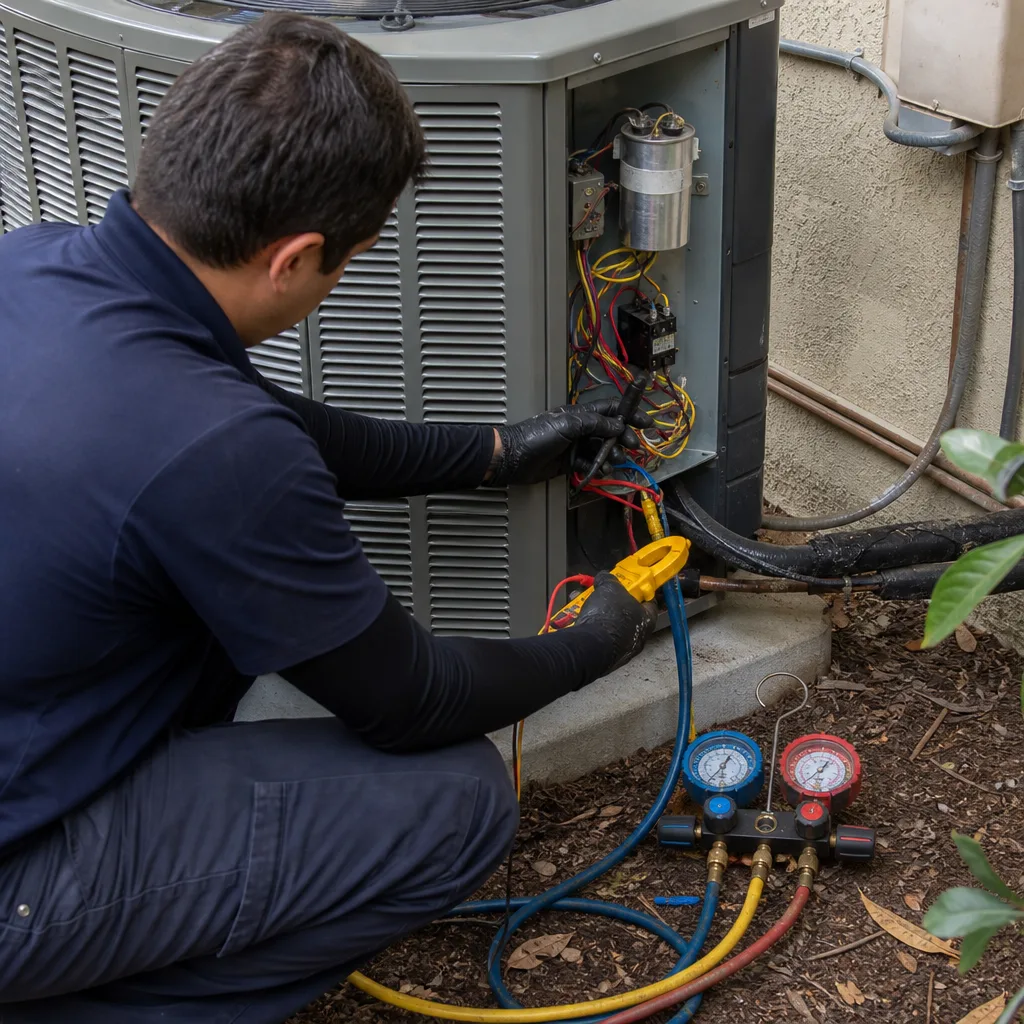 After
After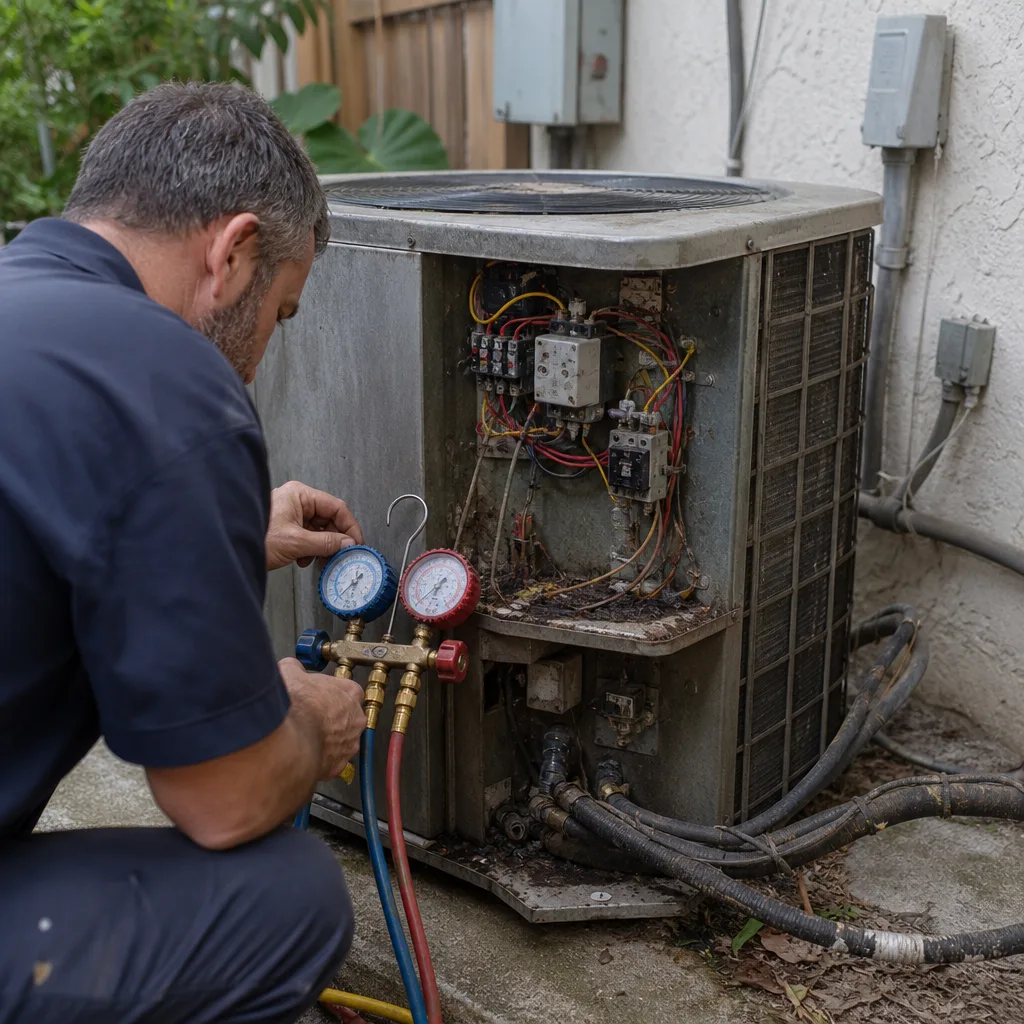 Before
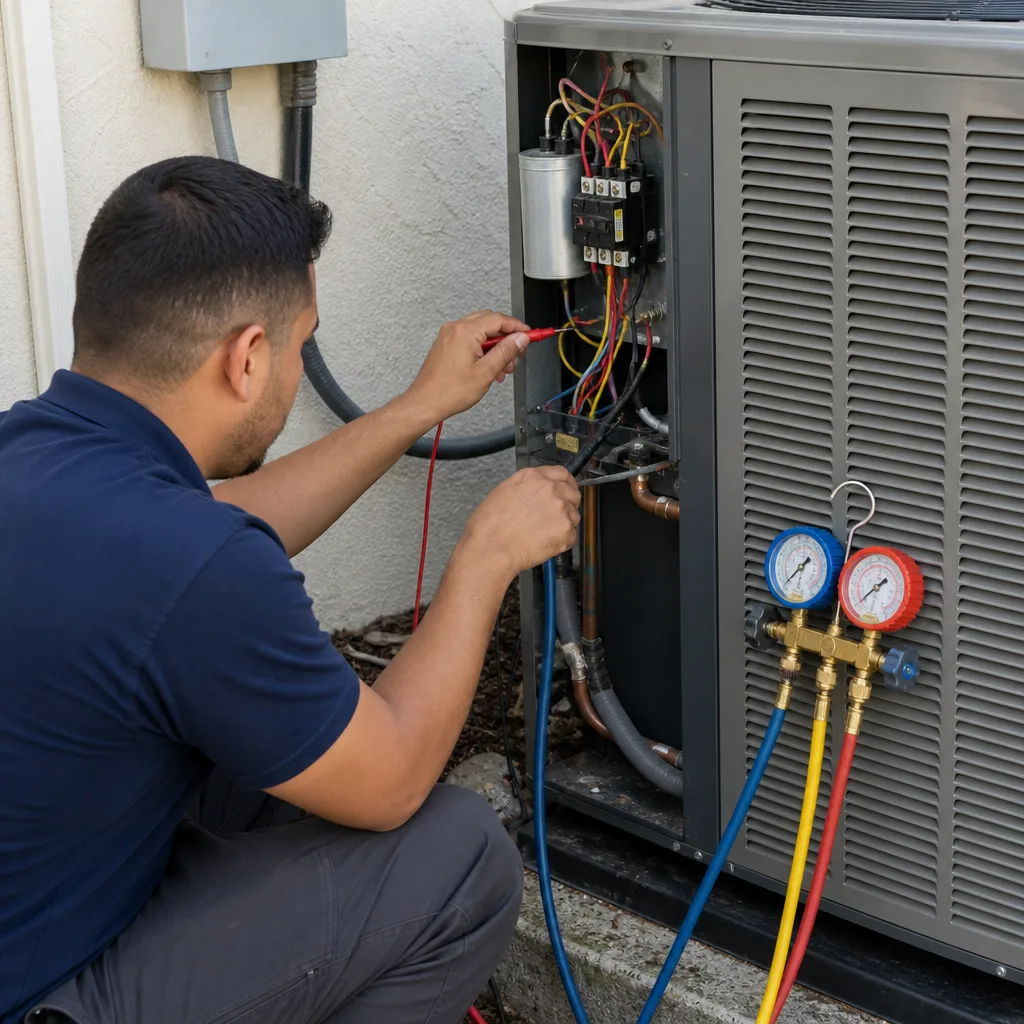 After
After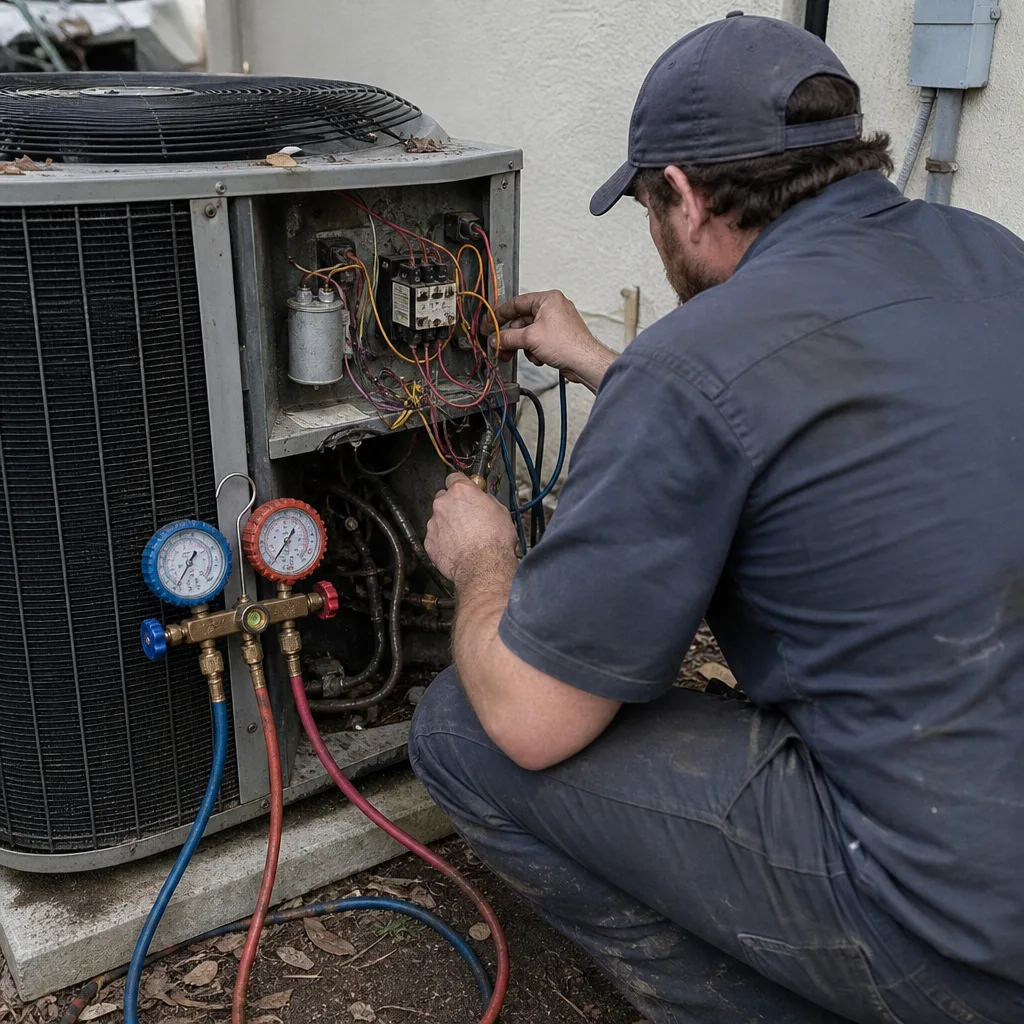 Before
 After
AfterReplacement Cost & What’s Included
Carrier heat pump service in Orlando typically falls between $150 and $650 installed. The final number depends on the part, the Carrier series, and labor. Here’s a breakdown of what you can expect:
- Capacitors and contactors: $150 to $250 installed. These are the most common failures we see on Orlando heat pumps because they sit in the outdoor unit and bake in the Florida sun.
- Control boards and defrost sensors: $250 to $450 installed. Carrier boards run higher than universal equivalents, but they communicate correctly with your system.
- Motors (fan or blower): $300 to $650 installed. Larger, variable-speed motors on Infinity systems sit at the higher end of that range.
- Refrigerant recharge or reversing valve: $350 to $650, depending on severity and the specific valve.
Every quote includes the part, the labor, and a written guarantee before we do the work. If the repair fails within the coverage window, we come back free, no arguing required. That’s the 365-Day Done Right Promise, and it’s not an add-on. No surprises at the door, no pressure to sign before you understand exactly what you’re paying for.
DIY or Call Us?
There’s a real safety line here, and we want you to know exactly where it is. Heat pumps contain high-voltage capacitors that can hold a lethal charge even after the system is unplugged. If you’re not trained to discharge capacitors safely, do not open the service panel. That’s the electrical equivalent of poking a live wire with a fork. We’d rather you call us and let a background-checked professional handle it.
What you can safely check yourself: make sure your thermostat is set correctly (sounds obvious, but we get these calls weekly), check that your breakers haven’t tripped at the panel, swap out a dirty air filter, and verify the outdoor unit isn’t blocked by landscaping or debris. If those boxes are checked and your system is still acting up, call (850) 695-3178 and tell us what you’re seeing. We’ll give you a straight answer on whether it needs a service call or not. Tell you what it costs, tell you what’s broken, then we fix it. In that order.
FAQs
Most Carrier heat pump components last 10 to 15 years, but Orlando’s heat and humidity push capacitors, contactors, and fan motors to the lower end of that range. A capacitor that might last 12 years in a northern climate often fails in 7 or 8 years here simply because it sits in a sun-baked outdoor unit running twice as many hours annually.
Some parts, like clogged drain lines or dirty sensors, can be cleaned and restored. But capacitors, contactors, boards, and motors are sealed components that get replaced when they fail, not rebuilt. Repairing a sealed capacitor or control board isn’t a real option, and anyone offering it is risking your system’s health to save a few dollars.
Most service calls run 1 to 2 hours from arrival to system running. That includes diagnosis time (testing the component, checking related wiring and pressures), the replacement itself, and a full system check afterward to confirm everything is cooling or heating correctly. We stock the most common Carrier-compatible parts on our trucks, so there’s no days-long wait for basic repairs.
Yes. While this page focuses on Carrier heat pump service, we work on Trane and Lennox systems regularly and stock common parts for all three. If you’ve got a mixed-brand system, which is more common in Orlando than people realize, we can handle that too.
If your Carrier heat pump is acting up, call (850) 695-3178 for a free estimate. We’ll answer in person, give you a real arrival time you can track, and put a written price in front of you before any work begins. That’s the Halden standard, and it applies to every single job we do.
Written by Andre Fuller, Owner & Lead HVAC Technician, Halden Heating and Air Orlando at Halden Heating and Air Orlando, serving Orlando and nearby areas.