
Last updated October 16, 2026
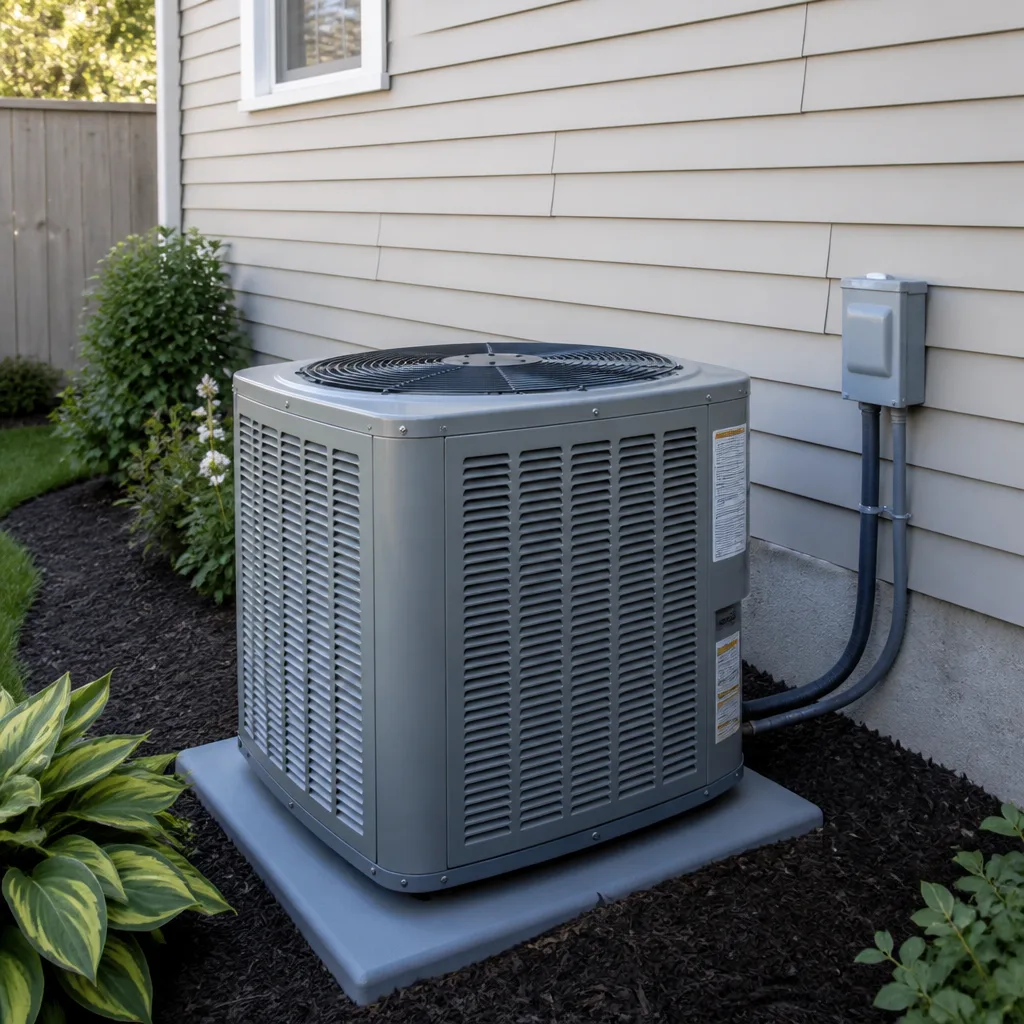 AC repair
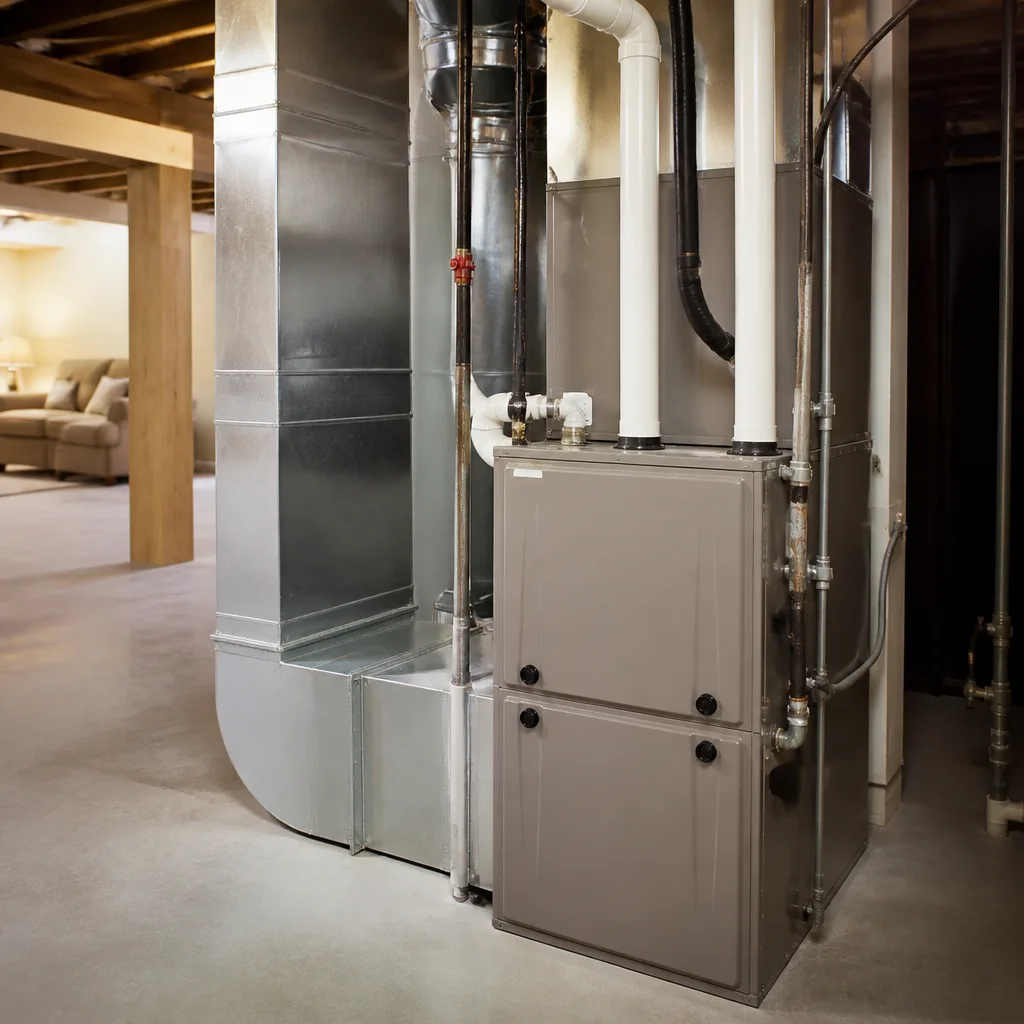 Furnace & heating
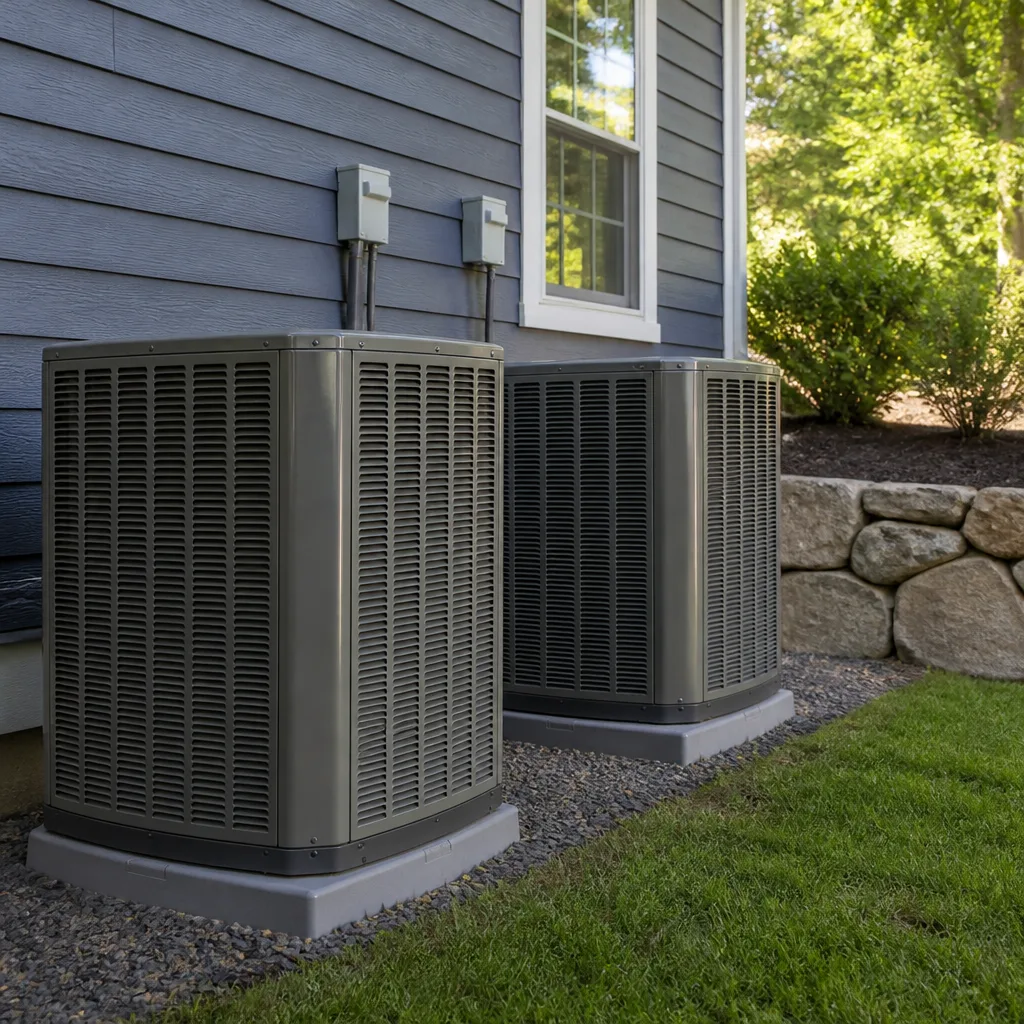 Heat pumps
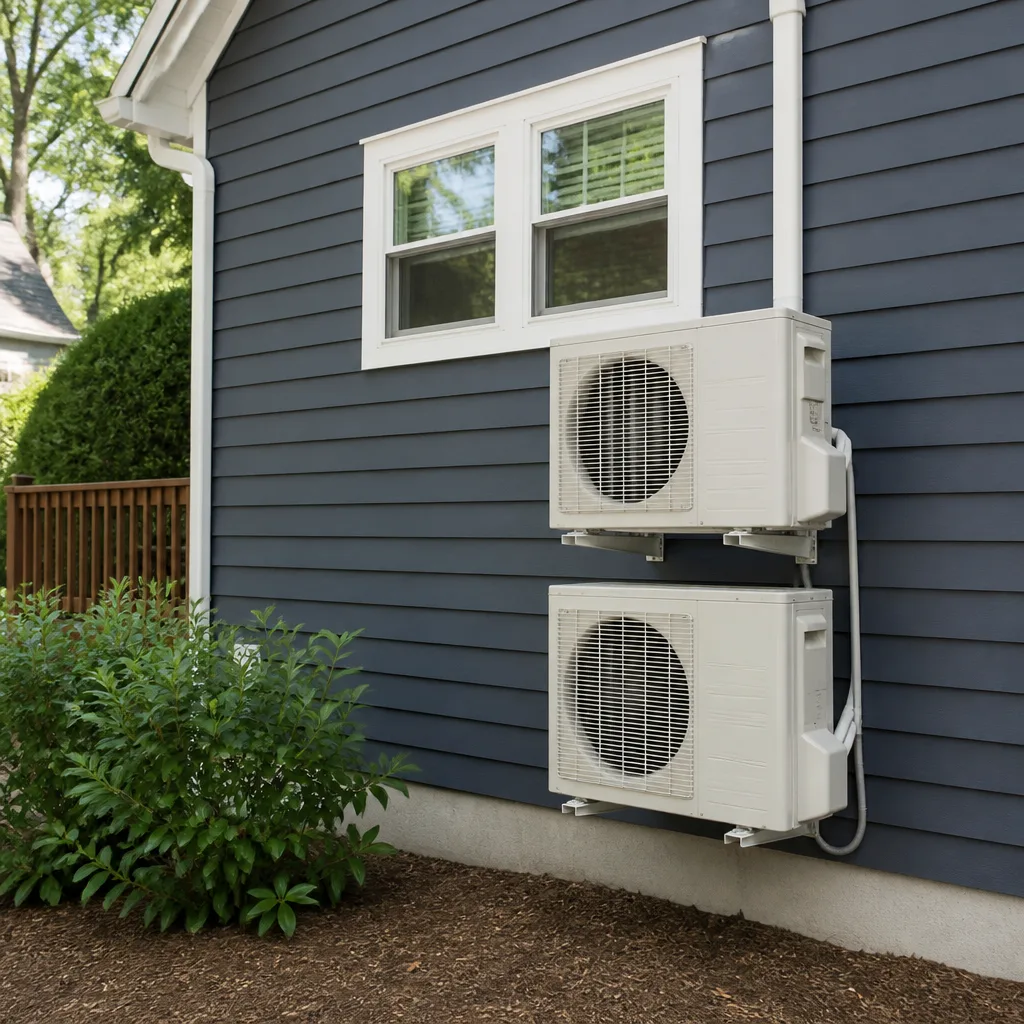 Ductless mini splits
 Carrier
 Trane
Trane Goodman
Seasonal tune-up and full diagnostic on your Carrier, Trane, or Goodman system - readings shown to you before any repair is proposed
Diagnosis first, numbers second - you approve the repair price before a single part goes in.
Get your free estimateDIY vs Professional HVAC: The Orlando Homeowner’s Decision Guide
Handling refrigerant without an EPA 608 certification isn’t a building code issue in Orlando, it’s a federal violation with fines starting at $44,539 per day. That number surprises most homeowners, and it should. The real line between DIY and professional HVAC work isn’t drawn at mechanical difficulty. It’s drawn at refrigerant, electrical panels, and permits. This guide gives you a clear, honest map of what you can safely handle yourself in Orlando’s climate, what legally requires a licensed contractor, and where the warranty and insurance traps hide. For related reading, see our How to Hire a HVAC Contractor in Orlando: A Step-by-Step Guide. By the end, you’ll know exactly which tasks save you money and which ones put you at risk.
Quick Answer
Orlando homeowners can safely DIY basic HVAC maintenance like filter changes, thermostat swaps, and condensate line flushes, which saves roughly $150 to $300 per year. But any task involving refrigerant, electrical wiring beyond the thermostat, or equipment replacement legally requires an EPA 608 certified technician and a Florida licensed contractor. Attempting those jobs yourself can void your manufacturer warranty, trigger federal fines, and leave you paying full price for a repair that insurance would have covered.
Styles & brands we work with
Table of Contents
- The Legal Line: What Florida Law Actually Says
- DIY-Safe Tasks: What You Can Do This Weekend
- Pro-Only Tasks: Where DIY Goes Wrong Fast
- The Warranty Fine Print Nobody Reads
- The Honest Cost Comparison
- The Tech Layer: Smart Tools That Reduce Service Calls
- Insurance and the DIY Paper Trail
- Orlando-Specific Factors That Change the Math
The Legal Line: What Florida Law Actually Says
Florida draws a hard line between homeowner maintenance and contractor-only work, and it’s not based on how handy you are. The federal Clean Air Act requires anyone handling refrigerant, even to add a pound to a low system, to hold an EPA Section 608 certification. That’s not a Florida rule; it’s federal law enforced by the EPA, and the fines start at $44,539 per violation per day. When we talk to homeowners in Orlando who attempted a DIY refrigerant recharge based on a YouTube tutorial, most had no idea that’s the exposure they accepted when they connected that gauge set.
Florida building code adds another layer. Any equipment replacement, duct modification, or electrical work beyond a simple thermostat swap requires a permit and a licensed contractor. Pulling a permit as a homeowner is possible for some work, but HVAC mechanical permits in Orange County typically require a licensed contractor’s signature on the application. So the legal line isn’t fuzzy. It’s bright, and it’s drawn at refrigerant and permits.
Here is the definitive breakdown for Orlando homeowners:
- Legal for homeowners without any license: air filter replacement, thermostat battery replacement, cleaning debris from around the outdoor unit, pouring vinegar or a mild cleaner into the condensate drain line, and visual inspection of the system.
- Legal but often unwise for homeowners: swapping a basic thermostat (low voltage, but wiring mistakes can blow a transformer or control board), condensate line flushing with compressed air (risk of blowing the line apart if pressure is too high), and cleaning evaporator coils that are easily accessible.
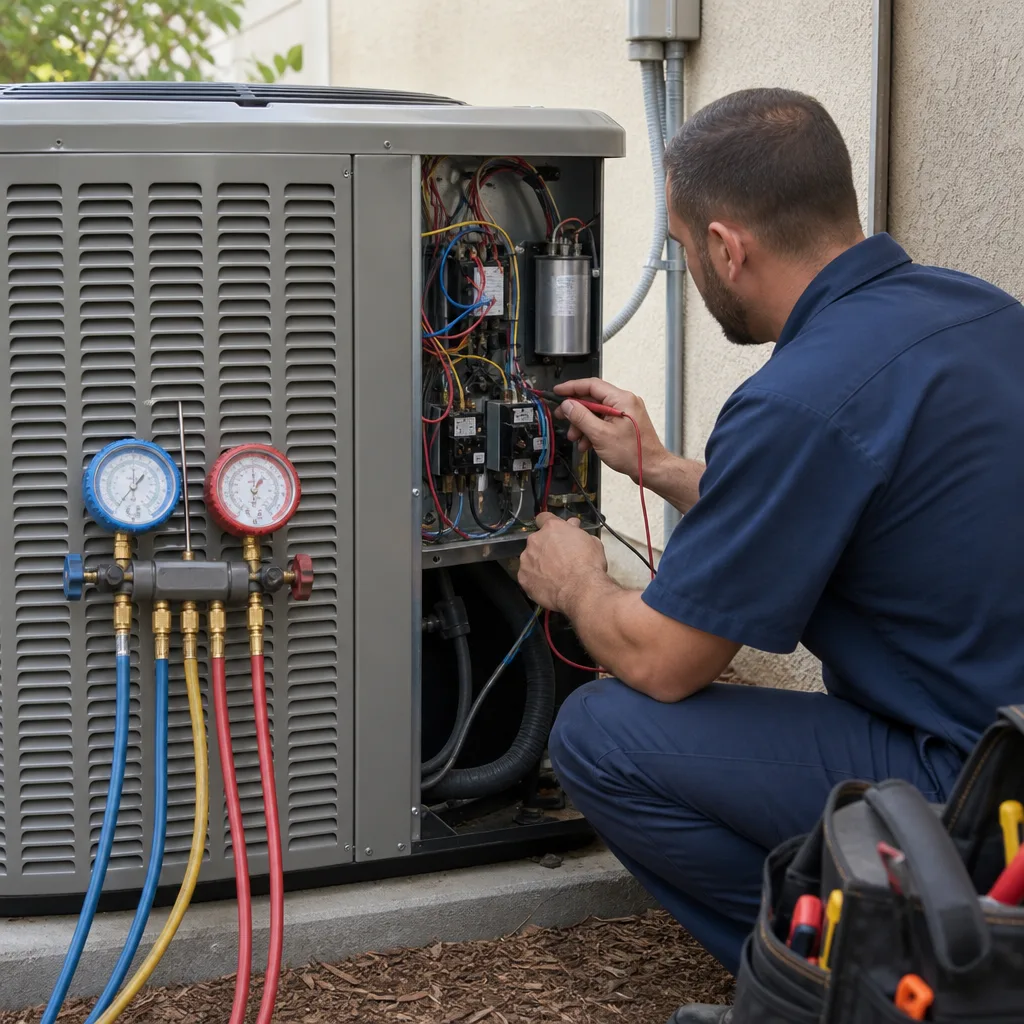
- Illegal without EPA 608 certification: adding or removing refrigerant, repairing any component in the sealed refrigeration system, installing a new line set, and recovering refrigerant from a system before replacement.
- Illegal without a Florida licensed contractor and permit: full system installation, compressor replacement, evaporator coil replacement, condenser replacement, any ductwork modification, and any electrical panel work feeding the HVAC system.
This matters in Orlando specifically because our cooling season runs roughly March through November. When a system fails in July, the pressure to “just recharge it” is enormous. But the legal exposure doesn’t change with the heat index. A $40 can of refrigerant from an auto parts store, used on a residential AC system, is a federal violation. The EPA has fined individual homeowners, not just contractors. We mention this not to scare you, but because nobody else in Orlando’s HVAC market leads with it, and you deserve to know the actual stakes before you open an access panel.
DIY-Safe Tasks: What You Can Do This Weekend
The good news: there is a meaningful list of maintenance tasks that are fully legal, genuinely safe, and worth doing yourself. These tasks don’t touch refrigerant, don’t open electrical enclosures, and don’t require permits. Done consistently, they extend equipment life and reduce the frequency of professional service calls.
- Replace your air filter every 30 to 60 days. In Orlando, pollen season and summer dust load mean filters clog faster than the manufacturer’s “90 days” suggestion. A clogged filter forces the blower motor to work harder, raises your energy bill, and shortens equipment life. A good MERV 8 or MERV 11 filter costs $8 to $20 and takes 60 seconds to swap. This is the single highest-value DIY task, and skipping it is the most common avoidable cause of service calls we see in Orlando.
- Flush the condensate drain line monthly during cooling season. Your AC pulls gallons of moisture out of Orlando’s humid air every day. That water drains through a PVC pipe that algae loves to clog. Pour one cup of white vinegar or a purpose-made condensate line cleaner into the drain line access point once a month. This prevents the number one cause of water damage and ceiling stains we see in Orlando homes.
- Clean around the outdoor condenser unit. Leaves, grass clippings, and Orlando’s famous oak pollen collect on the condenser fins. Turn off power at the disconnect box next to the unit, then gently remove debris by hand or with a soft brush. Never use a pressure washer: it bends the aluminum fins and reduces efficiency permanently.
- Check thermostat batteries and settings. If your thermostat runs on batteries, replace them twice a year. Weak batteries cause erratic behavior that looks like a system failure but costs $4 to fix. While you’re there, verify the fan setting is on “Auto” rather than “On.” Running the fan constantly recirculates humid air and can actually increase indoor humidity in Orlando.
- Inspect visible ductwork in the attic. Look for disconnected sections, crushed flex ducts, or visible gaps at connection points. If you find a disconnected duct, a licensed contractor should repair it properly with mastic sealant, but identifying the problem yourself saves diagnostic time and gives you clear information before making a call.
These five tasks, done consistently, save roughly $150 to $300 per year in avoided service calls and efficiency losses. They are the full extent of what we recommend for DIY. Everything beyond this list crosses into territory where the risk equation flips, which is exactly what the next section covers.
Pro-Only Tasks: Where DIY Goes Wrong Fast
Now for the tasks that look tempting but are prohibited or genuinely dangerous without training. These are the jobs we get called in to fix after a homeowner attempt made things worse, and the pattern is consistent.
Refrigerant Handling (Illegal Without EPA 608)
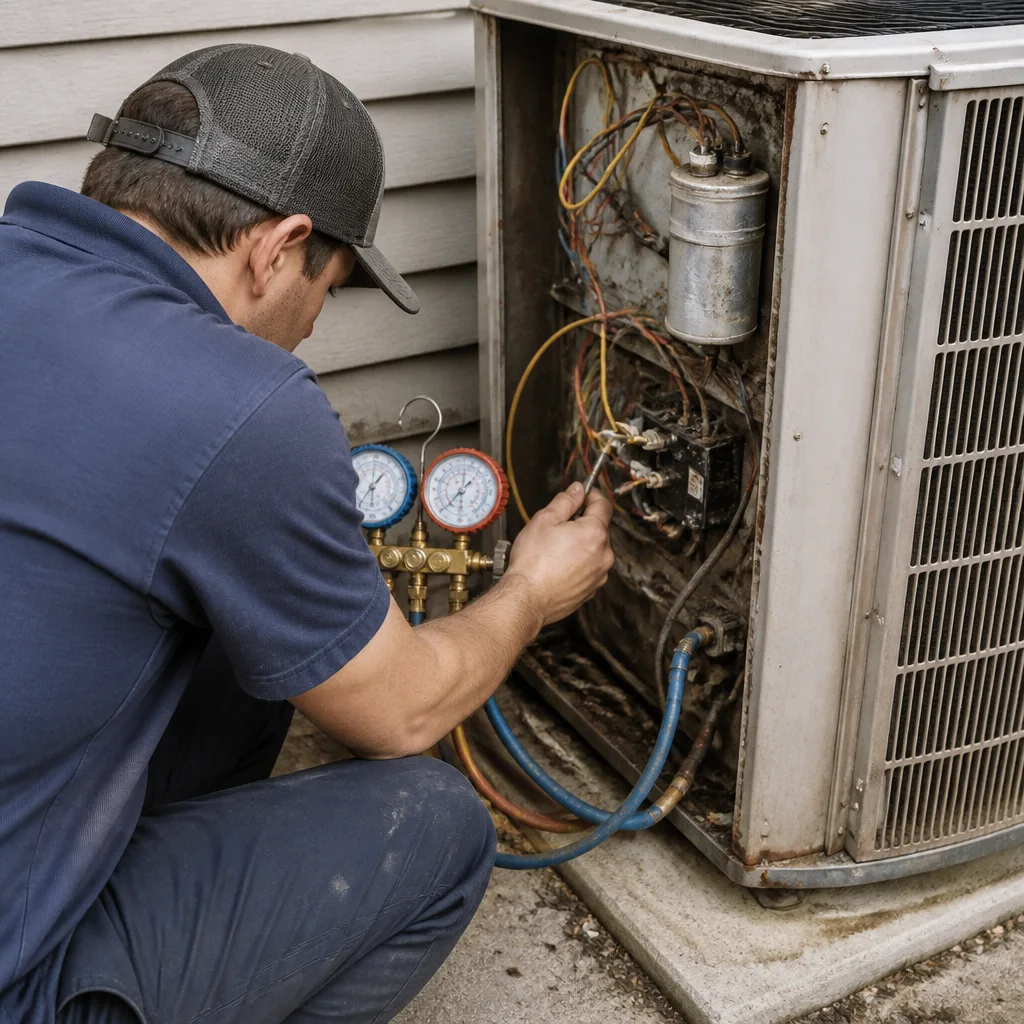
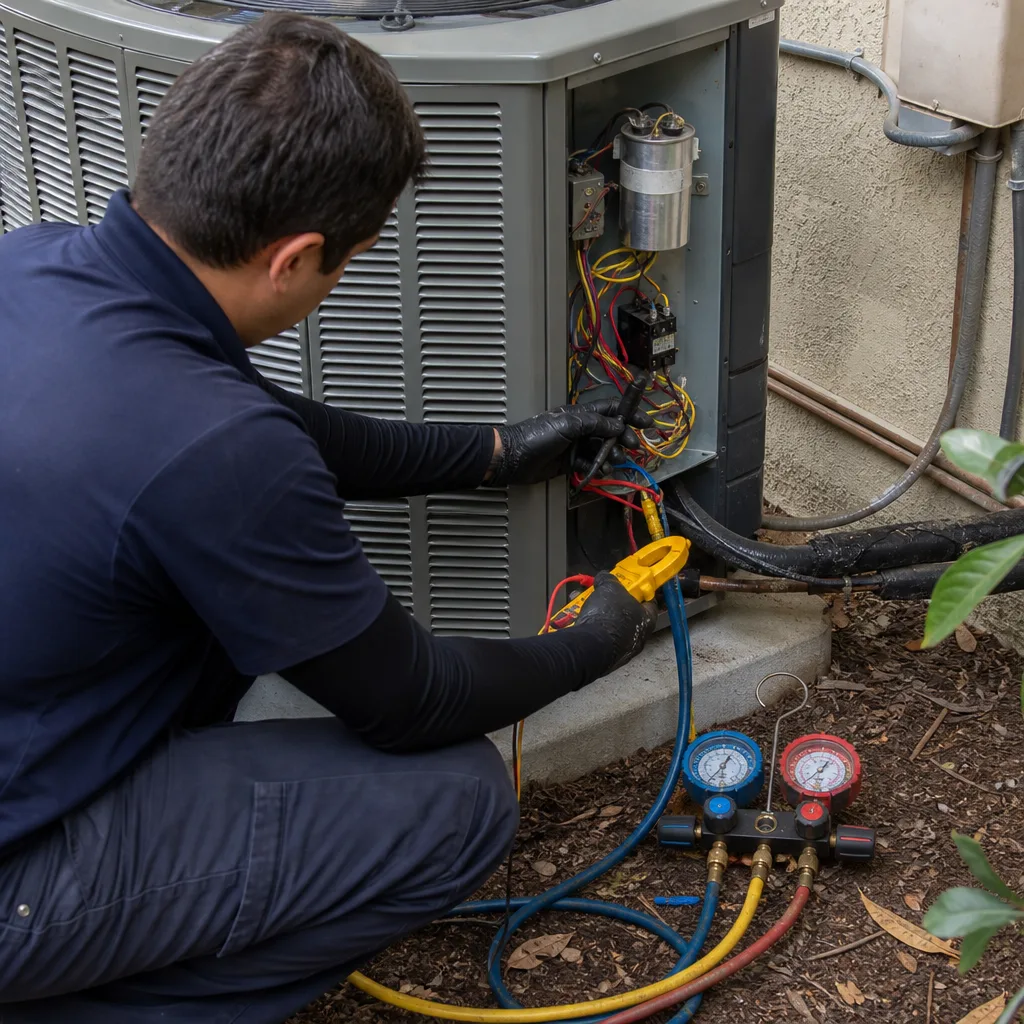
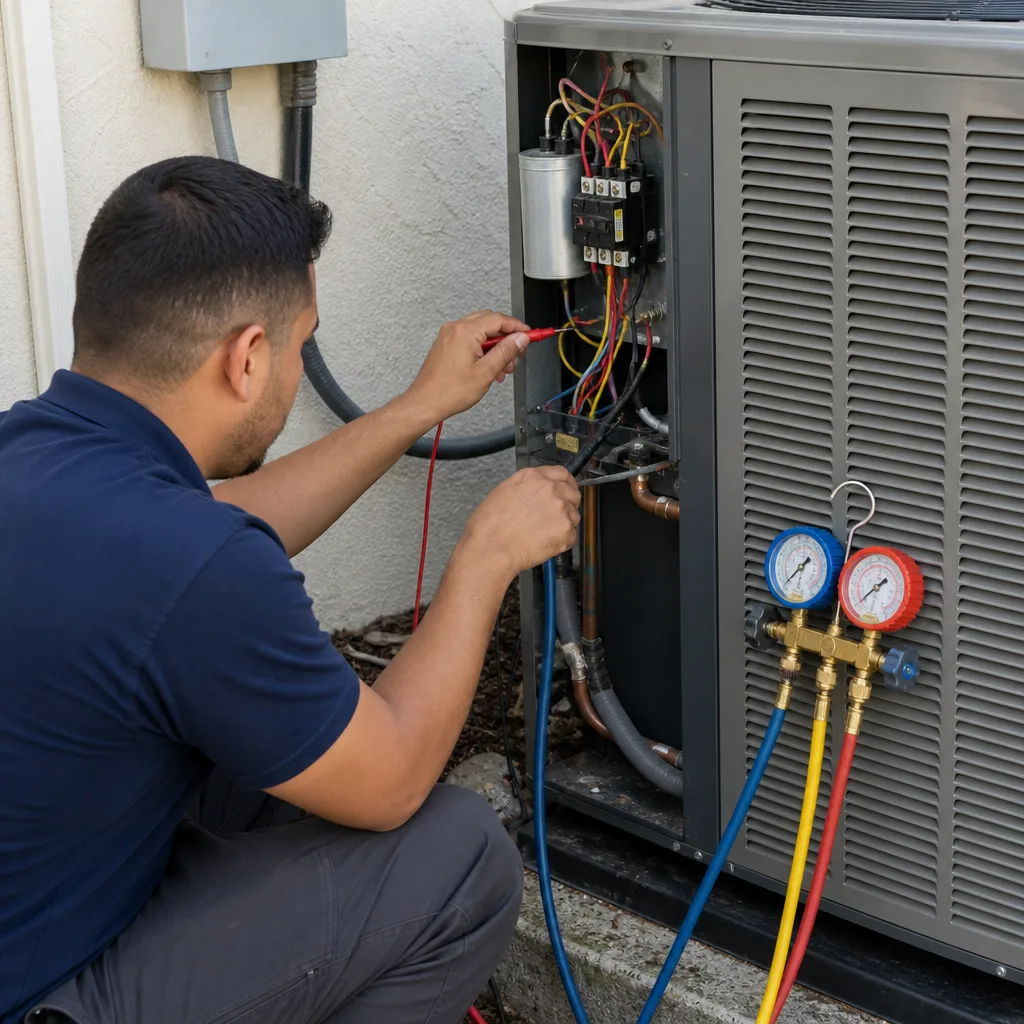
If your system is low on refrigerant, it has a leak. Adding refrigerant without finding and fixing the leak is like putting air in a tire with a nail in it: it works briefly, then fails again. But the legal issue is more serious. Purchasing and handling R-410A or the newer A2L refrigerants without certification is a federal violation. The gauges, hoses, and manifold sets sold online do not come with legal authority to use them. We have seen Orlando homeowners buy a gauge set, overcharge their system, and destroy a compressor that would have cost $400 to repair properly. That turned a $400 problem into a $4,000 problem.
Electrical Panel and High-Voltage Work
Your condenser unit runs on 240 volts. The capacitor inside stores a charge even after power is disconnected. Touching the wrong terminal can stop your heart. The disconnect box next to the unit is safe to operate (it’s the switch you flip to cut power), but opening the condenser cabinet to test or replace a capacitor is not a beginner task. Capacitors in Orlando fail more often than in cooler climates because heat degrades them faster, which makes them a frequent DIY temptation. A capacitor costs $15 to $40, but the labor and diagnostic time a professional brings is what you’re actually paying for. Yours is not the first capacitor to look identical to the old one but be wired differently.
Compressor and Coil Replacement
Replacing an evaporator coil or compressor requires refrigerant recovery, brazing with a torch, nitrogen pressure testing, vacuum pulling to below 500 microns, and precise refrigerant weighing. Any single step done wrong results in a system that fails within days or weeks. We have replaced compressors in Orlando where the homeowner or a handyman installed the part but skipped the filter drier or left moisture in the lines. The result was acid formation in the refrigerant oil, which destroyed the new compressor within one season. The part was under warranty, but the labor wasn’t, and the manufacturer denied the claim when they saw the installation wasn’t performed by a licensed contractor.
Anything That Requires a Permit
Orange County and the City of Orlando require permits for equipment replacement and most ductwork. If a system is installed without a permit, it can complicate a future home sale, and your homeowners insurance may deny a claim related to that work. Orlando’s real estate market is competitive, and buyers increasingly order permit searches before closing. An unpermitted AC replacement becomes a negotiating point against you.
The Warranty Fine Print Nobody Reads
Most Orlando homeowners believe their AC system’s 10-year parts warranty protects them no matter what. That belief is expensive. Read the actual warranty language from any major manufacturer, and you’ll find exclusions that matter more than the coverage itself.
Take a typical 10-year parts warranty from Trane or Lennox. It covers manufacturing defects in the compressor, coils, and other major components. But the fine print says the warranty is void if the equipment was “not installed and serviced by a licensed HVAC contractor,” or if “unauthorized repairs or modifications” were performed. That phrase, “unauthorized repairs,” is the trap. When a homeowner replaces a capacitor themselves and then the compressor fails three months later, the manufacturer’s warranty department can and does deny the compressor claim on the grounds that an unauthorized repair compromised the system.
This is not theoretical. We have handled warranty claims in Orlando where a homeowner’s $50 DIY thermostat installation caused a low-voltage short that fried a control board. The board was a $900 part under warranty. The manufacturer denied the claim because the failure traced back to a non-licensed installation. The homeowner paid full price for the board plus labor. The thermostat swap that saved $150 ended up costing $1,100.
Here is what the warranty fine print actually requires, in plain English:
- Installation by a licensed contractor: Nearly all manufacturers require this for warranty activation. Some require online registration within 60 days of installation, and your contractor should handle that.
- Annual professional maintenance: Some warranties require proof of annual professional maintenance to keep the parts warranty valid. Goodman and Rheem have moved toward this position. Keep records.
- OEM or approved replacement parts: Using aftermarket parts on a covered component can void the warranty on that component and adjacent parts.
- No unauthorized modifications: This includes DIY electrical work, refrigerant handling, and any alteration to the system’s original configuration.
The practical takeaway: your 10-year parts warranty is worth real money in Orlando, where a replacement compressor or evaporator coil can run $1,500 to $3,500 before labor. Protecting that warranty means limiting DIY work to the tasks in the previous section and keeping receipts for any professional service.
The Honest Cost Comparison
Most DIY-vs-pro articles pretend the comparison is simple. It’s not. Here is an honest accounting that includes the hidden costs, the avoided costs, and the risk-adjusted numbers for Orlando specifically.
| Task | DIY Cost | Pro Cost in Orlando | Risk of DIY Gone Wrong |
|---|---|---|---|
| Air filter replacement | $8 – $20 per filter | $60 – $120 service call | None, if done correctly |
| Condensate line flush (vinegar) | $10 – $20 per year | $120 – $200 per flush | Low; avoid compressed air |
| Thermostat battery replacement | $4 – $8 | $90 – $150 service call | None |
| Basic thermostat swap | $30 – $250 for the unit | $150 – $350 installed | Medium; wrong wiring can fry a control board |
| Refrigerant recharge | Illegal; $40 can + fines from $44,539/day | $200 – $500 including leak search | Severe; federal violation, compressor damage |
| Capacitor replacement | $15 – $40 part | $150 – $300 installed | High; stored charge can injure, wrong replacement fails fast |
| Annual maintenance | $20 in filters and cleaner | $120 – $250 for a professional tune-up | DIY misses hidden issues; pro catches them early |
| Compressor replacement | Not legal or practical | $1,800 – $3,500 installed | Severe; warranty void, early failure likely |
The numbers tell a clear story. The DIY tasks that are legal and safe save you $150 to $300 per year. That’s real money. But the DIY tasks that are illegal or dangerous expose you to costs that dwarf any savings: a $44,539 per day federal fine for refrigerant handling, a $900 voided warranty claim for a thermostat mistake, a $4,000 compressor replacement after an overcharge. The savings curve tops out quickly, and the risk curve goes vertical. We tell Orlando homeowners the same thing every time: do the $20 maintenance yourself, and call us before you touch anything with refrigerant or high voltage in it.
The Tech Layer: Smart Tools That Reduce Service Calls
There is a middle ground between full DIY and calling a technician for every issue, and it lives in the monitoring tools now available for residential HVAC. These tools give you visibility into your system without requiring you to open any access panels or handle any regulated substance. In our experience serving Orlando, homeowners who use these tools well cut their professional service calls by roughly one-third, because they catch problems early and communicate symptoms precisely.
The most useful tools for Orlando homeowners:
- A smart thermostat with humidity monitoring. Orlando’s humidity is the hidden variable in comfort and equipment health. A thermostat that tracks indoor humidity, like an Ecobee or Nest, helps you spot drainage issues and over-sized systems before they cause mold or water damage. It also gives you run-time history, so a technician can see exactly when and how long your system runs.
- Whole-home energy monitors. Devices like Sense or Emporia track the electrical draw of your condenser and air handler. A compressor that starts drawing more power than normal is often failing. An energy monitor can flag that trend weeks before the compressor dies, letting you schedule a repair instead of an emergency replacement.
- Smart water leak detectors near the air handler. A $40 battery-powered sensor next to your indoor unit pings your phone if the condensate pan overflows. In Orlando, where the AC runs 10 months a year, a clogged drain that goes unnoticed for a day can ruin drywall and flooring. A leak detector turns a $2,000 water damage repair into a $150 drain line flush.
- Filter replacement reminders. Most smart thermostats have them built in. Set the reminder for 30 days during Orlando’s pollen season and 60 days the rest of the year. It’s a small thing, but automated reminders beat memory every time.
The line here is clear: monitoring and noticing is DIY. Diagnosing and repairing is not. Use these tools to gather information and catch problems early, then hand that information to a licensed technician when something looks off. A homeowner who can say “my compressor is drawing 11 amps for 20 minutes at a time and the humidity hasn’t dropped below 65 percent” gets a faster, more accurate diagnosis than one who says “it’s not cooling right.”
Insurance and the DIY Paper Trail
This is the section most DIY guides skip, and it’s the one that can cost you the most money. When an HVAC-related insurance claim is filed, the insurance company looks for a reason to deny it. A record of DIY work on the system is exactly the reason they’re looking for.
Consider a common Orlando scenario. A condensate drain clogs, the pan overflows, and water damages your ceiling. You file a homeowners insurance claim for $3,000 in drywall and paint. The adjuster arrives and asks when the system was last serviced. If you say you’ve been maintaining it yourself, the insurance company may argue that negligent maintenance caused the overflow and deny the claim. If you have receipts from a professional maintenance visit within the last year, the claim is much harder to deny.
Now consider the more serious scenario. A compressor fails, and the system is under a 10-year parts warranty. The manufacturer asks for service records. If a homeowner performed electrical work on the system, that record becomes the documented reason the claim is denied. We have seen this in Orlando with a Lennox system where a homeowner replaced his own thermostat, wired it incorrectly, and shorted the control board. The thermostat receipt and the homeowner’s own description of the work became the paper trail the manufacturer used to deny the board replacement.
Here is what we tell Orlando homeowners about the paper trail:
- Keep every receipt for professional HVAC service. Annual maintenance receipts are worth real money in warranty claims and insurance disputes.
- Document your DIY maintenance. A note in your phone with the date you changed the filter or flushed the drain line shows diligence if a question ever comes up.
- Never perform electrical or refrigerant work yourself and expect coverage. The moment a DIY repair is discoverable in a claim, it becomes the reason for denial. Insurers and manufacturers do not need to prove your work caused the failure; they need to show it could have, and that’s enough.
- Use a licensed contractor for any repair that touches the sealed system, electrical, or refrigerant. A licensed contractor’s work comes with its own paper trail: permits, invoices, and warranty documentation that protect you in a claim.
The short version: DIY maintenance protects you. DIY repairs expose you. The difference is the paper trail.
Orlando-Specific Factors That Change the Math
Orlando’s climate and housing stock make the DIY-vs-pro decision different here than in most of the country. The assumptions that hold in Atlanta or Dallas don’t always transfer.
First, the cooling season. Orlando’s AC systems run 2,500 to 3,500 hours per year, roughly double the national average. That means every component wears faster. Capacitors that last 10 years in Ohio fail in 4 to 5 years here. Compressors that reach 15 years up north rarely make it past 10 in Orlando. The consequences are two-fold: DIY maintenance matters more here because the system works harder, and professional repair comes more often because parts fail sooner. A homeowner who skips filter changes in Orlando isn’t just reducing efficiency; they’re accelerating the death of an expensive system.
Second, the humidity. Orlando’s summer humidity routinely exceeds 80 percent, and your AC is your dehumidifier. A system that’s slightly undersized or low on refrigerant may still cool to 75 degrees but won’t remove enough moisture, leaving your home sticky and promoting mold growth in walls and ceilings. DIY diagnostics rarely account for humidity. A professional in Orlando knows that “it’s cooling but feels muggy” means something specific: a low charge, a clogged coil, or an over-sized system. That diagnostic skill comes from years of seeing local patterns, and it’s not something a YouTube video can replicate.
Third, the housing stock. Orlando’s homes range from 1950s concrete block ranches in College Park to 2020s builder-grade construction in Lake Nona and Horizon West. Older homes often have undersized ductwork, outdated electrical panels, and systems that were installed without permits decades ago. Newer homes frequently have builder-grade equipment installed to minimum code, which means small systems working at their limit from day one. Both scenarios create specific failure patterns that a local contractor recognizes immediately. A national DIY forum won’t know that a 1962 concrete block home in Conway has different insulation dynamics than a 2019 frame home in Winter Garden.
Fourth, Orlando’s permitting environment. Orange County and the City of Orlando enforce mechanical permits consistently, and they’re strict about it. A new AC installation without a permit can be flagged during a home sale, and unpermitted work is a common negotiation killer in Orlando’s competitive real estate market. If you’re selling a home in the next five years, unpermitted HVAC work is a liability you don’t want to carry.
Common Mistakes to Avoid
- Buying a refrigerant refill can and using it on your home AC. That $40 can triggers EPA jurisdiction, and the fine structure starts at $44,539 per day. It’s the most expensive $40 you’ll never spend legally.
- Replacing a capacitor without discharging it first. A capacitor holds a charge after power is off. Touching those terminals can kill you. We see this mistake attempted more in Orlando because heat kills capacitors and the part looks easy to swap.
- Using a pressure washer on the condenser coil. The fins bend, airflow drops, and efficiency never recovers. A bent-fin coil runs hotter and fails sooner in Orlando’s heat.
- Skipping annual professional maintenance because “the system runs fine.” Fine is how a failing system looks for the first year. In Orlando, a system that runs fine in May can fail in August. Maintenance catches the $200 issue before it becomes the $2,000 issue.
- Swapping a thermostat without checking the wiring diagram. Colors don’t always match. A miswired thermostat can blow the low-voltage fuse, the control board, or both. That’s a $200 to $900 mistake on a $50 savings.
- Leaving a clogged condensate line untreated because “it’s just a little drip.” That drip in an Orlando ceiling is drywall damage, paint, and possibly mold. A $60 drain flush beats a $2,000 ceiling repair every time.
- Ignoring the permit requirement on a new system. The lowest bidder who says “you don’t need a permit” is counting on you not asking. You need one, and the absence shows up at your home sale.
See the difference
 Before
 After
After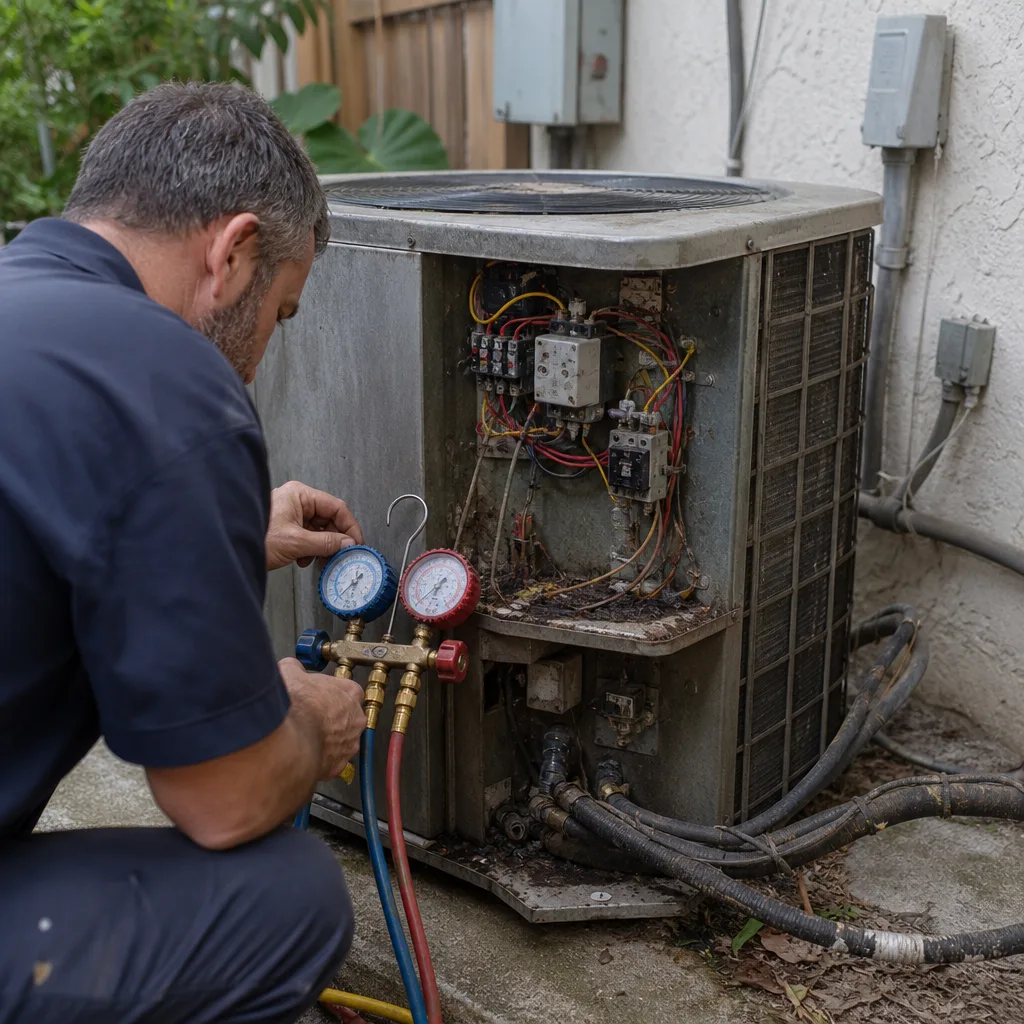 Before
 After
After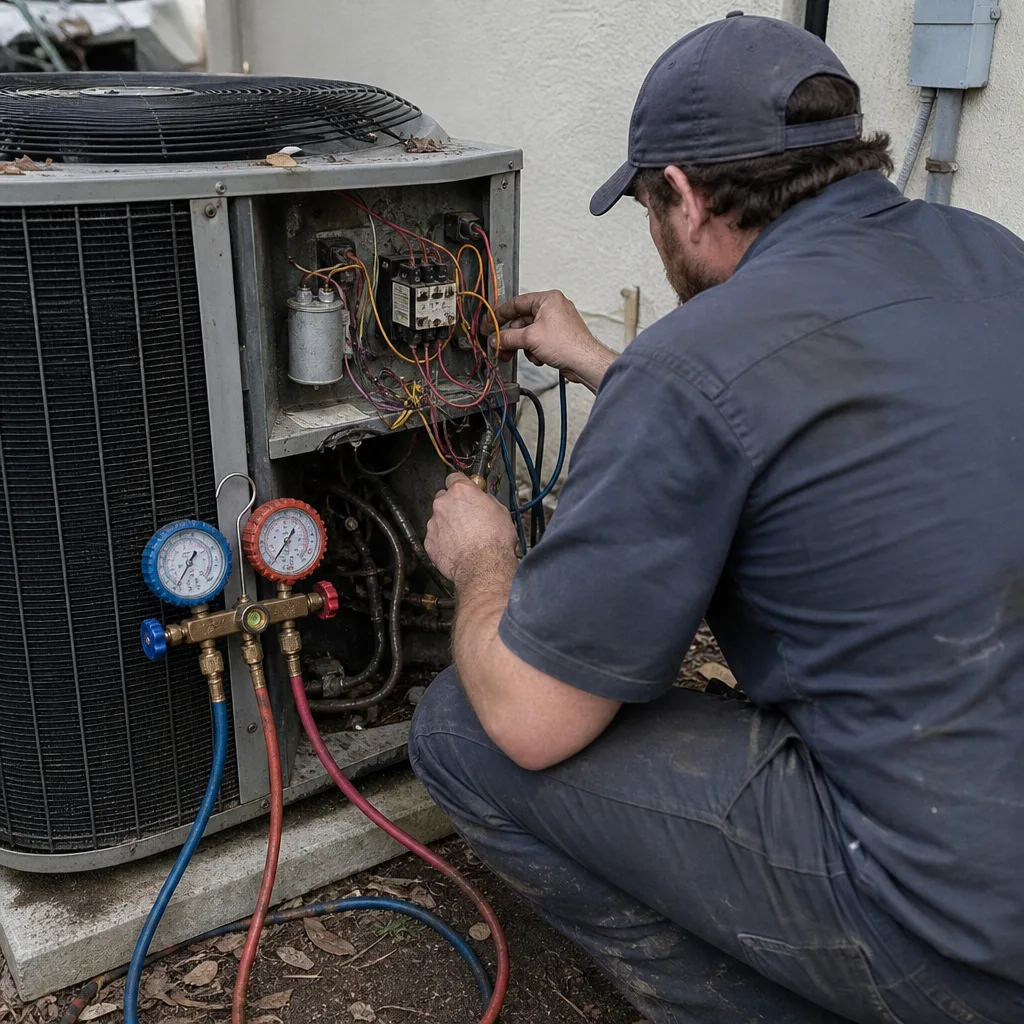 Before
 After
AfterWhen to Call a Professional
Call a licensed HVAC contractor immediately when you notice any of these: refrigerant lines frozen or sweating, a hissing or bubbling sound from the indoor unit, a burning smell from the vents, the breaker for the AC tripping repeatedly, water pooling around the air handler, or a system that runs constantly without reaching the set temperature. These symptoms indicate refrigerant leaks, electrical faults, or drainage failures beyond the DIY line. Also call when your system is over 10 years old and you’re facing a major repair: the replacement-versus-repair decision requires a load calculation and honest pricing, not a guess. Halden Heating and Air Orlando offers free estimates across Orlando, and our AC Repair in Orlando service includes a written price before any work starts. Call (850) 695-3178 and a real person answers, any hour.
Frequently Asked Questions
No. Handling refrigerant without an EPA Section 608 certification is a federal violation with fines starting at $44,539 per day per violation. Even purchasing refrigerant in containers designed for residential systems requires certification. A licensed contractor must handle all refrigerant work in Orlando.
You can legally replace air filters, change thermostat batteries, clean debris from around the outdoor condenser, pour vinegar into the condensate drain line, and visually inspect your system for obvious problems. These tasks require no license and no permit.
Yes, in most cases. Manufacturer warranties from Trane, Lennox, Goodman, and Rheem typically exclude coverage for failures caused by unauthorized repairs or modifications. A DIY electrical or refrigerant repair that precedes a component failure gives the manufacturer grounds to deny the claim.
Most AC repairs in Orlando run between $150 and $500 depending on the part and the system. Refrigerant leak repairs run $200 to $1,200, and compressor replacement runs $1,800 to $3,500 installed. AC Installation in Orlando for a full system typically runs $6,000 to $14,000 depending on size and efficiency.
At 12 years old, most Orlando AC systems are past the age where major repairs make sense. A compressor replacement on a 12-year-old system is generally not wise: you’re putting $2,500 into a system that may need another $2,000 in repairs within two years. A new system with a 10-year parts warranty and a 30 percent efficiency gain often pays for itself in Orlando’s long cooling season.
Yes. Orange County and the City of Orlando require permits for AC equipment replacement, and the permit application requires a licensed contractor’s signature. An unpermitted installation can complicate a future home sale and may affect insurance coverage.
The Bottom Line
The DIY-vs-professional HVAC line in Orlando isn’t about skill; it’s about law, warranty, and risk. The safe, legal DIY tasks are filters, drain line flushes, thermostat batteries, and visual inspections. They save you $150 to $300 a year and extend equipment life. Everything beyond that, from capacitor swaps to refrigerant work, risks federal fines, voided warranties, and expensive failures in a climate that punishes mistakes harder than most. Use smart monitoring tools to catch problems early, keep every receipt, and call a licensed contractor when the work touches refrigerant, electrical, or permits. That’s the honest, Orlando-specific answer we’ve been giving homeowners since 2004, and it hasn’t changed.
Written by Andre Fuller, Owner at Halden Heating and Air Orlando, serving Orlando since 2004.